

What Sleep Hygiene Actually Means
Sleep hygiene is a term borrowed from behavioral medicine, first formalized by sleep researcher Peter Hauri in the late 1970s. It refers to a set of behavioral and environmental practices designed to support consistent, restorative sleep. The term is sometimes used loosely online, blurring well-supported practices with commercial wellness trends. This article focuses on the subset of sleep hygiene recommendations that have accumulated meaningful evidence in peer-reviewed research - particularly from randomized controlled trials and systematic reviews - while flagging where evidence is thinner than popular coverage implies.
This content is general health education, not medical advice. If you have persistent sleep difficulties, consult a qualified healthcare provider.
The Core Practices With Consistent Research Support
Not all sleep hygiene tips are created equal. The following practices appear repeatedly across clinical sleep medicine guidelines and behavioral research as genuinely effective for most healthy adults.
Anchor your sleep and wake times to a consistent daily schedule, including weekends.
The human circadian system is a biological clock synchronized primarily by behavioral timing cues. Irregular sleep schedules - especially highly variable wake times - disrupt this timing, increasing sleep onset latency and reducing sleep quality. Consistency in wake time is considered the most powerful behavioral lever for stabilizing circadian rhythms.
Get bright light exposure in the morning and limit bright light, especially blue-spectrum light, in the hours before bed.
Light is the primary external signal that sets the circadian clock. Morning light advances the rhythm and promotes earlier, more consolidated sleep onset. Bright light exposure in the two to three hours before bed suppresses melatonin and delays sleep timing. This is a well-replicated finding across chronobiology research.
Use the bed only for sleep (and sex), not for work, screens, or prolonged wakefulness.
This is the core principle of stimulus control therapy, one of the most rigorously tested behavioral interventions for insomnia. When the bed is consistently associated with wakefulness and arousal, the brain learns to be alert there. Restricting the bed's use re-establishes the conditioned association between the bed and sleepiness.
Wind down with a consistent pre-sleep routine that reduces cognitive and physiological arousal.
Sleep onset requires a reduction in core body temperature, heart rate, and mental activation. Structured wind-down routines - which may include light reading, gentle stretching, or relaxation techniques - help trigger this physiological transition. Research on pre-sleep cognitive arousal identifies racing thoughts and worry as major behavioral contributors to insomnia.
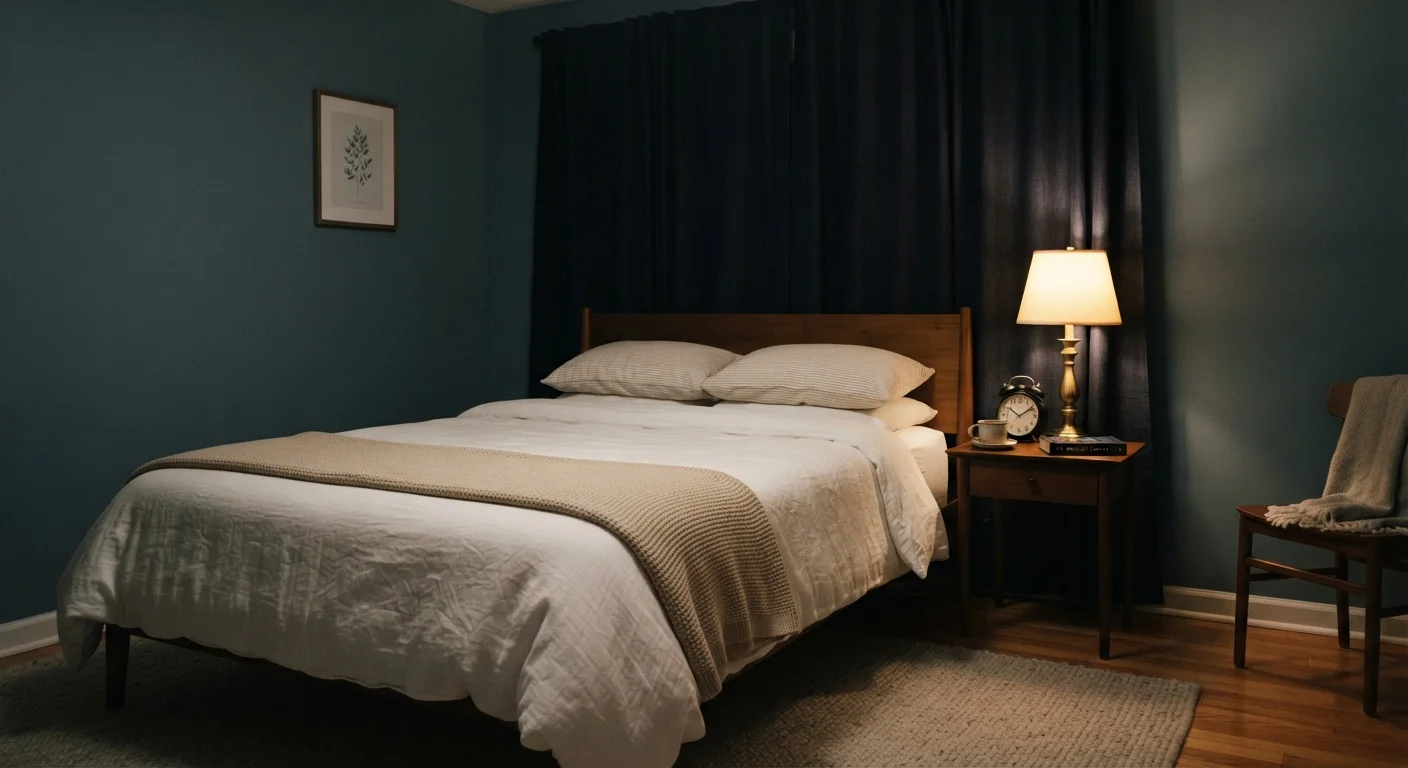
Keep the sleep environment cool, dark, and quiet.
Core body temperature naturally drops during sleep initiation, and a cooler room supports this process. Light and noise are well-documented sleep disruptors, activating arousal systems even during sleep. While individual preferences vary, the general direction of evidence favors cooler, darker, quieter environments for most adults.
For readers working on broader wellness routines, building consistent daily habits applies the same behavioral science principles to mental wellness more broadly.
What the Evidence Doesn't Strongly Support
Several popular sleep tips circulate widely despite limited or mixed human evidence. Weighted blankets show promising results for anxiety-related sleep disruption in some populations, but large trials in general adult populations are lacking. Melatonin supplements have clearer evidence for circadian timing issues (like jet lag or shift work) than for primary insomnia - and appropriate use should be discussed with a clinician. Sleep-tracking apps and wearables can raise awareness but have also been linked to orthosomnia - anxiety about sleep data - which may worsen outcomes for some users.
When Sleep Problems Go Beyond Hygiene
Sleep hygiene practices are most effective for mild-to-moderate sleep difficulties in otherwise healthy adults. They are not a substitute for clinical evaluation of sleep disorders such as obstructive sleep apnea, restless legs syndrome, or chronic insomnia disorder. If sleep difficulties significantly affect your daytime functioning, mood, or health, a healthcare provider can assess whether a more structured intervention - such as CBT-I with a trained therapist - or a clinical workup is appropriate.
Timing of exercise also intersects with sleep quality. What the evidence says about workout timing separates common claims from what circadian biology research actually supports.
Putting It Together: Sleep Hygiene as a System
Individual sleep hygiene tips tend to show modest effect sizes in isolation. Research, including meta-analyses of behavioral sleep interventions, consistently finds that multiple practices applied together - particularly within structured approaches like Cognitive Behavioral Therapy for Insomnia (CBT-I) - produce larger and more durable improvements than single-habit changes. CBT-I is currently recommended by the American College of Physicians as a first-line treatment for chronic insomnia before medication.
Sleep quality also interacts with physical and nutritional patterns. Eating patterns with strong research support and structuring a sustainable home exercise routine both document downstream effects on sleep quality. Addressing sleep as one pillar of an integrated health routine - rather than an isolated fix - reflects how behavioral research increasingly frames the issue.
If you are experiencing chronic sleep difficulties, daytime impairment, or symptoms that may indicate a sleep disorder, please speak with a qualified healthcare professional before making significant behavioral changes.
The content provided on our blog site traverses numerous categories, offering readers valuable and practical information. Readers can use the editorial team’s research and data to gain more insights into their topics of interest. However, they are requested not to treat the articles as conclusive. The website team cannot be held responsible for differences in data or inaccuracies found across other platforms. Please also note that the site might also miss out on various schemes and offers available that the readers may find more beneficial than the ones we cover.