

Summary
18 items · 30-60 minutes per quote reviewed
Why Price Is Only Part of the Picture
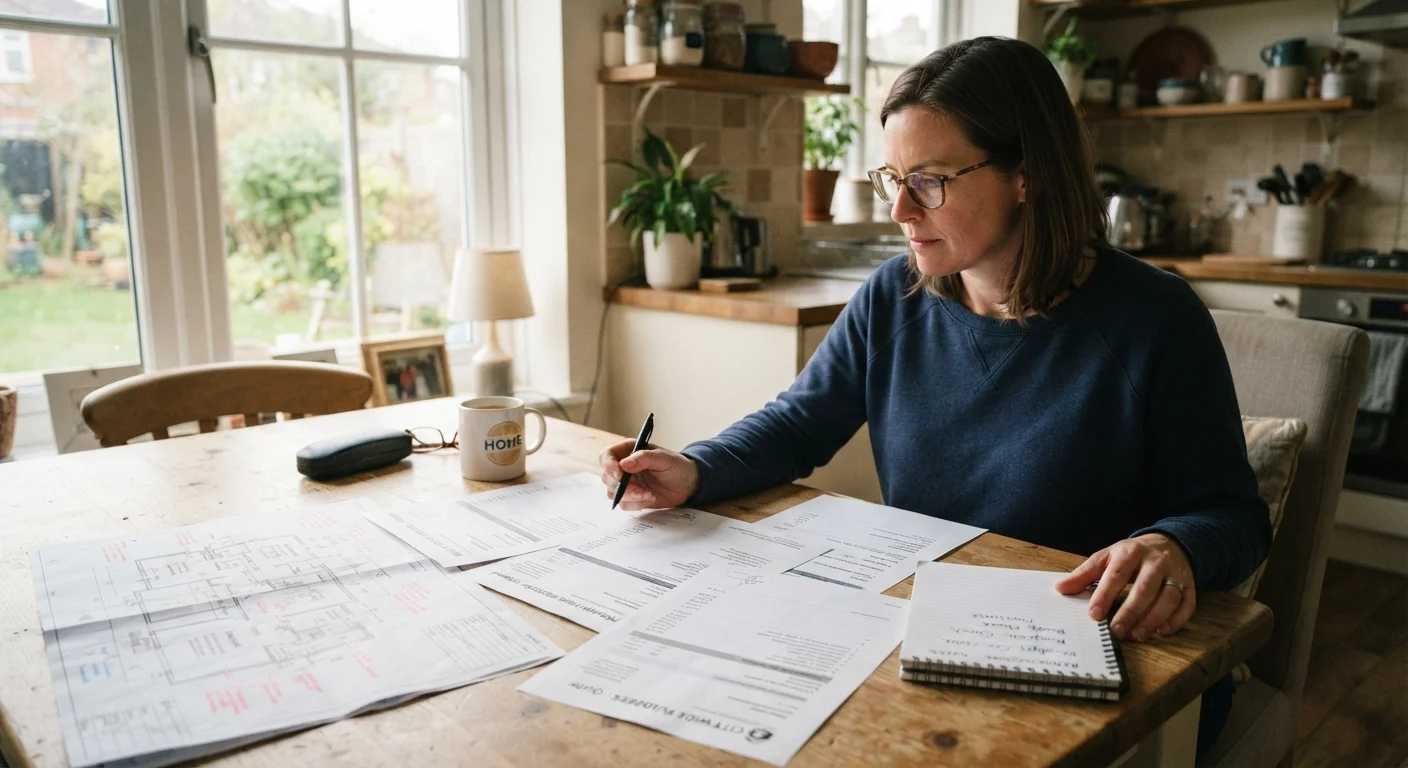
When quotes from three contractors come back at $8,400, $11,200, and $9,800, the temptation is to go straight for the lowest number. But a lower price can reflect missing scope, inferior materials, no permit pull, or a contractor carrying inadequate insurance. Any of those gaps can cost you far more than the savings you thought you'd captured.
A rigorous side-by-side comparison treats price as one data point among many. The checklist below walks you through every dimension worth evaluating - so you're comparing offers that are genuinely equivalent before making a decision. For a broader framework on when the higher-priced option is the smarter call, see our spending tradeoff guide.
Credentials and Compliance
Scope of Work
Materials and Specifications
Timeline and Scheduling
Payment Terms and Warranties
Tools and Documents You'll Need
Before sitting down to compare quotes, gather the following. Having everything in one place lets you move through the checklist efficiently and ensures you're not making decisions from memory.
All three written quotes
Forms the basis of your side-by-side comparison across every checklist category.
Your project scope document
A written description of your project that you provided to all contractors, ensuring they're quoting the same job.
State contractor licensing board website
Used to verify that each contractor's license is current and in good standing.
Insurance certificate request form
A standard form contractors use to have their insurer issue a certificate of insurance naming you as the certificate holder.
Spreadsheet or comparison table
Lets you align each quote's line items in the same row for fast visual comparison.
Red Flags and What to Do About Them
Even after checking every box, certain patterns in a quote should prompt a direct conversation - or prompt you to walk away. A contractor who resists pulling permits, for example, is asking you to absorb legal and financial risk that is rightfully theirs. Unpermitted work can complicate home sales and insurance claims, and it may need to be torn out and redone. Our article on permits, inspections, and codes explains exactly when permits are required and what inspections involve.
Never Accept a Quote Without a Written Scope
A verbal description of the project does not protect you if work falls short or disputes arise. Any quote worth considering should be accompanied by a written scope of work that specifies tasks, materials, exclusions, and timeline. If a contractor is reluctant to put details in writing before you sign, treat that as a significant red flag.
Large Upfront Deposits Carry Real Risk
Requiring more than 30% of the total project cost before work begins is outside the norm for most residential jobs and may indicate cash-flow problems. Some states cap deposit amounts for home improvement contracts - check your state's consumer protection rules before agreeing to any payment structure.
If you've worked through the checklist and still feel uncertain, revisit the scope of work section with each contractor in a follow-up conversation. A professional who is confident in their bid welcomes clarifying questions. For a full walkthrough of the hiring process from start to finish, see hiring a contractor without getting burned.
Unlicensed or Uninsured Work Puts You at Legal Risk
Hiring a contractor without valid insurance means you may be liable for injuries that occur on your property. Unpermitted work can void homeowner's insurance claims, trigger fines, and require costly remediation before a home sale. Always request and verify insurance certificates and license numbers independently - do not rely on what a contractor tells you verbally.
The content provided on our blog site traverses numerous categories, offering readers valuable and practical information. Readers can use the editorial team’s research and data to gain more insights into their topics of interest. However, they are requested not to treat the articles as conclusive. The website team cannot be held responsible for differences in data or inaccuracies found across other platforms. Please also note that the site might also miss out on various schemes and offers available that the readers may find more beneficial than the ones we cover.