

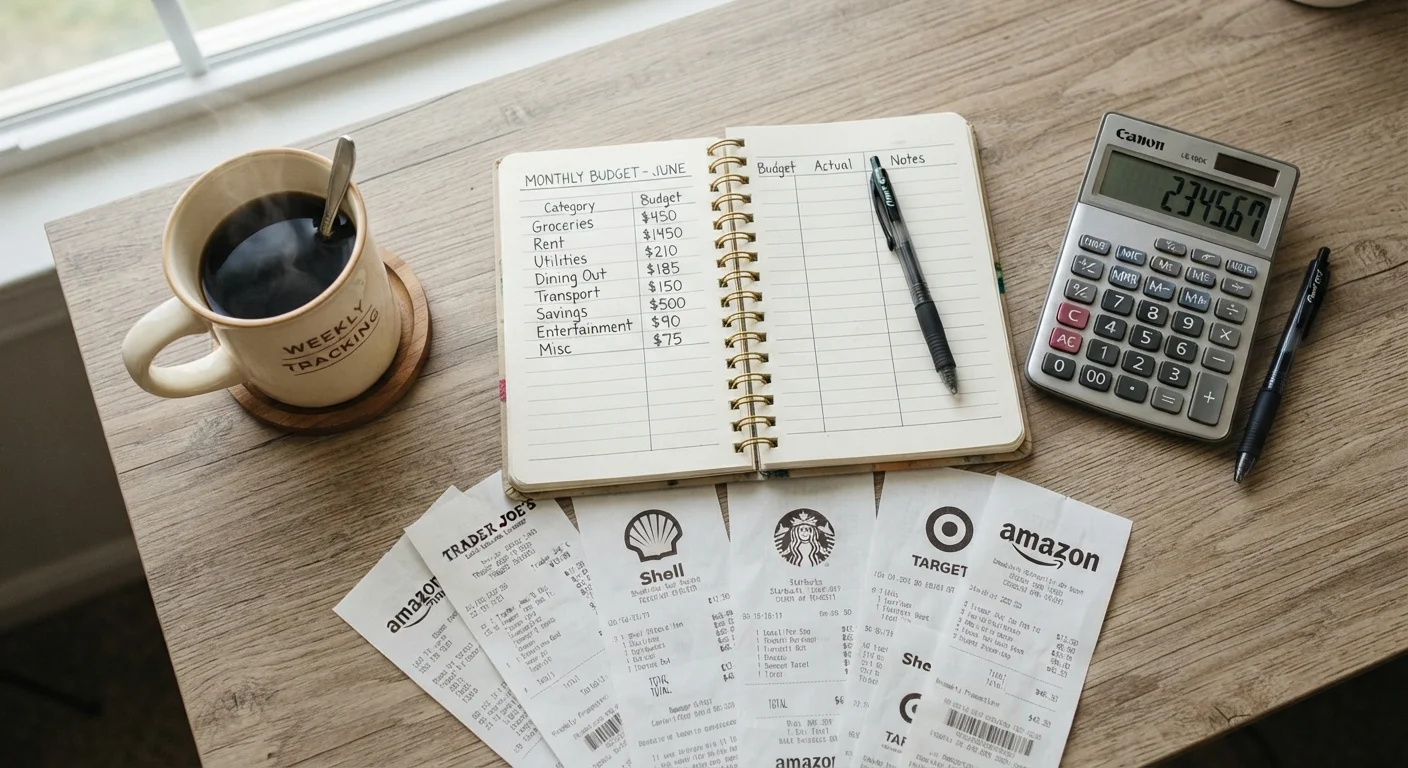
Why Spending Feels Invisible Until It Isn't
The gap between what people think they spend and what they actually spend is one of the most well-documented patterns in personal finance. It's not a character flaw - it's a predictable outcome of how memory and attention work. Frequent small purchases register as trivial and fade quickly; a $6 coffee or a $12 delivery fee barely registers in the moment. But these amounts compound quietly into hundreds of dollars each month.
This matters because budgeting from inaccurate assumptions produces inaccurate plans. If your mental model of your grocery spending is $400/month but your actual transactions show $620, any budget built on that estimate is already broken before you start. The fix isn't discipline - it's data. And the data is already sitting in your bank and credit card statements.
Spending patterns also tend to concentrate in predictable categories. According to the U.S. Bureau of Labor Statistics Consumer Expenditure Survey, housing, transportation, and food consistently account for the largest shares of household spending for most Americans - but discretionary categories like dining out, entertainment, and subscriptions are where most unexamined growth occurs. That's where this guide focuses. For a broader look at spending wisely across all categories, explore our full hub.
This Is General Financial Education
This article provides general information about personal spending habits and is not personalized financial advice. Every household's situation is different. For guidance specific to your financial circumstances, consult a qualified financial professional.
What You'll Need Before You Start
The process doesn't require special software or financial expertise - just access to your actual transaction records and a way to organize them. Here's what to have ready:
Bank or credit card transaction history
Provides a complete, date-stamped record of actual purchases across 30-90 days.
Spreadsheet application
Used to organize, total, and categorize transactions manually if preferred.
Budgeting or expense-tracking app
Automates transaction import and categorization, reducing manual data entry.
Highlighters or color-coding system
Helps visually sort printed statements by spending category at a glance.
If you pay for significant expenses in cash, note that cash transactions won't appear in digital records. Keep a simple log on your phone or check ATM withdrawal patterns as a proxy. Once you have your tools in place, move through the steps below in order - skipping steps tends to leave the biggest leaks undiscovered.
Gather your transaction data
Log into every bank account, credit card, and payment app you use regularly and download or print the last 60-90 days of transactions. Don't skip the accounts you use "only occasionally" - those are often where the surprises hide. If you use cash frequently, estimate those amounts by checking ATM withdrawal history.
Build your spending categories
Create a simple category list before you start labeling transactions. Common categories include: Housing, Utilities, Groceries, Dining Out, Transportation, Health, Subscriptions, Entertainment, Shopping, Personal Care, and Miscellaneous. Keep categories broad enough to be manageable but specific enough to be meaningful - five categories tells you almost nothing; fifty is unworkable.
Assign every transaction to a category
Go line by line through your transaction history and label each item. Resist the urge to guess - if you don't recognize a charge, look it up. Unknown charges are often forgotten subscriptions or automatic renewals that deserve their own review. Ambiguous purchases (a grocery store run that included household supplies) should go to whichever category best reflects intent.
Total each category and find your monthly average
Sum each category across the full date range, then divide by the number of months covered to get a monthly average. Do the same for your total spending. Compare that total to your actual take-home pay for the same period. This gap - or its absence - is the most important number on the page.
Flag needs versus wants in each category
Go back through your category totals and mark each one as primarily a 'need' (fixed obligation or essential) or a 'want' (discretionary). Most categories contain both - groceries are a need, but gourmet snacks and convenience markups are wants. Breaking a category like 'Dining' into 'work lunches' versus 'weekend restaurant meals' can surface meaningful distinctions. The goal isn't to judge; it's to see where choices live.
Identify the highest-impact leaks
Look for three things specifically: (1) recurring charges you had forgotten about or no longer use, (2) categories where spending is significantly higher than you would have guessed, and (3) patterns tied to specific triggers - stress shopping, late-night ordering, boredom browsing. Rank the leaks by dollar value. Fix the biggest ones first; small optimizations on large categories outperform micro-savings everywhere else.
Set a realistic monthly spending target
Using your actual data - not an aspirational guess - set category-level monthly targets that are modestly tighter than your current averages. Aim for meaningful but achievable reductions rather than dramatic cuts. Targets that feel punishing tend to be abandoned. Build your targets into a spending plan that accounts for all income and obligations before discretionary choices. For a complete framework on doing this, see Personal Budgeting: The Complete Framework.
Schedule a recurring weekly review
Set a 10-minute weekly calendar block to check actual spending against your targets. You don't need to re-categorize everything - just scan the week's transactions and note any category running ahead of pace. Catching overspending mid-month gives you time to adjust; catching it at month-end doesn't.
Where People Most Often Find the Leaks
After running this exercise, most people find spending surprises in a handful of consistent places:
- Subscriptions and memberships: The average household carries more active recurring charges than it realizes. Many were signed up during free trials and never canceled.
- Convenience markups: Delivery fees, platform surcharges, and convenience-store pricing routinely add 20-40% to the base cost of goods. These rarely feel significant in the moment but add up substantially over a month.
- Dining and coffee: This category almost always runs higher than estimated, particularly when work lunches, weekend meals, and quick coffee stops are added together.
- Irregular but real expenses: Car maintenance, medical co-pays, household repairs, and gift purchases feel exceptional each time they occur - but over a full year, they're predictable budget items that deserve a monthly allocation.
Groceries deserve their own attention. It's one of the few categories where small habit shifts can yield consistent savings without affecting quality of life meaningfully. See practical grocery spending habits for a straightforward approach.
The 90-Day Rule for Accuracy
One month of data can be skewed by an unusual expense or a slow week. Running your analysis over 90 days and dividing by three gives you a monthly average that accounts for irregular but real spending patterns - like car maintenance, gifts, or seasonal costs.
Once you've identified your leaks, the next step is building a spending plan that reflects your real life - not an idealized version of it. From there, spending wisely is less about sacrifice and more about intention.
This article is for general informational and educational purposes only and does not constitute personalized financial advice. Consult a qualified financial professional for guidance tailored to your individual circumstances.
The content provided on our blog site traverses numerous categories, offering readers valuable and practical information. Readers can use the editorial team’s research and data to gain more insights into their topics of interest. However, they are requested not to treat the articles as conclusive. The website team cannot be held responsible for differences in data or inaccuracies found across other platforms. Please also note that the site might also miss out on various schemes and offers available that the readers may find more beneficial than the ones we cover.