

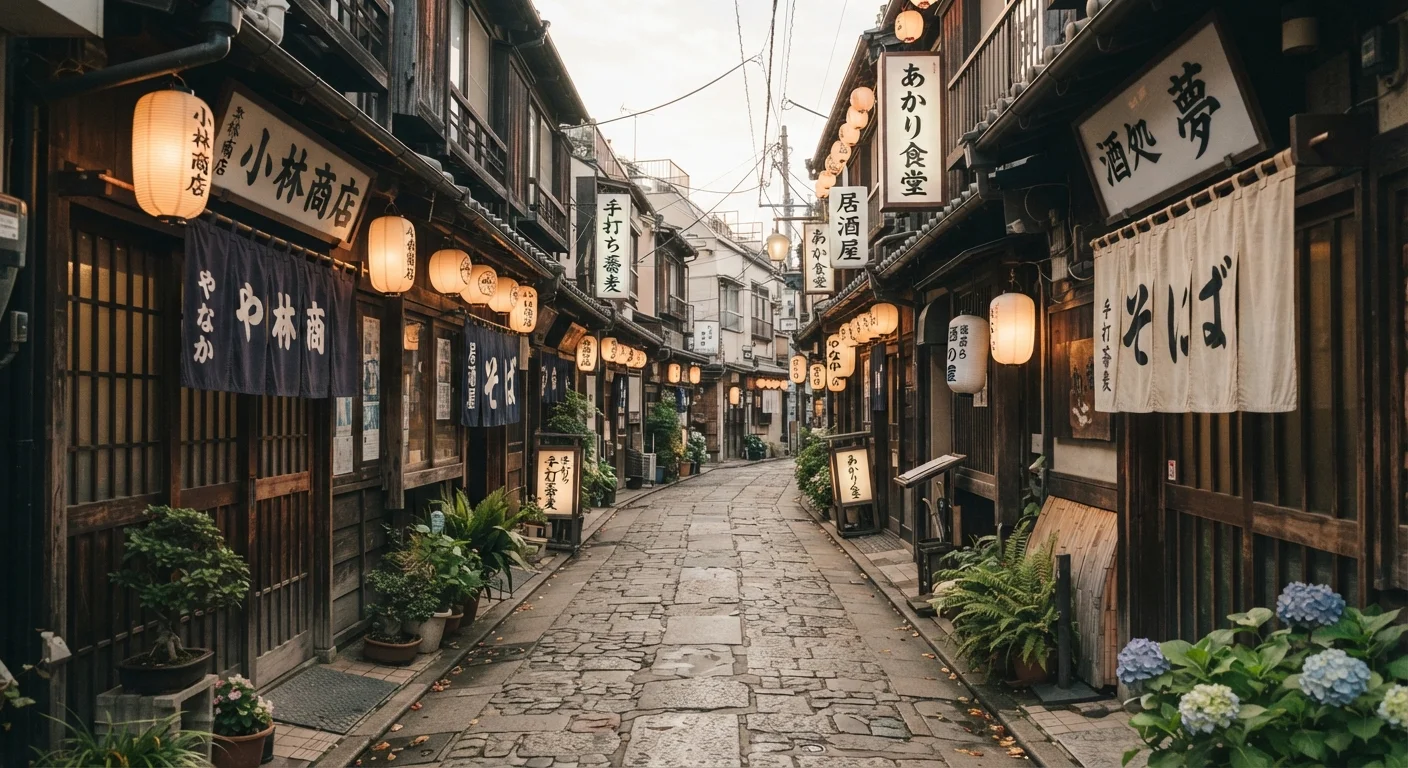
Why Neighborhood Walking Beats Landmark Hopping
Tokyo's most-visited landmarks-Senso-ji, Shibuya Crossing, teamLab-are genuinely worth seeing. But they don't tell you much about how the city actually functions or feels. The neighborhoods below do. Each has a distinct character shaped by its residents, its architecture, and its economic history. None requires a special ticket or a guided tour to appreciate.
For cost-conscious travelers, this is also smart budget strategy. A half-day spent wandering a residential district typically costs far less than a themed attraction, while delivering a more memorable experience. For more on keeping Tokyo spending in check, see our underused money-saving strategies that complement this kind of itinerary.
One practical note before you go: verify current transit schedules, operating hours for any markets or shops, and any entry requirements with official sources before your visit, as these can change.
Plan Your Route Around Transit Clusters
Yanaka and Nezu are walkable together in a single morning. Koenji and Shimokitazawa are on the same train line and make a natural afternoon pairing. Grouping geographically close neighborhoods reduces transit time and lets you see more without backtracking across the city.
Six Neighborhoods That Reward the Walk
Yanaka: Old Tokyo That Survived the Earthquakes
Yanaka is one of the few Tokyo neighborhoods that largely escaped both the 1923 Great Kanto Earthquake and World War II bombing-which means it still has the low-rise wooden architecture, narrow lanes, and dense concentration of temples and shrines that once defined the city. The area around Yanaka Ginza, a covered shopping street, gives you independent food vendors, craft shops, and a pace that's completely at odds with Tokyo's commercial center.
The cemetery at the district's heart is a legitimate attraction: old trees, elaborate headstones, and near-total quiet on weekday mornings. The surrounding streets have clusters of small galleries, repair shops, and residences that don't cater primarily to tourists. Budget two to three hours here.
Yanaka preserves the street-level feel of pre-war Tokyo that most of the city lost decades ago.
Shimokitazawa: Vintage Shops, Small Theaters, and Live Music
Shimokitazawa has a long-standing reputation as Tokyo's bohemian quarter-a place where small live music venues, secondhand clothing markets, and independent coffee roasters occupy buildings that would have been demolished elsewhere in the city. It functions as a real neighborhood with real residents, not a preserved artifact or a commercial recreation of one.
The commercial streets are compact and walkable in under two hours. The draw is the density of independently owned shops rather than any single landmark. Thrift culture here is genuine-prices are reasonable and the selection is deep. Evenings bring a different energy, with live music starting after dinner at several small venues. Confirm specific venue programming before visiting.
Shimokitazawa operates as a functioning creative neighborhood, not a staged version of one.
Koenji: Subculture, Record Shops, and Covered Arcades
Koenji sits on the Chuo Line west of Shinjuku and has a distinct identity built around music subculture, punk and alternative retail, and a network of covered shopping arcades (shotengai) that predate the modern mall era. The north and south exits of the station anchor different commercial zones worth exploring independently.
Record shops here are serious operations-knowledgeable staff, deep catalogs, and reasonable prices by Tokyo standards. The shotengai on the south side have a more everyday, residential character: dry goods, produce, inexpensive lunch spots. This is a neighborhood where you can spend two hours browsing without spending much money.
Koenji's covered shotengai offer an unfiltered look at everyday Tokyo commercial life.
Nezu and Yanesen: The Slower Side of Bunkyo
Adjacent to Yanaka, the Nezu and Yanesen (Yanaka-Nezu-Sendagi) area fills in a larger walkable zone worth spending a half-day in rather than just an hour. Nezu Shrine is a legitimate highlight even for visitors who have already seen Fushimi Inari in Kyoto-it's smaller, less crowded, and accessible on foot from the surrounding lanes.
The cafés and small restaurants in this stretch tend toward the independent and unassuming. You're unlikely to encounter English menus everywhere, but point-and-order is a practical workaround in many spots, and visual menus are common. Nezu is roughly 15 minutes on foot from Yanaka Ginza, making a combined walk natural.
Nezu Shrine offers an authentic alternative to Tokyo's more crowded religious sites.
Kagurazaka: French Influence, Hidden Alleys, and Traditional Craft
Kagurazaka's unusual character traces to a historical French community presence and its position as a geisha district until the mid-twentieth century. Today it sits somewhere between upscale residential and quietly cultural-there are French bakeries and Japanese craft shops within the same block, and narrow flagstone alleys (yokocho) cutting off the main street into a quieter world behind it.
The yokocho off the main Kagurazaka-dori are the primary reason to come here. They're short, easily explored, and contain some of the area's better small restaurants. The neighborhood is also flat and compact, making it a reasonable option for travelers with mobility considerations. Allow two hours to cover it thoroughly.
Kagurazaka's flagstone side alleys hide some of the neighborhood's most atmospheric dining and craft shops.
Monzen-Nakacho: Shitamachi Culture Along the Old River District
Monzen-Nakacho (often shortened to Monnakas by locals) sits in the Koto ward east of the city center-an area historically tied to river trade and working-class life. Tomioka Hachimangu Shrine anchors the neighborhood and hosts a regular flea market worth checking schedules for in advance. The streets around it have an older-Tokyo texture: izakayas, rice sellers, small hardware stores.
It sees fewer foreign visitors than any other district on this list, which means interactions feel less transactional and more incidental. The Sumida River and its associated waterways are a short walk away, providing a scenic backdrop for an afternoon walk. Evening here, when the izakayas fill up, offers a different experience from the daytime stroll.
Monzen-Nakacho receives fewer foreign visitors than most comparable neighborhoods, giving it an unfiltered local atmosphere.
Hours and Access Can Vary Seasonally
Smaller shops, market stalls, and some shrines in these neighborhoods may keep irregular hours or close on specific weekdays. Before building a tight itinerary around any single destination, check current hours through official district websites or direct contact. This is especially relevant for Yanaka Ginza vendors and Tomioka Hachimangu's flea market schedule.
Making the Most of Your Wanders
A few logistics worth planning before you set out. Tokyo's train network connects all of these neighborhoods efficiently, but Google Maps or the Navitime app (popular with locals) will serve you better than paper maps for navigating between them. IC cards-rechargeable transit cards-are the most practical way to pay fares across rail and subway lines.
If you're questioning assumptions about Japan being prohibitively expensive or difficult to navigate without language skills, our piece on common Japan travel myths addresses those concerns directly. The short version: self-guided neighborhood exploration in Tokyo is accessible and affordable for most international travelers willing to do a bit of preparation.
These districts aren't substitutes for Tokyo's iconic sights-they're complements. Build them into your itinerary as half-day extensions rather than full-day replacements, and you'll leave with a more textured picture of the city.
The content provided on our blog site traverses numerous categories, offering readers valuable and practical information. Readers can use the editorial team’s research and data to gain more insights into their topics of interest. However, they are requested not to treat the articles as conclusive. The website team cannot be held responsible for differences in data or inaccuracies found across other platforms. Please also note that the site might also miss out on various schemes and offers available that the readers may find more beneficial than the ones we cover.