

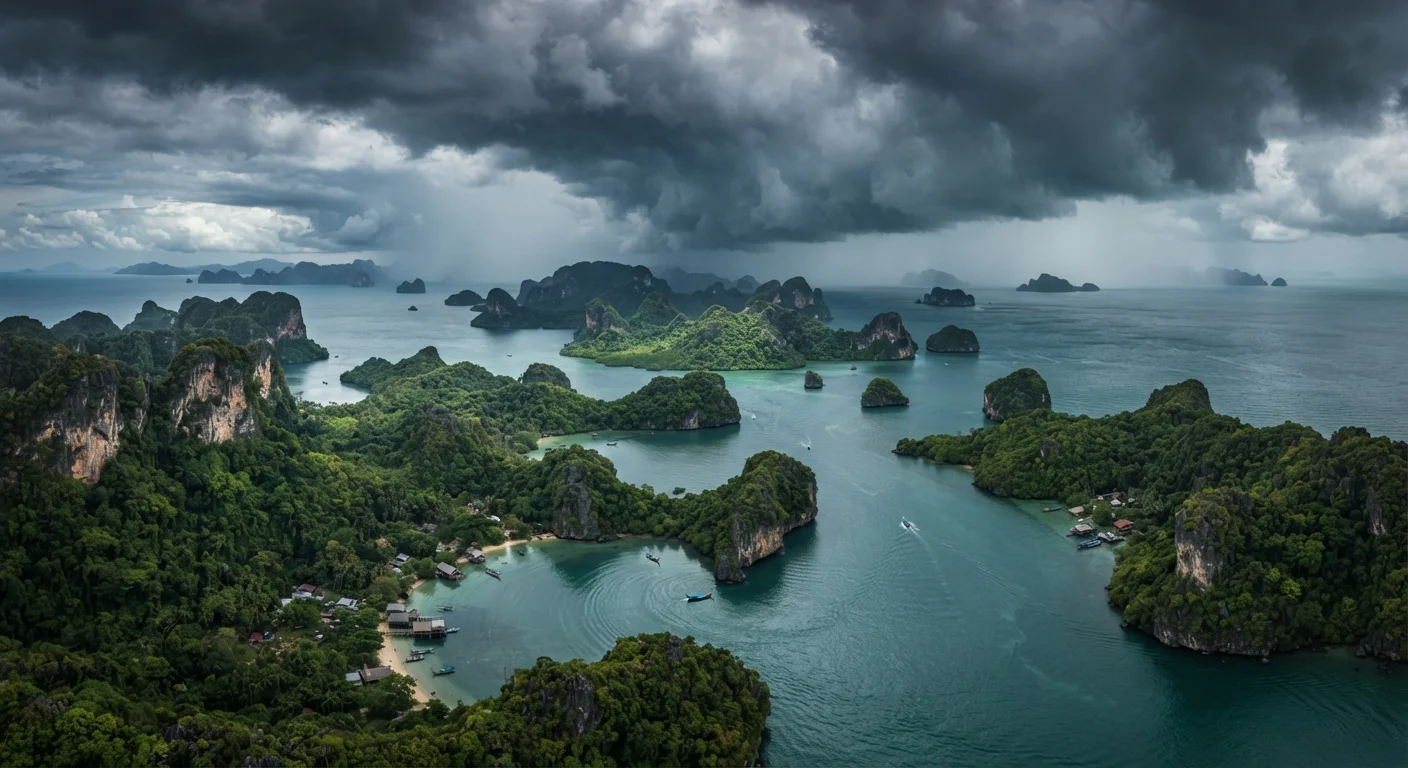
Why 'Off-Season' Doesn't Mean the Same Thing Everywhere
Travelers from the US often arrive in Southeast Asia with a mental model borrowed from home: off-season equals cold, gray, and closed. That framework breaks down fast when you're in a region where temperatures rarely dip below 70°F and the defining variable is rain, not cold. Here, off-season is a monsoon concept, and the monsoon doesn't follow a tidy, region-wide schedule.
The southwest monsoon sweeps up from the Indian Ocean and drenches western-facing coastlines-think Phuket and the Andaman Sea-from roughly May through October. Meanwhile, the northeast monsoon, arriving later in the year, dumps rain on eastern coasts and the South China Sea side. That's why Koh Samui gets hammered in November and December while Phuket is enjoying its driest months. Vietnam flips the script again: the south is dry while the central and northern regions are wet, and vice versa a few months later.
The upshot: there is no single off-season across Southeast Asia. There's always somewhere in the region having its best weather-the challenge is knowing which destination aligns with your travel window.
Monsoon Timing Varies Year to Year
Published seasonal guides give useful averages, but actual monsoon onset and intensity shift from year to year. A destination's 'dry season' might experience an unusually wet spell, or the rainy season may start late. Use historical averages as a planning baseline, but build flexibility into your itinerary where possible.
Country-by-Country Reality Check
Thailand is the clearest case of split-coast seasonality. The west coast (Krabi, Phuket, Koh Lanta) peaks November through April and goes soggy from May to October. The east coast (Koh Samui, Koh Phangan) runs the opposite way, with its roughest weather from October through December. For more detail on how this plays out in practice, see why travelers keep misjudging Thailand's rainy season.
Vietnam stretches across 1,000 miles of latitude, so seasons shift as you move. Hanoi and the north have a cool, dry winter (November-April) and a hot, rainy summer. Ho Chi Minh City and the south are driest from December through April. The central coast around Hoi An and Da Nang faces its heaviest rains from October through January.
Indonesia is similarly fragmented. Bali's wet season runs roughly November through March, but islands like Lombok and the Gili Islands can differ, and eastern islands like Flores operate on an entirely separate rainfall calendar.
Cambodia and Laos share a more straightforward pattern: a dry season from November through April and a wet season from May through October. The Mekong flood season (August-October) brings dramatic river scenery but can also affect road access in rural areas.
~1,000 mi
Length of Vietnam's coastline driving its seasonal variation
Vietnam's north-to-south extent means monsoon timing and intensity differ substantially between Hanoi and Ho Chi Minh City.
2
Distinct monsoon systems affecting Southeast Asia
The southwest and northeast monsoon systems arrive at different times and affect different coastlines, creating the region's complex seasonal mosaic.
3-5 hrs
Typical duration of a daily monsoon downpour
In many Southeast Asian destinations, rain during wet season is concentrated in afternoon bursts rather than spread throughout the day.
What Monsoon Rain Actually Looks Like on the Ground
One of the most persistent misconceptions is that monsoon season means constant, all-day rain. In most of Southeast Asia, that's not the reality. The typical pattern is a hot, humid morning, building clouds through the afternoon, and a heavy downpour for one to three hours in the late afternoon or early evening. By nightfall, skies often clear.
For a traveler with flexibility, this is manageable: visit temples and outdoor sites in the morning, eat lunch somewhere sheltered, and wait out the afternoon storm before heading back out. It's not ideal, but it's workable-and the landscape is noticeably lush and green in a way that the dry season can't match.
Where conditions become genuinely disruptive is during the peak of the northeast monsoon on exposed coastlines, or during tropical storm season (roughly June through November in the western Pacific). Rough seas can cancel island ferries for days at a time. If your trip depends on reaching specific islands or doing water-based activities like diving, the weather risk during true off-season is real and worth factoring into your plans.
Check Ferry and Dive Operator Schedules
During off-season months, island ferry services and dive operators frequently reduce schedules or suspend operations due to sea conditions. Before committing to an island-dependent itinerary, contact operators directly or check recent traveler reports to confirm services will be running during your travel dates.
How to Use This Information When Planning
The most practical takeaway is to start your planning with weather, not destinations. Decide when you can travel, then identify which parts of Southeast Asia align with favorable conditions for that window-rather than picking a dream destination and hoping the weather cooperates.
Shoulder season-the months bracketing the full monsoon-often offers the best balance. Early May or late October in Thailand's west, for example, can deliver mostly dry days with smaller crowds and lower prices than the January peak. For a fuller look at the tradeoffs involved, our planning around peak season guide walks through the honest compromises shoulder-season travel involves.
A few practical steps: cross-reference destination-specific rainfall averages (not just seasonal labels), check whether your planned activities-diving, trekking, island-hopping-are feasible in wet conditions, and always verify current travel conditions through your government's official travel advisory service before booking. Weather patterns are broadly predictable, but individual years vary.
This article provides general travel information only. Always verify visa requirements, safety advisories, and local conditions through official government sources before traveling.
Frequently Asked Questions
There is no single off-season for all of Southeast Asia. Each country and region follows its own monsoon calendar. Thailand's west coast (Phuket) is wettest from May to October, while the east coast (Koh Samui) peaks in November and December. Vietnam's seasons run in the opposite direction between its north and south.
For many travelers, yes. Rainfall is often concentrated in afternoon downpours rather than all-day drizzle, leaving mornings clear. Prices drop, crowds thin, and landscapes turn vibrantly green. The experience depends heavily on your destination and your flexibility.
Shoulder season falls between the peak dry period and the full monsoon-typically April to May and October to November depending on the country. Conditions are often reasonable, prices are lower than peak, and attractions are less crowded. See our <a href="/travel-smarter/trip-planning-essentials/planning-around-peak-season-crowds-costs-and-honest-tradeoffs">guide to peak-season tradeoffs</a> for a fuller breakdown.
Singapore and parts of Malaysia receive rainfall year-round but rarely experience a single prolonged dry or wet season as sharply defined as in Thailand or Vietnam. Cambodia and Laos have more predictable dry seasons running roughly November through April.
Generally yes, though not universally. Major urban hubs like Bangkok or Kuala Lumpur remain busy year-round for business travel, so discounts are less dramatic there. Beach and resort destinations tend to see more pronounced price swings between peak and off-season.
The content provided on our blog site traverses numerous categories, offering readers valuable and practical information. Readers can use the editorial team’s research and data to gain more insights into their topics of interest. However, they are requested not to treat the articles as conclusive. The website team cannot be held responsible for differences in data or inaccuracies found across other platforms. Please also note that the site might also miss out on various schemes and offers available that the readers may find more beneficial than the ones we cover.