

Where EV Costs Actually Drop
The clearest savings from switching to an electric vehicle come from two sources: energy and routine maintenance. On the energy side, the US Department of Energy has consistently found that the per-mile cost of electricity is lower than gasoline for most American drivers - though the exact gap depends on your utility rates and how much you rely on home charging versus public networks.
On maintenance, the mechanical case is straightforward. EVs have far fewer moving parts than internal combustion engines. There are no oil changes, no spark plugs, no timing belts, and typically simpler or absent transmission systems. Regenerative braking - where the motor slows the car and recovers energy - also reduces wear on brake pads, extending their lifespan meaningfully. For drivers who put high annual mileage on a vehicle, these savings compound over time.
Staying on top of maintenance across a vehicle's lifetime matters for any car, but EV owners have fewer scheduled services to track - which reduces both the frequency and overall cost of shop visits.
~40%
Lower per-mile energy cost vs. gasoline (average)
The US Department of Energy's Alternative Fuels Data Center estimates electricity costs roughly 40% less per mile than gasoline for average US drivers, though local rates vary significantly.
$0
Oil changes required over EV lifetime
Electric motors have no engine oil to change - eliminating one of the most frequent recurring maintenance costs for gas vehicle owners.
8 years / 100K mi
Federal minimum EV battery warranty
US federal regulations require automakers to warrant EV battery packs for at least eight years or 100,000 miles, whichever comes first.
~25% higher
Average EV insurance premium vs. comparable gas vehicle
Insurance industry analyses have found EV premiums averaging notably higher than equivalent gas models, driven by repair costs and parts availability.
Costs That Remain - or Get More Complex
Several major ownership expenses don't shrink when you go electric, and a few can actually increase.
Insurance
EV insurance premiums run higher than comparable gas vehicles in most markets. Repair costs drive this: EV body panels, battery enclosures, and sensor arrays are expensive to fix, and the specialized labor pool remains smaller than for conventional vehicles. Drivers switching from a mid-size sedan to an equivalently sized EV should budget for a meaningful premium increase.
Depreciation
Depreciation is the single largest cost component for most vehicle owners, and EVs are not immune. Some EV models have depreciated quickly as technology advances and newer long-range options enter the market. This is a real cost even when it's invisible - you're losing money each year you own the vehicle. The true cost of owning any vehicle includes depreciation, and EV buyers should model this before assuming they're saving money.
Tires and Registration
EVs are heavier than equivalent gas vehicles due to battery packs, which accelerates tire wear. Registration fees in some states factor in vehicle weight or include EV-specific surcharges intended to offset reduced fuel tax revenue.
Model Your Specific Charging Situation First
Before assuming EV ownership will save you money, calculate what your actual charging setup will look like. If you have reliable home charging access and relatively low electricity rates, the economics are usually favorable. If you'll depend heavily on public fast chargers, run the per-mile math for those rates against your current fuel costs - the gap may be smaller than expected.
The Battery: A Long-Term Variable
Battery longevity is a legitimate cost consideration, not just a marketing anxiety. Most manufacturers warrant the battery for eight years or 100,000 miles, which provides meaningful coverage. In practice, many EV batteries degrade gradually rather than failing outright - losing some range over years of use rather than requiring sudden replacement.
That said, out-of-warranty battery replacement is expensive. Depending on pack size and model, costs can range from several thousand dollars to well over $15,000. Buyers planning to hold a vehicle long-term - as explored in our article on the financial case for keeping a car past 100,000 miles - need to factor this potential expense into their planning horizon.
Charging behavior affects battery health. Routinely charging to 100% or allowing deep discharges accelerates degradation faster than maintaining a charge between roughly 20% and 80%, according to general guidance from battery researchers and automaker documentation. Consult your vehicle's owner's manual for model-specific recommendations.
Charging Access: A Hidden Cost Variable
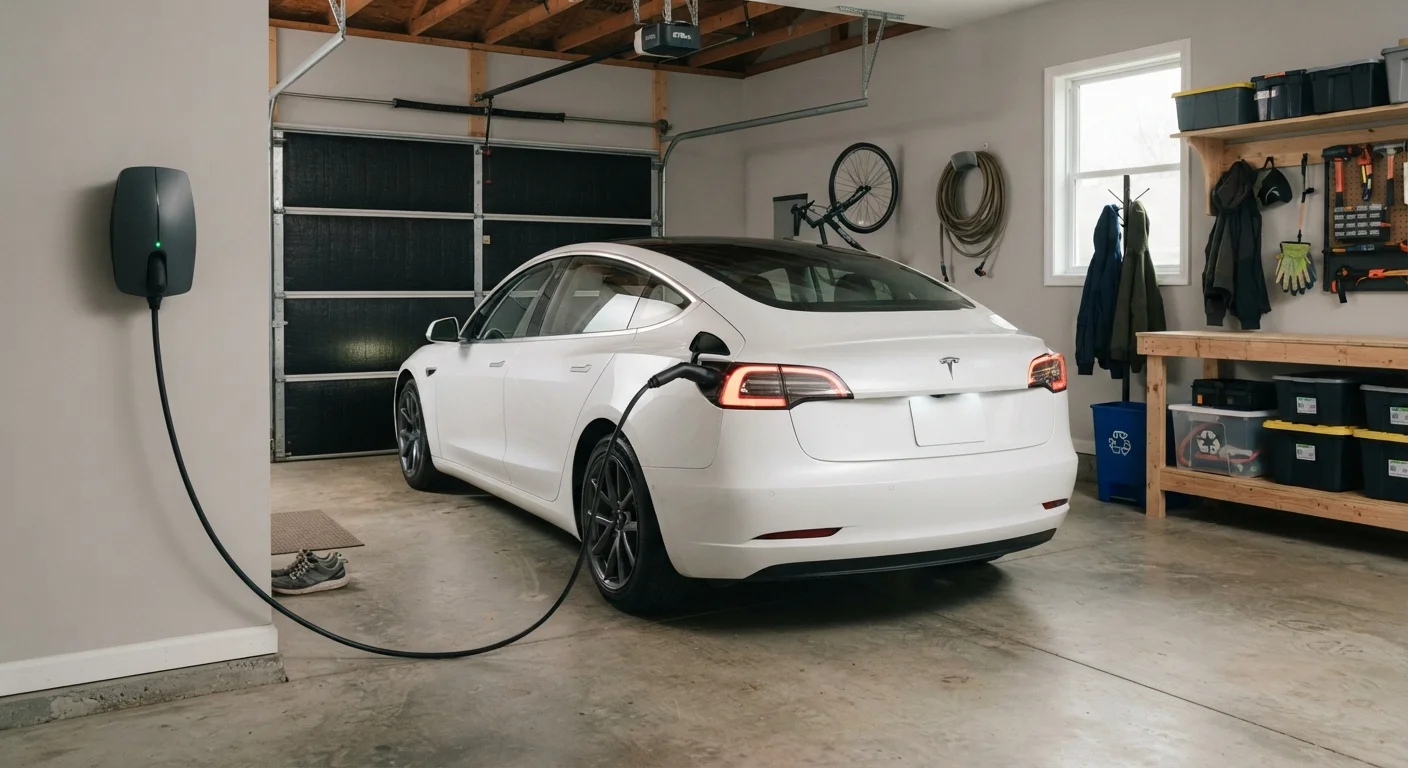
Home charging is where EV economics work best. Charging overnight on standard household current (Level 2 with a dedicated outlet) at off-peak electricity rates minimizes per-mile energy costs. Drivers without reliable home charging - those in apartments, shared housing, or areas with limited installation options - face a different math entirely.
Public DC fast chargers are more expensive per kilowatt-hour than home electricity, and pricing structures vary widely by network and location. In some scenarios, heavy reliance on fast chargers can push EV per-mile energy costs close to - or above - what a fuel-efficient gas vehicle would cost. This is a planning consideration that deserves attention before purchase, not after.
For a fuller picture of how EV running costs compare to sedans, SUVs, and trucks, see our breakdown of ownership costs by vehicle type.
This article is for general informational purposes only. Costs and conditions vary by vehicle, location, and individual circumstances. Consult qualified professionals for decisions specific to your financial situation.
Frequently Asked Questions
In most US markets, EVs cost less per mile for energy than gasoline vehicles, and routine maintenance tends to be cheaper. However, higher purchase prices, elevated insurance premiums, and potential battery costs mean total ownership costs vary significantly by driver and location.
Yes, though less of it. EVs skip oil changes, spark plugs, and some transmission service, but still require tire rotations, brake fluid checks, cabin air filter replacements, and general inspections. Brake wear is often reduced thanks to regenerative braking systems.
Battery replacement costs vary widely by vehicle and pack size, but estimates generally range from several thousand to over $15,000. Most manufacturers offer battery warranties of eight years or 100,000 miles, which provides some protection for early adopters.
Generally, yes. Home charging using off-peak electricity rates is typically the most cost-effective option. DC fast chargers at public stations charge a premium - sometimes approaching or exceeding per-mile gas costs depending on network pricing and local utility rates.
EVs tend to have higher repair costs due to specialized components, advanced driver-assistance systems, and a smaller pool of qualified repair technicians. These factors push average premiums higher compared to equivalent gas-powered vehicles.
Depreciation varies by model, but some EVs have historically depreciated quickly as newer models with improved range enter the market. This is a meaningful ownership cost that buyers should factor into total cost comparisons.
The content provided on our blog site traverses numerous categories, offering readers valuable and practical information. Readers can use the editorial team’s research and data to gain more insights into their topics of interest. However, they are requested not to treat the articles as conclusive. The website team cannot be held responsible for differences in data or inaccuracies found across other platforms. Please also note that the site might also miss out on various schemes and offers available that the readers may find more beneficial than the ones we cover.