

Why the Sticker Price Misleads Most Buyers
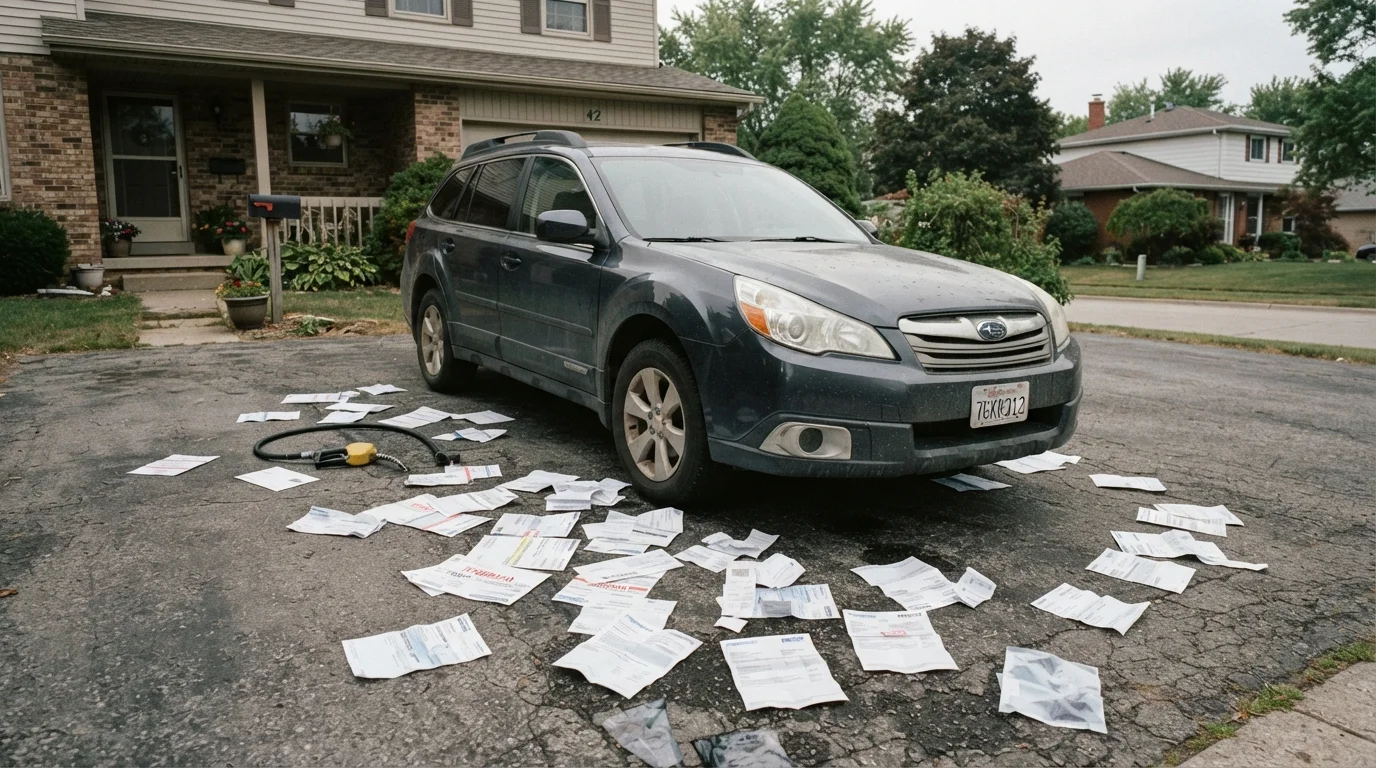
The window sticker shows the manufacturer's suggested retail price. It does not show what you will spend over the next five to seven years. Most buyers mentally anchor to that number - and the monthly payment that follows - while ignoring the six other expense categories that will quietly drain their budget every year they own the vehicle.
This framing error has real consequences. A driver who budgets only for a loan payment and gas may be spending $3,000-$5,000 more per year than they realize once insurance, depreciation, maintenance, and fees are counted. Understanding the full picture before purchase - or right now, mid-ownership - is the first step toward making smarter decisions. If you want to understand the terminology lenders and dealers use, start with our car ownership cost glossary.
The Seven Cost Categories Every Owner Should Track
Breaking total cost of ownership into categories makes the math manageable and reveals where your specific situation might be costing you the most.
1. Depreciation
Depreciation is the gap between what you paid and what the vehicle is worth today. New vehicles commonly lose 15-25% of value in year one and 40-60% over five years, according to data aggregated by automotive valuation firms. It is the largest single cost for most owners - and the one least likely to appear in a household budget because no check is written.
2. Financing Interest
On a $35,000 vehicle financed at 7% over 60 months, interest alone adds roughly $6,600 to the total outlay. Longer loan terms lower monthly payments but increase cumulative interest paid - a trade-off worth calculating explicitly before signing.
3. Insurance
Premiums depend on your state, driving record, coverage level, vehicle make, and even credit score in most states. The national average for full-coverage auto insurance has climbed steadily and now frequently exceeds $1,500-$2,000 per year for a single driver. Comprehensive and collision coverage - typically required by lenders - add significantly to that figure.
4. Fuel
Annual fuel costs depend on miles driven, local gas prices, and your vehicle's fuel economy. At 15,000 miles per year and 25 MPG, a driver paying $3.50 per gallon spends about $2,100 annually on gas alone.
5. Maintenance and Tires
Routine maintenance - oil changes, filters, brake service, tire rotations - averages $500-$1,200 per year for most vehicles. Tires add another $600-$1,000 every three to five years depending on vehicle size. Skipping scheduled service typically converts lower short-term costs into higher long-term repair bills. See essential car maintenance guidance for what to stay on top of.
6. Repairs
Unexpected repairs are harder to predict but should be budgeted as an average annual figure. Older vehicles out of warranty may average $500-$1,500 in unplanned repair costs annually, though individual years can vary widely.
7. Taxes, Registration, and Fees
State registration fees, annual property taxes on vehicles (in states that levy them), title fees, and emissions inspection costs vary considerably by location. Collectively, they often total $200-$800 per year.
$10,000+
Average annual new vehicle ownership cost
AAA's Your Driving Costs study consistently finds total annual costs exceeding $10,000 when depreciation, insurance, fuel, and fees are all counted.
15-25%
New vehicle value lost in year one
Automotive valuation data shows new cars typically shed 15-25% of their purchase price within the first 12 months of ownership.
$6,600
Interest on a typical 60-month auto loan
A $35,000 vehicle financed at 7% APR over five years generates approximately $6,600 in total interest payments over the loan term.
~$2,100
Annual fuel cost at average driving and pricing
Estimated for a driver covering 15,000 miles per year in a vehicle rated 25 MPG at a fuel price of $3.50 per gallon.
How to Calculate Your Own Annual Cost
Add up 12 months of insurance premiums, fuel receipts, maintenance invoices, and loan interest paid. Then estimate your annual depreciation by comparing the current market value of your vehicle to what it was worth 12 months ago. Divide all repair and tire costs into an annual average based on your ownership history.
That sum - often surprising the first time you run it - is your true annual cost of ownership. Most drivers find it is meaningfully higher than their loan payment alone suggested. Our annual car cost audit checklist walks through this process category by category so nothing gets missed.
Run Your Numbers Once a Year
Set a calendar reminder to tally all vehicle costs at the same time each year - ideally when your registration renews. Comparing year-over-year totals quickly reveals whether aging repair costs are offsetting the savings from a paid-off loan, or whether a change in insurance rates has shifted your cost profile.
Where Costs Can Be Reduced - and Where They Cannot
Some costs are fixed once you drive off the lot. Depreciation on a new vehicle, for instance, cannot be reversed. But several cost levers remain in your control throughout ownership.
- Loan terms: Choosing a shorter loan term reduces total interest paid, even if the monthly payment is higher.
- Insurance coverage: As a vehicle ages and its market value drops, reassessing whether full-coverage insurance is still cost-effective is worth doing annually.
- Maintenance timing: Following manufacturer service intervals protects against expensive failures and keeps warranty coverage valid.
- Holding period: Selling or trading in frequently resets depreciation at its steepest point. Drivers who hold vehicles well past the loan payoff date often see their annual cost drop substantially.
For a detailed look at where vehicle owners most commonly leave money on the table, see where car owners lose money without realizing it. And if you're weighing a new purchase, the new vs. used financial comparison lays out how depreciation and financing interact across both paths.
Frequently Asked Questions
Total cost of ownership includes depreciation, loan interest, insurance, fuel, routine maintenance, tires, unexpected repairs, registration and title fees, state and local taxes, and incidental costs like parking or tolls. Most drivers undercount by focusing only on the monthly loan payment and fuel.
According to AAA's annual Your Driving Costs study, the average annual cost to own and operate a new vehicle in the US has exceeded $10,000 in recent years when all expense categories are counted. The exact figure varies by vehicle type, mileage, and location.
Depreciation is the loss in market value your vehicle experiences over time. A new car can lose 15-25% of its value in the first year alone. Because this loss is not tied to a monthly bill, many owners overlook it entirely - but it is typically the largest single cost of ownership.
Generally, yes. Once a loan is paid off and depreciation slows, annual costs drop significantly. The key trade-off is staying current on maintenance so repair costs don't offset the savings. Our guide on <a href="/car-ownership-guide/car-costs-savings/long-term-vehicle-ownership-the-financial-case-for-keeping-a-car-past-100000-miles">keeping a car past 100,000 miles</a> covers this in detail.
Significantly. Trucks and larger SUVs typically carry higher insurance, fuel, and financing costs than compact sedans. EVs may lower fuel and maintenance expenses but can carry higher purchase prices and insurance premiums. See our breakdown of <a href="/car-ownership-guide/car-costs-savings/car-ownership-costs-by-vehicle-type-sedans-suvs-trucks-and-evs-compared">ownership costs by vehicle type</a> for specifics.
Documentation fees, dealer-installed add-ons, financing markups, and destination charges are common at the point of sale. These can add hundreds to several thousand dollars to the transaction price. Learn more in our article on <a href="/car-ownership-guide/car-costs-savings/hidden-fees-in-car-transactions-that-inflate-the-final-price">hidden fees in car transactions</a>.
The content provided on our blog site traverses numerous categories, offering readers valuable and practical information. Readers can use the editorial team’s research and data to gain more insights into their topics of interest. However, they are requested not to treat the articles as conclusive. The website team cannot be held responsible for differences in data or inaccuracies found across other platforms. Please also note that the site might also miss out on various schemes and offers available that the readers may find more beneficial than the ones we cover.