

Summary
28 items · 30-60 minutes
Why a Car Cost Audit Is Worth Your Time
The average American household spends more on transportation than on any budget category except housing, according to the Bureau of Labor Statistics. Yet most drivers can only name two or three of their recurring car expenses off the top of their head. The rest get lost inside bank statements, auto-pay queues, and receipts nobody keeps.
This checklist changes that. Working through it once a year gives you a verified, line-by-line picture of what your vehicle actually costs - not what you estimate it costs. That number is almost always higher, and often higher in places that are fixable. For a deeper look at how the full ownership equation works, see how the full cost of ownership breaks down.
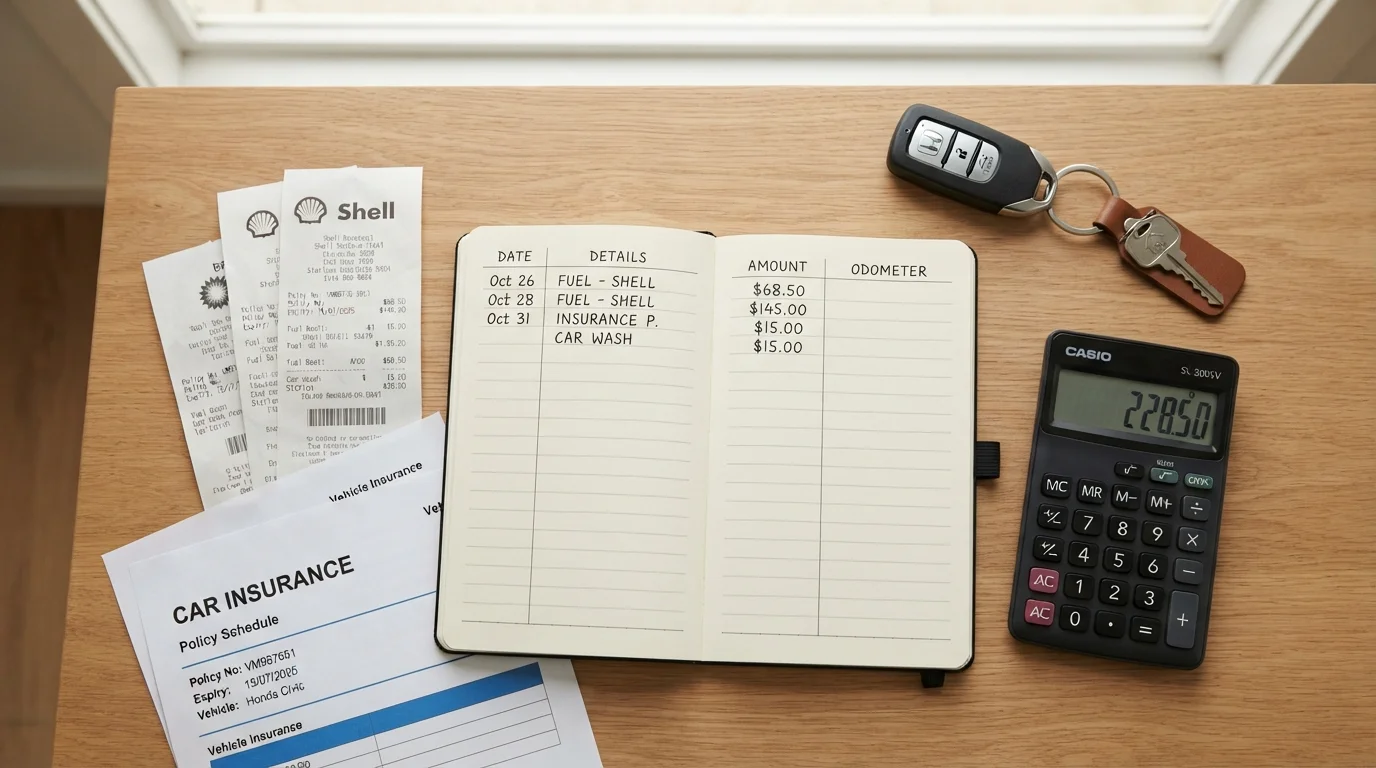
Set aside 30-60 minutes, pull together 12 months of statements, and work through each group below. Use a spreadsheet or even a notebook - the format matters less than the completeness.
12 Months of Bank and Credit Card Statements
The primary source for verifying actual spend across every expense category.
Spreadsheet (or Paper Ledger)
Records each line item and calculates category totals and a grand annual sum.
Vehicle Valuation Tool
Used to look up current market value of your vehicle for estimating annual depreciation.
Fuel Tracking App or Gas Station Receipts
Provides a verifiable fuel-spend total rather than a rough estimate.
Insurance Declarations Page
Confirms exact annual premium and coverage details for your audit record.
The Full Audit Checklist
Work through each group in order. Record the annual total for every line item you can confirm. Leave nothing as a guess - if you can't verify an amount, flag it for follow-up rather than estimating.
Before You Start: Gather Your Documents
Fixed Monthly Costs
Variable Operating Costs
Government Fees and Taxes
Subscriptions and Connected Services
Depreciation and Opportunity Cost
Don't Estimate - Verify
The most common audit error is filling gaps with rough guesses rather than confirmed figures. An unverified estimate in one category can make your total look reasonable even when a real problem is hiding elsewhere. If you can't find a receipt or statement, check directly with your insurer, lender, or state DMV before recording a number.
When you're done, add every confirmed figure into a single annual total. Compare it against your household budget allocation for transportation. The gap between those two numbers - if there is one - is where this audit pays for itself. For context on the financial blind spots this process tends to surface, see where car owners most commonly lose money without noticing.
What to Do With Your Results
Once you have your verified annual total, a few follow-up steps turn data into action.
- Benchmark against your income. Financial planning guidance generally suggests keeping total transportation costs - including car payment, insurance, fuel, and maintenance - below 15-20% of take-home pay. Your audit number gives you a precise percentage to work with.
- Identify the biggest surprise line items. Most drivers find that depreciation, parking, or cumulative small fees are larger than expected. Knowing where the money goes is the prerequisite for reducing it.
- Check for patterns in maintenance spend. If repair costs are climbing year over year, that's a signal worth tracking. The guide to managing maintenance costs over a vehicle's lifetime outlines how to budget for this category more predictably.
- Review subscriptions tied to your vehicle. Connected-car services, satellite radio, roadside assistance, and manufacturer app plans are easy to forget - and easy to cancel if unused. These recurring charges behave much like the subscription creep that drains household budgets broadly.
- Store your results. Save this year's totals so next year's audit has a baseline to compare against. A simple log - even a dated spreadsheet tab - is enough. Pair it with a vehicle maintenance log for a complete ownership record.
Running this audit alongside a broader financial review amplifies its value. If you do a year-end savings audit, your verified car cost total plugs directly into that process.
This article provides general financial information for educational purposes only and is not personalized financial advice. Consult a qualified financial professional for guidance specific to your situation.
The content provided on our blog site traverses numerous categories, offering readers valuable and practical information. Readers can use the editorial team’s research and data to gain more insights into their topics of interest. However, they are requested not to treat the articles as conclusive. The website team cannot be held responsible for differences in data or inaccuracies found across other platforms. Please also note that the site might also miss out on various schemes and offers available that the readers may find more beneficial than the ones we cover.