

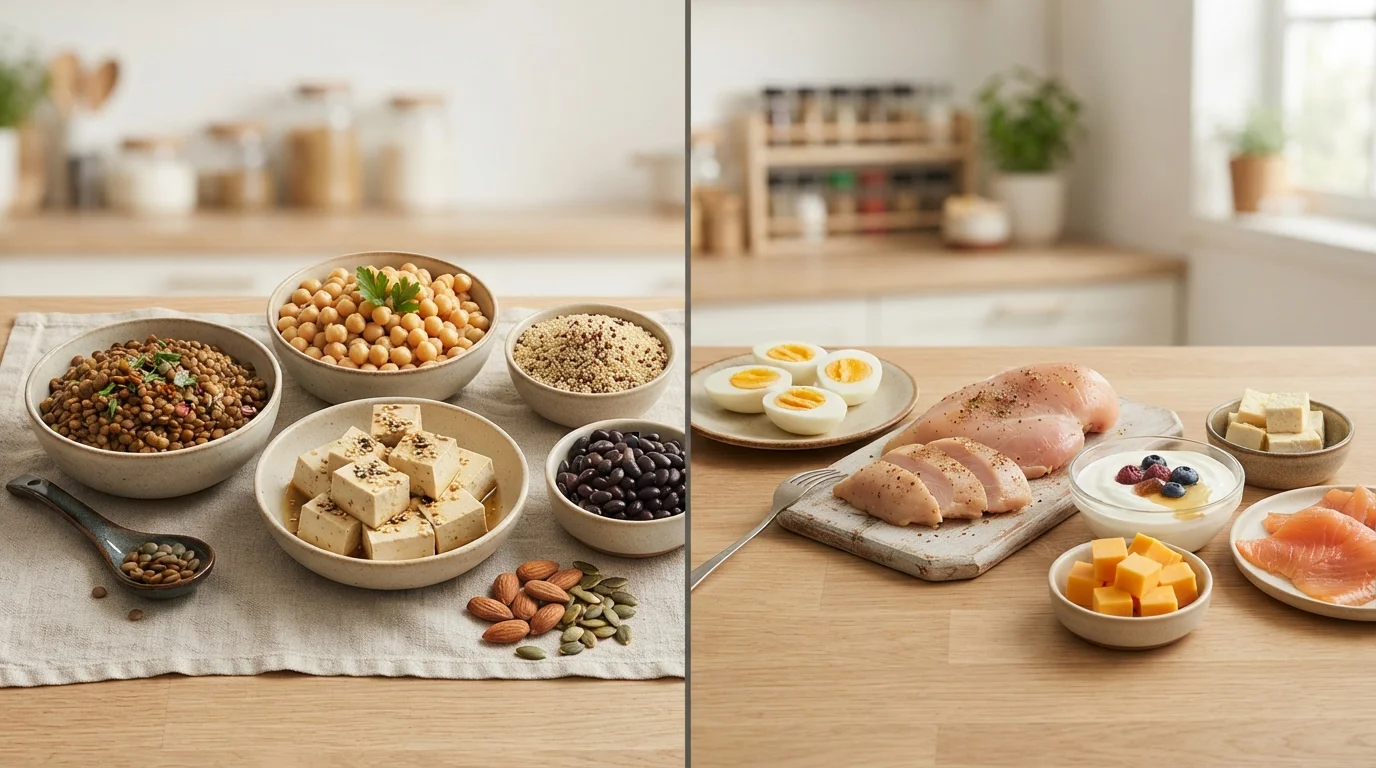
Option A
Plant-Based Protein
The fiber-rich, environmentally lighter option with variable completeness.
Best for: Those pursuing flexible or vegetarian diets who are willing to combine food sources for complete amino acid coverage.
Option B
Animal Protein
The nutritionally complete, highly bioavailable conventional choice.
Best for: Individuals seeking straightforward, complete protein sources with consistent amino acid profiles and high digestibility.
What Makes a Protein Source 'Good'?
Protein quality is assessed by two core criteria: amino acid profile and digestibility. Proteins are made from 20 amino acids, nine of which are essential - meaning the body cannot synthesize them and must obtain them through food. A protein source containing all nine in adequate ratios is called complete.
The most widely used scientific measure of protein quality is the DIAAS, developed by the Food and Agriculture Organization. It accounts for both amino acid content and how efficiently the gut absorbs those amino acids. Animal proteins - eggs, milk, beef, and fish - typically score at or above 1.0, indicating high quality. Most isolated plant proteins score lower, reflecting either an amino acid limitation or reduced digestibility.
That said, protein quality is only one dimension. The food matrix surrounding a protein source - its fiber content, fat type, vitamins, and minerals - significantly shapes its overall effect on health. Evaluating protein in isolation misses much of the real-world picture. For a broader view of how food composition affects health outcomes, see our comparison of whole and processed foods.
Amino Acid Profiles: Complete vs. Complementary
Animal proteins - including meat, poultry, seafood, eggs, and dairy - are consistently complete. Their amino acid ratios closely match human tissue needs, which is why they score highly on the DIAAS. Leucine, an amino acid particularly important for stimulating muscle protein synthesis, is abundant in dairy, eggs, and meat.
Most plant proteins are incomplete on their own. Legumes tend to be low in methionine; grains tend to be low in lysine. The long-standing dietary strategy of complementary combining - eating rice with beans, for example - offsets these gaps. Importantly, the amino acids do not need to be consumed in the same meal; the body maintains a short-term pool of amino acids throughout the day.
Soy is a notable exception among plant sources: it is considered a complete protein with a DIAAS close to many animal foods, making it a nutritionally efficient plant option. Quinoa and buckwheat also contain all essential amino acids, though in smaller quantities than soy.
| Criterion | Plant-Based Protein | Animal Protein |
|---|---|---|
| Amino acid completeness | Usually incomplete; soy is an exception | Complete in all essential amino acids |
| Digestibility (typical range) | 70-90% (varies by preparation) | 90-99% |
| DIAAS score (typical) | 0.5-0.9 (soy: ~1.0) | 1.0-1.2+ |
| Fiber content | High - legumes, grains, seeds | Negligible |
| Saturated fat | Generally low | Variable; higher in red meat and full-fat dairy |
| Iron type | Non-heme iron (lower absorption) | Heme iron (higher absorption) |
| Vitamin B12 | Absent (supplementation needed for vegans) | Naturally present |
| Cost (general) | Generally lower (legumes, lentils) | Variable; can be higher per gram |
Digestibility and Bioavailability
Even when a protein contains the right amino acids, the body must be able to extract and absorb them. Animal proteins are generally digested at rates of 90-99%, while many plant proteins fall in the 70-90% range. This difference is partly due to antinutrients - compounds such as phytates, tannins, and protease inhibitors present in legumes, grains, and seeds that can reduce protein absorption.
Cooking substantially reduces most antinutrients. Soaking legumes before cooking, fermenting soy into tempeh or miso, and sprouting grains further improves digestibility. These preparation steps are worth understanding if plant proteins form a large share of your diet.
A Note on Protein Requirements
The US Recommended Dietary Allowance (RDA) for protein is 0.8 grams per kilogram of body weight for sedentary adults - a minimum, not an optimal target for everyone. Older adults, those recovering from illness, and people engaged in regular resistance training may benefit from higher intakes. A registered dietitian can help determine an appropriate target for your individual situation.
Fiber, while not a protein concern in itself, also influences how the gut processes food. Plant protein sources are typically high in fiber, which has independent cardiovascular and metabolic benefits - a nutritional advantage not present in most animal proteins.
Health Associations and What the Evidence Shows
Epidemiological research - studies tracking populations over time - consistently associates diets higher in red and processed meats with elevated risks for certain cancers and cardiovascular disease. The World Health Organization classifies processed meat as a Group 1 carcinogen based on this body of evidence. Unprocessed red meat carries a lower, though still observed, association.
Conversely, fish and poultry show neutral to favorable associations in most large cohort studies. Eggs and dairy present a more nuanced picture that varies by the health outcome studied and the individual's overall dietary pattern.
Plant-based protein diets, when well-constructed, are linked to lower rates of type 2 diabetes, hypertension, and certain cancers. However, a poorly planned plant-based diet - high in refined carbohydrates and low in variety - does not automatically confer these benefits. The quality and diversity of the entire diet matter more than any single nutrient decision.
~70%
Share of US adults meeting protein RDA
National Health and Nutrition Examination Survey (NHANES) data indicate the majority of US adults meet or exceed the protein RDA, suggesting protein deficiency is uncommon in the general population.
~1.0
DIAAS score for whole egg protein
The Food and Agriculture Organization's DIAAS framework rates whole egg protein at approximately 1.0, making it a benchmark reference protein in nutrition research.
2x
Heme vs. non-heme iron absorption difference
Research indicates heme iron from animal foods is absorbed at roughly 15-35%, while non-heme iron from plants is absorbed at approximately 2-20%, depending on dietary cofactors like vitamin C.
This article provides general nutrition information and education. It is not medical or dietary advice. Consult a registered dietitian or qualified healthcare provider before making significant changes to your diet, especially if you have a chronic health condition.
The content provided on our blog site traverses numerous categories, offering readers valuable and practical information. Readers can use the editorial team’s research and data to gain more insights into their topics of interest. However, they are requested not to treat the articles as conclusive. The website team cannot be held responsible for differences in data or inaccuracies found across other platforms. Please also note that the site might also miss out on various schemes and offers available that the readers may find more beneficial than the ones we cover.