

Why the Nutrition Facts Panel Exists
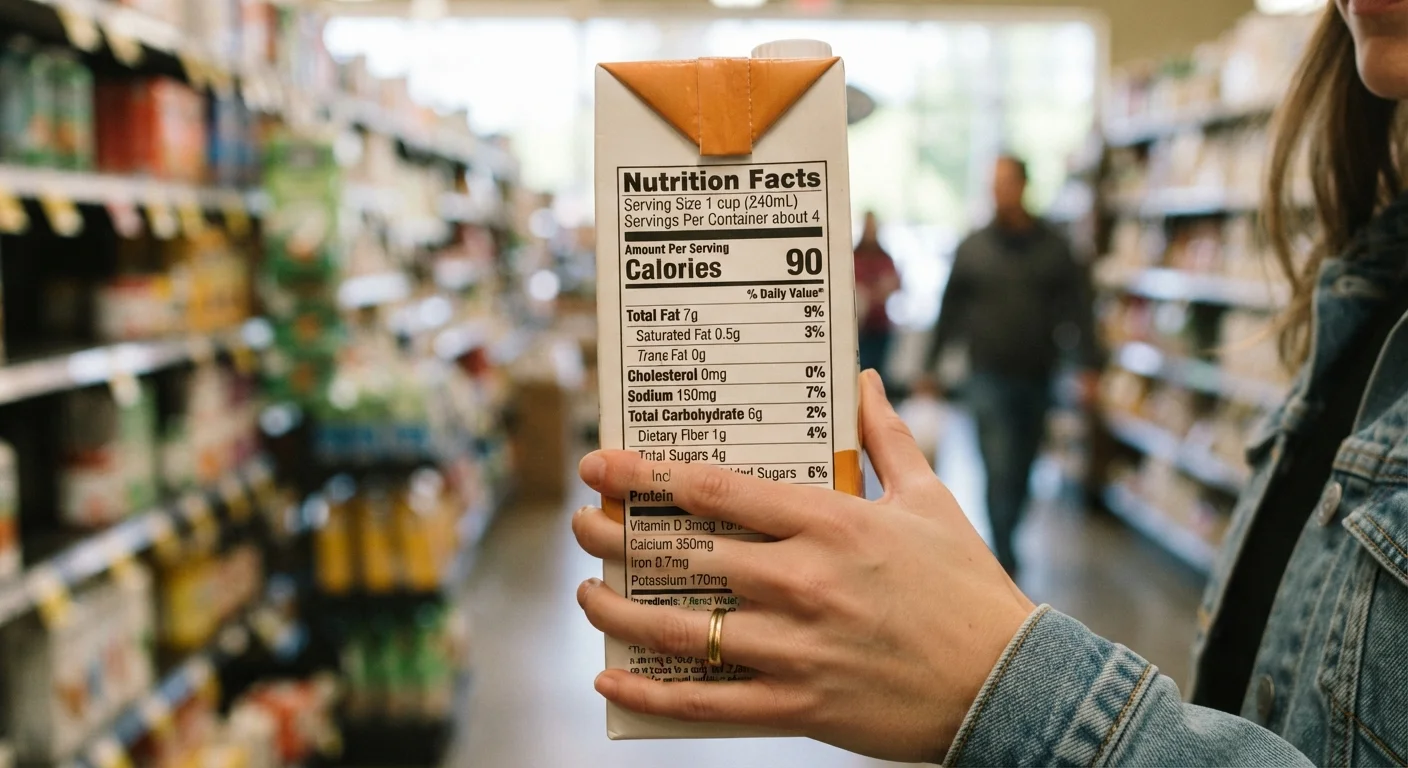
The Nutrition Facts panel is a federal requirement governed by the FDA. Its current format - updated in 2020 - reflects decades of nutritional research and is designed to give consumers standardized, comparable data across every packaged food. Unlike front-of-package claims such as "natural," "light," or "made with whole grains," the panel itself is tightly regulated. Learning to read it directly cuts through marketing language that can otherwise distort your perception of a food's actual composition. For a deeper look at why calorie counts alone often mislead, see what nutrient density really means.
What you will need
Step-by-Step: Reading Every Section of the Label
Work through the panel from top to bottom - each section builds on the one above it.
Start with Serving Size and Servings Per Container
Every figure on the label - calories, grams of fat, milligrams of sodium - applies to one serving, not the entire package. The serving size is listed in both a common household measure (e.g., 1 cup) and grams. If you eat two servings, every number doubles. The FDA now requires serving sizes to reflect amounts people typically consume, so a 20 oz soda bottle, for example, is listed as a single serving.
Check the Calorie Count in Context
Calories represent the energy one serving provides. A higher calorie count isn't automatically a problem - it depends on the nutrient quality behind those calories. A handful of nuts and a handful of chips may have similar calorie counts but very different nutritional profiles. Calorie information is most useful as a rough benchmark, not as the single deciding factor.
Scan the Macronutrients: Fat, Carbohydrates, and Protein
Under calories, the panel lists total fat (broken into saturated and trans fat), total carbohydrate (broken into dietary fiber and total sugars), and protein. Pay particular attention to:
- Saturated fat: Current dietary guidelines recommend limiting this; it appears in grams and as a % DV.
- Trans fat: No safe intake level has been established. Aim for as close to zero as possible.
- Dietary fiber: Most US adults fall well short of recommended intake. Look for products contributing a meaningful amount. Fiber intake gaps are widespread and have real health consequences.
- Protein: Listed in grams but without a % DV for most adults.
Distinguish Total Sugars from Added Sugars
Total sugars include both naturally occurring sugars (such as lactose in dairy or fructose in fruit) and added sugars. Added sugars - listed separately and with a % DV - are what current evidence links most clearly to adverse health outcomes when consumed in excess. The FDA defines added sugars as those introduced during processing; they do not include naturally present sugars. For more on the research behind this distinction, see the evidence on added sugar.
Review Sodium and Key Micronutrients
Sodium is listed in milligrams and as a % DV. It's one of the two nutrients - alongside added sugars - that Americans most consistently consume above recommended levels, largely through packaged and restaurant foods. Below sodium, the label is required to list Vitamin D, Calcium, Iron, and Potassium - four nutrients identified as commonly underconsumed. For a broader overview of vitamins and minerals, see our micronutrient reference guide.
Read the Ingredient List
Ingredients are listed in descending order by weight. The first three to five ingredients define what the product is mostly made of. A whole grain listed fifth after several refined starches and sweeteners signals a product that is primarily not whole grain, regardless of front-of-package claims. Look for recognizable, minimally processed ingredients near the top of the list as a general signal of food quality.
Common Confusions and How to Avoid Them
Percent Daily Values are a guide, not a rule. DVs are calibrated to a 2,000-calorie reference diet, which does not match everyone's actual energy needs. Use them to compare products and to identify whether a nutrient contribution is meaningful - not as a personal prescription.
"Zero" doesn't always mean absent. FDA rounding rules allow a product to list 0g of trans fat if it contains less than 0.5g per serving. If partially hydrogenated oils appear in the ingredient list, trace trans fats are present regardless of what the panel shows.
Front-of-package claims require skepticism. Terms like "reduced sodium" or "low fat" have legal definitions, but "clean," "simple," and "wholesome" do not. The ingredient list is a more reliable signal than any claim on the front. Common patterns that derail healthy eating often begin with over-relying on these front-panel claims.
Use the Label to Compare, Not to Judge
The Nutrition Facts panel is most powerful as a comparison tool. When choosing between two similar products, align them side by side and look at serving size, sodium, added sugars, and fiber. Small differences in those four numbers often reflect meaningful differences in overall nutritional quality. No single food needs to be perfect - patterns across your whole diet matter more.
This article is for general informational purposes only and does not constitute medical or dietary advice. Speak with a registered dietitian or qualified healthcare professional for guidance tailored to your individual health needs.
The content provided on our blog site traverses numerous categories, offering readers valuable and practical information. Readers can use the editorial team’s research and data to gain more insights into their topics of interest. However, they are requested not to treat the articles as conclusive. The website team cannot be held responsible for differences in data or inaccuracies found across other platforms. Please also note that the site might also miss out on various schemes and offers available that the readers may find more beneficial than the ones we cover.