

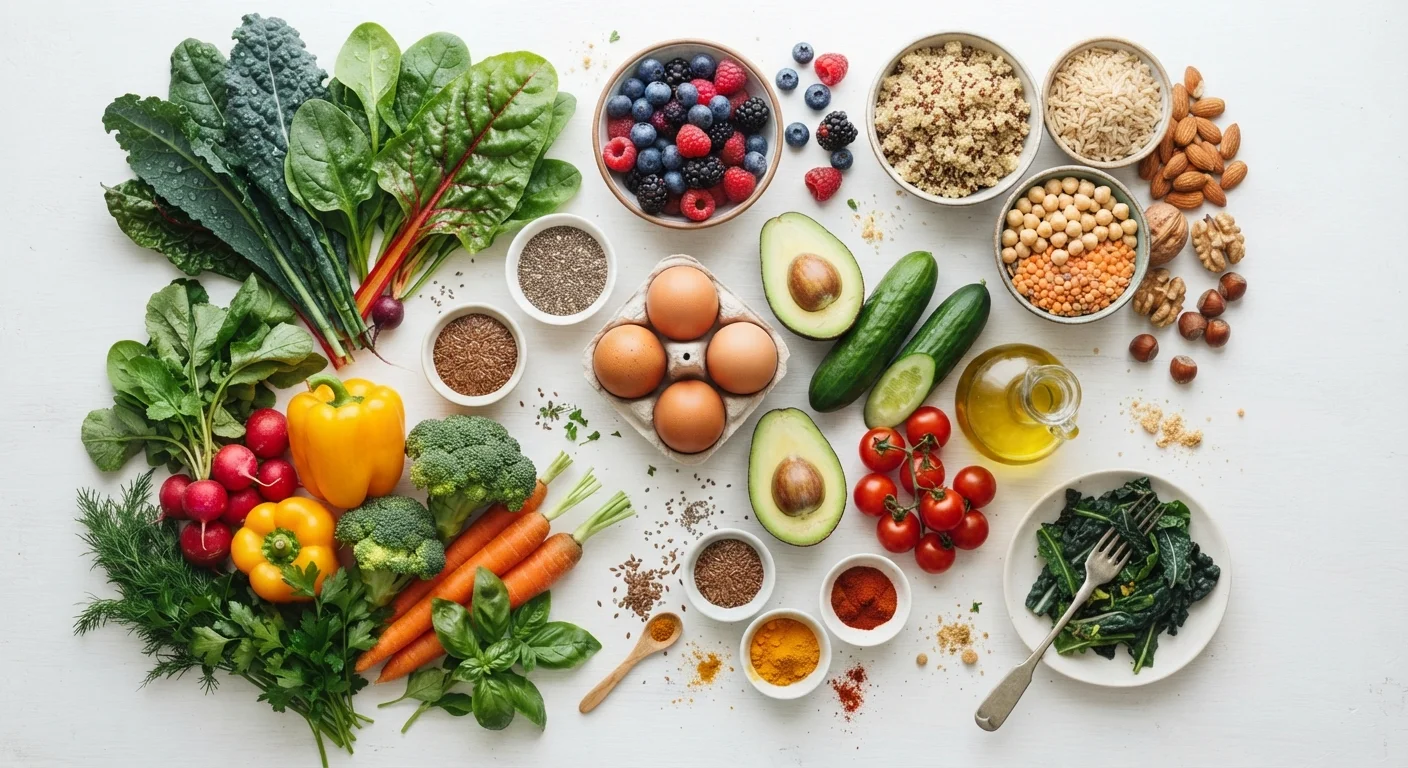
Why Calories Alone Are an Incomplete Picture
A calorie is a unit of energy - nothing more. Two foods can deliver the identical number of calories while offering almost nothing alike in terms of nutritional value. A 200-calorie candy bar and a 200-calorie serving of lentils both fuel your body, but only one of them delivers substantial protein, iron, folate, and fiber alongside that energy.
This is the core limitation of calorie-centric thinking. Decades of public health messaging trained many people to treat calories as the primary lens for evaluating food choices, yet nutrition researchers have long recognized that diet quality - not just energy quantity - is what drives health outcomes over time. Understanding what carbs, protein, and fat actually do in the body reveals why reducing food to calorie totals misses most of the picture.
~90%
Americans not meeting vegetable intake recommendations
According to the CDC's dietary data, roughly 90% of Americans fall short of recommended vegetable intake - a key driver of micronutrient deficiency despite adequate or excess calorie consumption.
2x
Difference in fiber between whole and refined grains
Research consistently shows whole grains deliver approximately twice the dietary fiber of their refined counterparts per serving, illustrating how processing dramatically reduces nutrient density.
57%
Share of US calories from ultra-processed foods
Studies published in nutrition journals estimate that ultra-processed foods account for over half of daily calorie intake for the average American adult, foods that by definition tend to have low nutrient density.
What Nutrient Density Actually Measures
Nutrient density evaluates a food by stacking up the essential nutrients it provides - vitamins, minerals, dietary fiber, high-quality protein, and beneficial plant compounds - against its calorie load. A food that delivers abundant nutrients per calorie is nutrient-dense; one that delivers mostly energy with little else is sometimes called "empty calories."
Key nutrients considered in most frameworks include: vitamins A, C, D, E, K, and the B-complex group; minerals such as calcium, potassium, magnesium, iron, and zinc; dietary fiber; and protein with a full or near-complete amino acid profile. Protein source and quality matter here because not all proteins are nutritionally equivalent.
Importantly, nutrient density is not the same as "low calorie." Olive oil and salmon are calorie-dense foods that also happen to be nutrient-dense. The framework rewards richness of nutritional content, not simply lightness of caloric load.
“The quality of calories matters enormously. Two diets with identical calorie counts can produce very different health outcomes depending on what foods those calories come from.”
— Walter Willett, Professor of Epidemiology and Nutrition, Harvard T.H. Chan School of Public Health
Practical Examples: High vs. Low Nutrient Density
Comparing everyday foods side by side makes this concept immediately concrete.
- Kale vs. iceberg lettuce: Both are low-calorie leafy greens, but kale delivers far more vitamin K, vitamin C, calcium, and iron per serving.
- Whole oats vs. sugary breakfast cereal: Comparable calories, but oats provide substantially more fiber, magnesium, and slow-digesting carbohydrates.
- Eggs vs. egg white-only products: Whole eggs include choline, vitamin D, and fat-soluble vitamins that egg whites alone cannot provide.
- Lentils vs. white rice: Lentils offer dramatically more protein, fiber, folate, and iron for a similar calorie cost.
Choosing more nutrient-dense options within each food category - rather than overhauling your entire diet overnight - is a sustainable approach that most nutrition researchers support. Common missteps when trying to eat healthier often involve swapping foods without understanding what's actually being gained or lost.
Reading Labels With Nutrient Density in Mind
Once you understand nutrient density, nutrition labels become a more useful tool. Rather than scanning only for calories, look at the percent daily values (%DV) for fiber, vitamins, and minerals - a food contributing 10% or more DV for several key nutrients per serving is generally doing nutritional work. At the same time, assess what the calories come alongside: added sugars, sodium, and refined starches often signal low nutrient density.
Reading a Nutrition Facts label without getting confused walks through each panel section in plain terms and can help you apply this framework at the shelf. Nutrient needs also shift across life stages, so what constitutes an adequately dense diet for a young adult differs from what an older adult requires - see how nutrient needs shift from young adulthood to older age for more context.
This article is for general informational and educational purposes only and does not constitute medical or dietary advice. Consult a registered dietitian or qualified healthcare professional before making significant changes to your diet, especially if you have an existing health condition.
Frequently Asked Questions
Not necessarily. Nutrient density refers to the ratio of beneficial nutrients to calories, not to raw calorie count. Salmon and avocado are high in calories yet also highly nutrient-dense. The concept is about quality relative to energy, not just calorie level.
Yes. Energy balance still matters - consuming more calories than your body uses will result in weight gain regardless of food quality. Nutrient density is a framework for improving diet quality, not a weight-loss guarantee. A healthcare provider or registered dietitian can help you understand your individual needs.
No. Many of the most nutrient-dense foods - dried beans, lentils, frozen spinach, canned sardines, oats, and eggs - are among the most affordable options in any grocery store. Cost-per-nutrient is often far better for these staples than for packaged convenience foods.
Nutrient density is a scientifically grounded concept measurable across all foods. 'Superfoods' is a marketing term with no regulated definition. Many foods labeled as superfoods are nutrient-dense, but so are countless inexpensive staples that rarely get that label.
Yes, to varying degrees. Some cooking methods reduce water-soluble vitamins like vitamin C, while others - such as gentle cooking of tomatoes - can actually increase the bioavailability of certain compounds like lycopene. Steaming and roasting generally preserve more nutrients than prolonged boiling.
For most people, rigidly tracking every calorie is neither necessary nor sustainable. Focusing on nutrient density tends to naturally moderate calorie intake because high-fiber, protein-rich whole foods promote satiety. However, some individuals managing specific health conditions may benefit from closer monitoring - speak with a healthcare professional about what's appropriate for you.
The content provided on our blog site traverses numerous categories, offering readers valuable and practical information. Readers can use the editorial team’s research and data to gain more insights into their topics of interest. However, they are requested not to treat the articles as conclusive. The website team cannot be held responsible for differences in data or inaccuracies found across other platforms. Please also note that the site might also miss out on various schemes and offers available that the readers may find more beneficial than the ones we cover.