

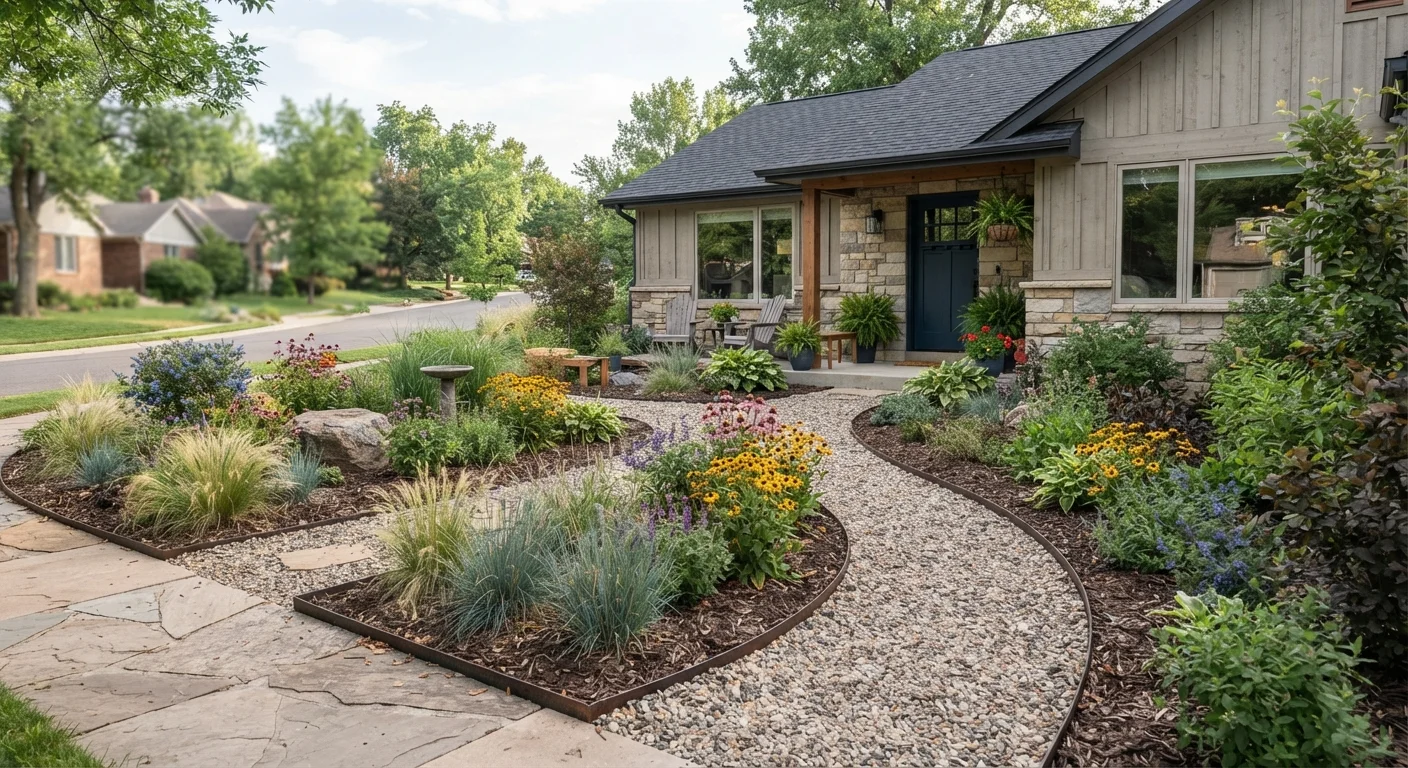
Why Low-Maintenance Design Starts With a Plan
Landscaping costs - in both time and money - tend to compound when a yard is planted reactively rather than thoughtfully. A homeowner who fills beds with whatever looks good at the nursery in spring often finds themselves battling drought stress, aggressive spreaders, and pest outbreaks by midsummer. The fix rarely comes from working harder; it comes from designing smarter upfront.
Low-maintenance landscaping isn't about having a bare or boring yard. It's about choosing plants, materials, and layouts that align with your local climate and soil rather than fighting against them. The strategies below reflect that principle - each one reduces the recurring demands on your time and wallet without sacrificing a yard you can be proud of. For context on how design thinking reduces long-term costs in other areas too, see our spending wisely guidance.
Choose native and regionally adapted plants
Plants native to your region evolved alongside local soils, rainfall patterns, and wildlife. Once established, they typically need far less supplemental water, fertilizer, or pest intervention than exotic ornamentals bred for appearance rather than resilience. Native prairie grasses, for instance, develop deep root systems that tolerate drought and crowd out weeds naturally.
Our article on why native plants outperform exotic ornamentals goes deeper on specific advantages by region. The practical takeaway: even replacing a third of your ornamental plantings with natives can noticeably reduce your irrigation and fertilizing schedule.
Native plants evolved to thrive locally - they need far less water, fertilizer, and pest control once established.
Apply mulch strategically across garden beds
A properly mulched bed does three jobs simultaneously: it retains soil moisture, regulates soil temperature, and suppresses weed germination. A 2-3 inch layer of organic mulch (wood chips, shredded bark, or straw) around plant bases can meaningfully reduce how often you need to water and weed. It also breaks down over time, gradually improving soil structure.
The details matter here. Too thin and weeds push through; too thick and you risk crown rot at plant bases. Our guide on mulching garden beds correctly covers material selection, placement, and depth in practical terms.
A 2-3 inch mulch layer can halve your weeding time and reduce irrigation frequency throughout summer.
Replace thirsty turf with ground covers or hardscaping
Traditional cool- or warm-season lawn grass is one of the most resource-intensive elements of a typical American yard. It needs regular mowing, fertilizing, edging, and irrigation - especially during dry stretches. Replacing low-traffic lawn sections with ground covers (creeping thyme, clover, sedum) or permeable hardscaping (gravel, flagstone, decomposed granite) can eliminate those tasks entirely in those zones.
Clover deserves particular mention: it stays low, fixes nitrogen into the soil, tolerates foot traffic, and rarely needs mowing. For areas that still need grass, comparing grass seed versus sod helps you make that establishment decision wisely.
Swapping low-traffic turf for clover or gravel eliminates mowing, fertilizing, and irrigation in those zones.
Group plants by water needs (hydrozoning)
Hydrozoning means grouping plants that share similar irrigation requirements together rather than mixing drought-tolerant species with thirsty ones in the same bed. When plants with different needs share a zone, you end up either overwatering the drought-tolerant ones or underwatering the thirsty ones - both create problems that demand more attention.
A simple audit of your current plantings - separating high-, medium-, and low-water needs - makes irrigation scheduling dramatically simpler and more efficient. Pair this with accurate watering habits: common watering myths outlines the practices that quietly damage plants even when you're trying to do right by them.
Grouping plants by water needs means fewer irrigation adjustments, less waste, and healthier plants overall.
Install drip irrigation or soaker hoses
Overhead sprinklers lose significant water to evaporation and overspray, especially during warm months. Drip irrigation and soaker hoses deliver water directly to root zones at low pressure, which reduces both water use and fungal disease risk from wet foliage. Once set up on a timer, they run without your involvement.
The upfront installation effort is modest for most garden beds, and the long-term reduction in watering time and water bills is meaningful. Our in-depth look at drip versus sprinkler irrigation walks through the practical trade-offs for different yard types and budgets.
Drip irrigation cuts water waste and frees you from hand-watering - a one-time setup with lasting returns.
Build soil health to reduce inputs over time
Healthy soil grows resilient plants that need less fertilizer, resist pests more effectively, and recover faster from stress. Composting kitchen and yard scraps is one of the most cost-effective ways to improve soil without buying amendments. It also reduces the volume of organic waste you'd otherwise discard.
You don't need elaborate equipment - a simple open-pile or bin system works for most households. Our home composting guide covers setup, what to include, and how to use finished compost effectively in garden beds. Over a few seasons, consistently improved soil dramatically reduces the need for purchased fertilizers.
Compost-enriched soil grows stronger plants naturally, steadily reducing your dependence on purchased fertilizers.
Putting It All Together
No single strategy works in isolation. The most resilient low-maintenance yards combine several of these approaches: native plants in mulched beds, organized by hydration zone, serviced by efficient irrigation, and framed by hardscaping that eliminates the least-productive patches of turf. Start with one or two changes that address your biggest pain points - most commonly, overwatering or relentless weeding - and build from there.
Start With Your Biggest Maintenance Drain
Rather than overhauling your entire yard at once, identify the single task that consumes the most of your time or money - often mowing a seldom-used lawn section or fighting weeds in a neglected bed. Addressing that one problem first delivers immediate relief and builds momentum. Small, strategic changes compounded over two or three seasons produce the most durable results.
If you're weighing a more intensive growing setup as an alternative, our overview of raised bed gardening trade-offs lays out the honest costs and benefits. And for anyone still managing significant lawn area, growing a healthy lawn efficiently is a useful companion read.
The content provided on our blog site traverses numerous categories, offering readers valuable and practical information. Readers can use the editorial team’s research and data to gain more insights into their topics of interest. However, they are requested not to treat the articles as conclusive. The website team cannot be held responsible for differences in data or inaccuracies found across other platforms. Please also note that the site might also miss out on various schemes and offers available that the readers may find more beneficial than the ones we cover.