

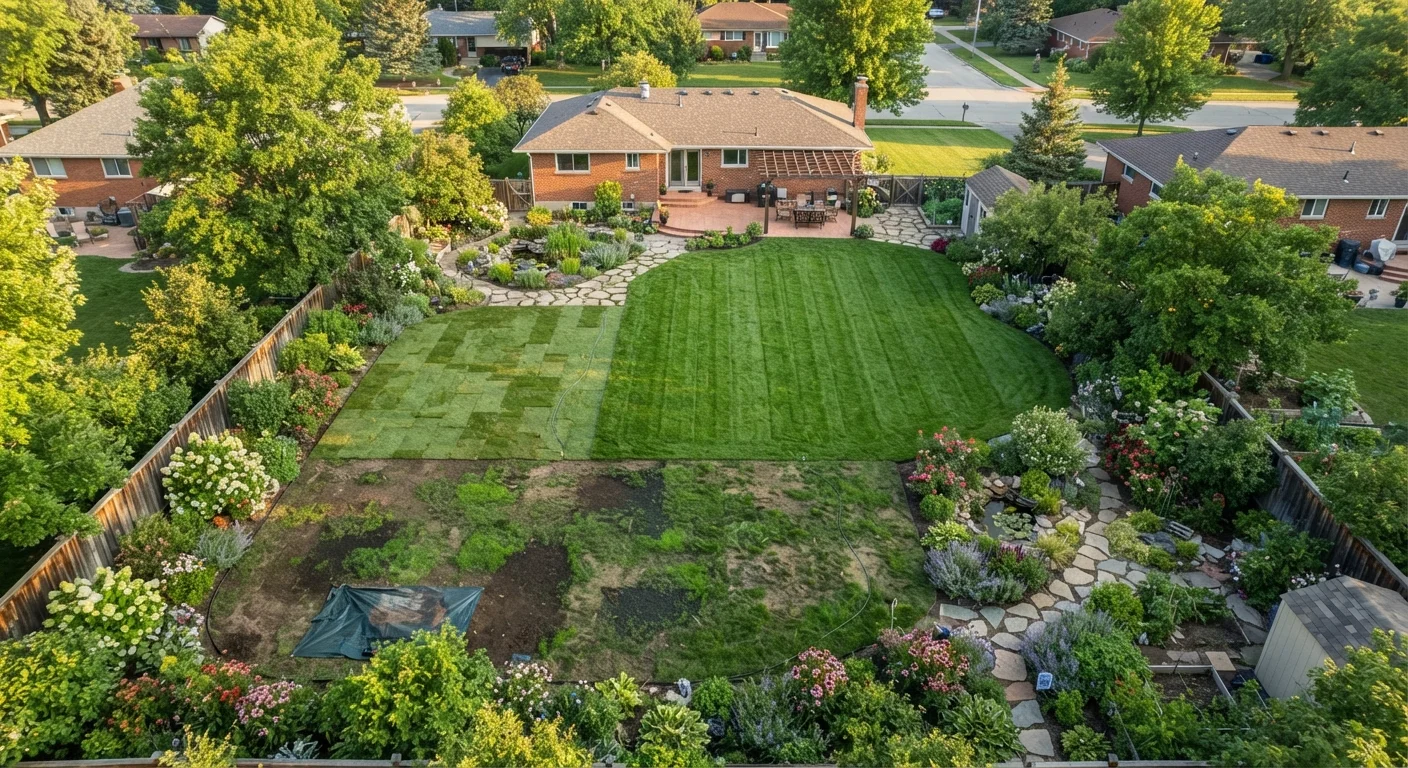
How to Use This Seasonal Calendar
Lawn care is not a one-size-fits-all task - the right timing depends on your grass type, climate zone, and local weather patterns. This calendar is organized by season and covers the four core tasks: mowing, fertilizing, aerating, and overseeding. Cool-season grasses (such as Kentucky bluegrass, tall fescue, and ryegrass) peak in spring and fall. Warm-season grasses (such as Bermuda, zoysia, and St. Augustine) thrive in summer heat. Use the grass type notes throughout each section to apply this guide accurately to your yard.
For a deeper look at soil prep, grass selection, and pest management, see The Complete Guide to Growing a Healthy Lawn.
Spring (March-May): Wake Up and Feed
Mowing: Resume mowing when grass actively grows and reaches one-third above your target height. Set the blade higher early in the season - scalping weakens roots. A general target for most cool-season grasses is 3-4 inches; warm-season grasses tolerate 1.5-2.5 inches depending on variety.
Fertilizing: Apply a balanced, slow-release fertilizer to cool-season lawns in early spring once soil temperatures reach 50-55°F. For warm-season lawns, hold off until late spring when temperatures consistently exceed 65°F. Over-fertilizing in early spring promotes excessive blade growth at the expense of root development.
Aerating: Spring is the secondary aeration window for cool-season grasses and the primary window for warm-season varieties. Core aeration - which physically removes plugs of soil - relieves compaction and improves water and nutrient penetration.
Weed control: Apply pre-emergent herbicide before soil temperatures reach 55°F to block crabgrass and annual weeds before they germinate. Pre-emergent applications and overseeding cannot happen simultaneously - the herbicide prevents all seed germination.
Summer (June-August): Protect and Conserve
Mowing: Raise mowing height by half an inch during summer heat. Taller grass shades the soil, retains moisture, and resists stress. Never remove more than one-third of the blade in a single cutting. During drought or extreme heat, let cool-season grasses go semi-dormant rather than forcing growth with water and fertilizer.
Watering: Water deeply and infrequently - roughly 1 inch per week, including rainfall - rather than shallow daily watering. Early morning is the most efficient time; evening watering raises disease risk.
Fertilizing: Avoid fertilizing cool-season grasses in mid-summer heat; it stresses already-struggling turf. Warm-season grasses can receive a mid-season light feeding if actively growing.
Pest monitoring: Watch for grub damage (irregular brown patches that pull up like carpet) and treat with an appropriate lawn insecticide if confirmed. Consult your local cooperative extension office for regionally appropriate thresholds and timing.
Extension Services Are a Free Local Resource
Your state's cooperative extension service - affiliated with a land-grant university - provides free, regionally calibrated guidance on fertilizer rates, pest thresholds, and grass varieties suited to your climate. Extension recommendations are research-based and updated regularly. Search for your state's extension service online and look for their turfgrass or lawn care publications.
Fall (September-November): The Most Critical Season
Fall is the single most important season for cool-season lawns and should not be skipped or abbreviated.
Aerating: Core aerate in early fall before overseeding. This is the highest-priority aeration timing for cool-season grasses - loosened soil allows new seed to make direct contact with the ground. See why overseeding often fails for the soil-contact details that most homeowners overlook.
Overseeding: Overseed bare or thin areas after aerating, ideally when soil temperatures are between 50-65°F. Keep the seedbed consistently moist until germination is established - typically 10-21 days depending on grass species.
Fertilizing: Apply a winterizer fertilizer (higher potassium content) in late fall to build root reserves before dormancy. This single application often produces the greatest long-term turf improvement of any annual treatment.
Mowing: Gradually lower cutting height by the final mow of the season to reduce the risk of snow mold, but avoid cutting shorter than 2 inches.
Winter (December-February): Rest and Plan
For most US regions, winter is a maintenance pause rather than an active care period. Cool-season grasses go semi-dormant; warm-season grasses in southern climates may continue slow growth.
What to avoid: Stay off frozen or frost-covered turf - foot traffic on brittle grass blades causes breakage. Avoid applying fertilizer or herbicide to dormant lawns.
Equipment maintenance: Sharpen mower blades, change engine oil, and clean or replace air filters so your mower is ready for spring. Dull blades tear grass rather than cut it cleanly, increasing disease vulnerability.
Planning: Use winter to assess your lawn's performance from the past year. Identify persistent thin spots, drainage problem areas, or compaction zones to prioritize in the next spring aeration and seeding schedule. While you're at it, consider pairing your seasonal lawn routine with the tasks in our seasonal home maintenance checklist for a complete year-round property care plan.
This article provides general lawn care information for educational purposes. Soil conditions, climate zones, and local regulations vary widely. Consult your local cooperative extension service for region-specific guidance on grass varieties, fertilizer applications, and pesticide use.
The content provided on our blog site traverses numerous categories, offering readers valuable and practical information. Readers can use the editorial team’s research and data to gain more insights into their topics of interest. However, they are requested not to treat the articles as conclusive. The website team cannot be held responsible for differences in data or inaccuracies found across other platforms. Please also note that the site might also miss out on various schemes and offers available that the readers may find more beneficial than the ones we cover.