

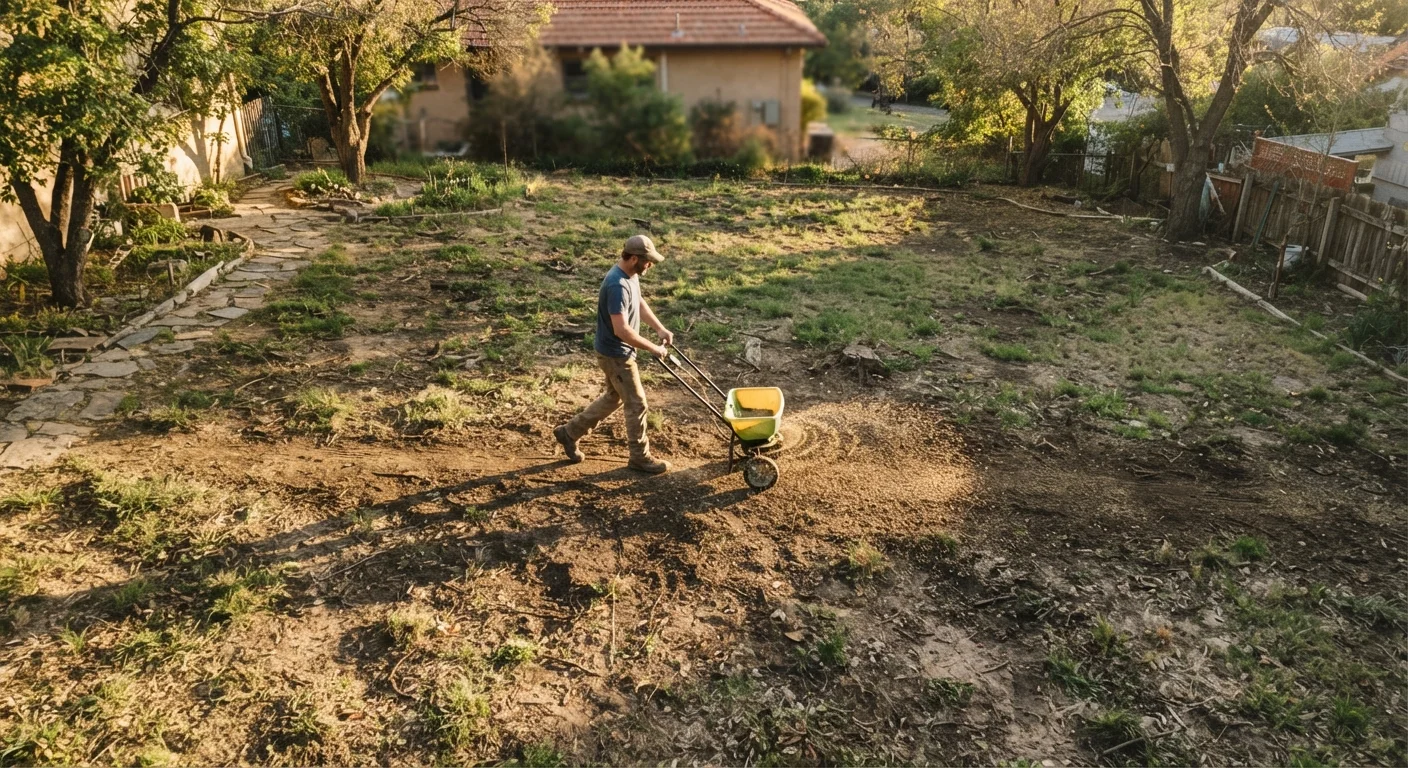
Why Overseeding Fails More Often Than It Should
Overseeding looks deceptively simple: buy some grass seed, scatter it across thin or bare patches, water occasionally, and wait. But most failed overseeding projects come down to a handful of predictable, avoidable mistakes. Understanding why seeds fail to germinate - or why seedlings die before establishing - saves you both money and frustration.
For a broader view of when to fit overseeding into your lawn routine, see the Seasonal Lawn Care Calendar - it lays out month-by-month timing that makes each task, including overseeding, far more likely to succeed.
Overseeding at the wrong time of year for the grass type.
Why it happens: Many homeowners overseed whenever they notice bare patches, regardless of season, assuming seed will eventually sprout when conditions improve.
Scattering seed onto thatch or unprepped soil without establishing seed-to-soil contact.
Why it happens: Thatch layers look like soil from a distance, so homeowners assume seeds will work their way down naturally.
Choosing a seed variety that doesn't match the existing lawn or local climate.
Why it happens: Seed is often purchased based on price or packaging claims rather than region-specific or shade-and-sun suitability.
Inconsistent or insufficient watering during the germination window.
Why it happens: Homeowners water thoroughly once or twice and assume that's enough, not realizing seedlings dry out rapidly in the first two weeks.
Mowing newly seeded areas too soon after germination.
Why it happens: New growth looks ready to mow quickly, and homeowners apply the same mowing schedule as the established lawn.
What to Do Differently for Real Results
Fixing an overseeding failure isn't complicated - it usually means correcting one or two upstream decisions. Start by confirming your timing aligns with your grass type. Cool-season grasses (fescues, ryegrass, bluegrass) establish best when soil temperatures sit between 50-65°F, typically late summer through early fall in most US regions. Warm-season grasses (Bermuda, zoysia, centipede) prefer soil temps above 65°F, making late spring the target window.
50-65°F
Optimal soil temp for cool-season grass germination
Soil temperature - not air temperature - is the reliable trigger for grass seed germination, according to university extension programs across the US.
7-21 days
Typical germination window for most grass seed types
Germination timelines vary by species, but most common turf grasses sprout within one to three weeks under adequate moisture and temperature conditions.
Once timing is right, prep the surface before a single seed hits the ground. Mow existing grass shorter than usual - around 2 inches - then rake out thatch and debris. For heavily compacted lawns, core aeration immediately before overseeding is one of the highest-impact steps you can take. It opens channels directly into the soil, giving seeds the contact they need. For a full breakdown of preparation, aeration, and fertilizing before a seasonal transition, the Fall Lawn Prep checklist covers each step in detail.
After seeding, water lightly and frequently - enough to keep the top half-inch of soil consistently moist without puddling or runoff. Hold off mowing until new grass reaches about 3.5 inches tall. At that height, roots are deep enough to survive the stress of the first cut.
Don't Apply Pre-Emergent Herbicide Before Overseeding
Pre-emergent herbicides are designed to prevent seeds from germinating - which means they will block your grass seed just as effectively as weeds. Avoid applying any pre-emergent product in the months leading up to overseeding. If weed pressure is a concern, address it after the new grass has been established and mowed at least two to three times.
If repeated overseeding attempts haven't improved your lawn's density, it may be worth reconsidering the approach entirely. The Grass Seed vs. Sod comparison can help you decide whether seeding is still the right tool for your situation, or whether sod offers a more reliable path to coverage. And if you're questioning how much lawn you actually want to maintain long-term, low-maintenance landscaping alternatives may offer a smarter direction.
The content provided on our blog site traverses numerous categories, offering readers valuable and practical information. Readers can use the editorial team’s research and data to gain more insights into their topics of interest. However, they are requested not to treat the articles as conclusive. The website team cannot be held responsible for differences in data or inaccuracies found across other platforms. Please also note that the site might also miss out on various schemes and offers available that the readers may find more beneficial than the ones we cover.