

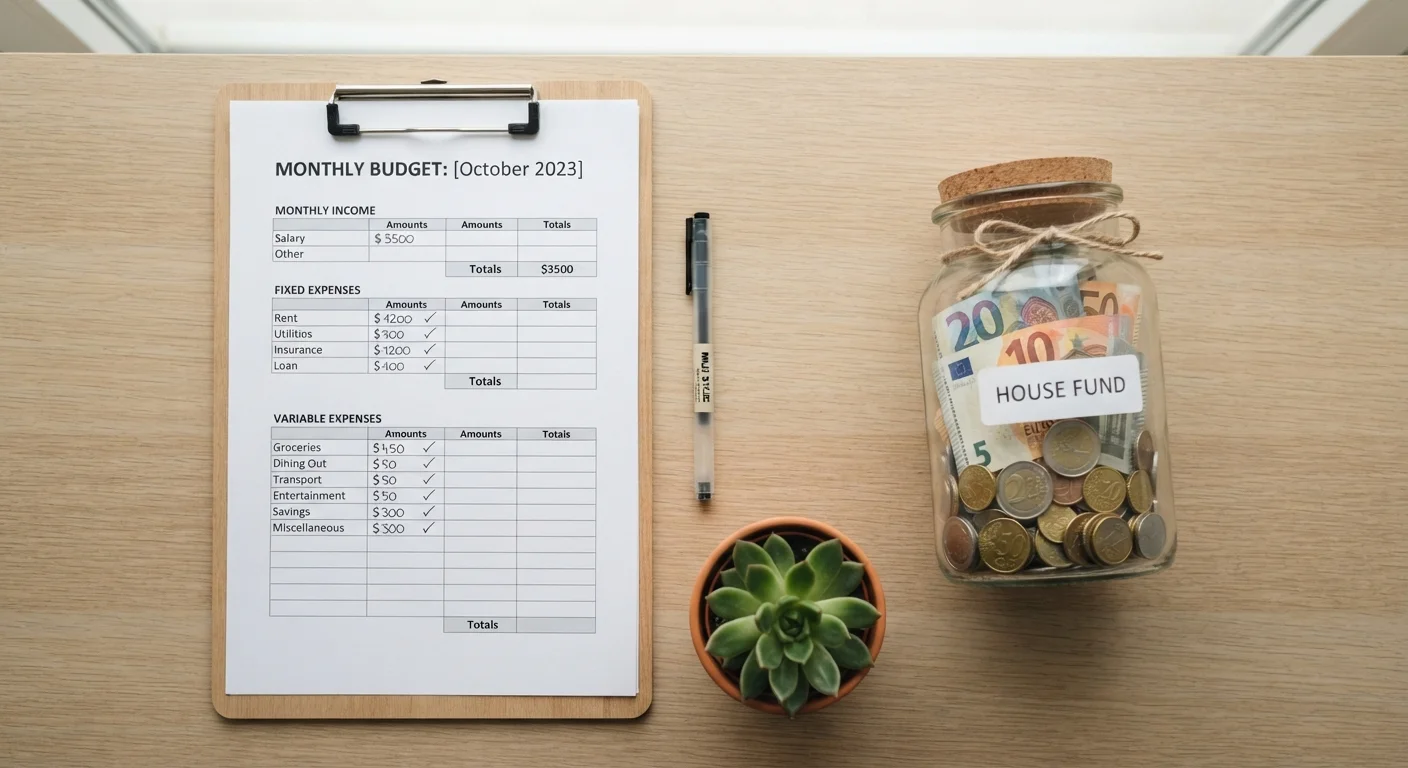
Two Tools, Two Jobs - and Why You Need Both
A budget and an emergency fund are not the same thing, and conflating them is one of the most common early mistakes in personal finance. A budget tells your money where to go each month - rent, groceries, transportation, savings. An emergency fund is a specific destination for a portion of that money, held in reserve for unpredictable financial shocks.
Think of it this way: a budget is the plumbing system of your finances, directing flow. An emergency fund is the pressure-relief valve - it exists so that one unexpected event doesn't burst the pipes. If you only have a budget and no fund, a $900 car repair sends you scrambling to debt or forces you to blow categories you worked hard to balance. If you only have savings with no budget, contributions become inconsistent and the fund rarely reaches a size that's actually useful.
The practical takeaway: these tools are designed to work in tandem, not as alternatives. Building smarter savings habits becomes significantly easier once you understand how each one supports the other.
57%
Americans unable to cover a $1,000 emergency from savings
According to a Bankrate survey, more than half of U.S. adults would need to borrow money or go into debt to handle an unexpected $1,000 expense.
3-6 months
Commonly recommended emergency fund coverage
Most mainstream personal finance frameworks - including guidance from the Consumer Financial Protection Bureau - cite three to six months of essential expenses as a general emergency fund target.
32%
Adults with a written or tracked monthly budget
Research from the National Foundation for Credit Counseling has found that fewer than one in three Americans actively tracks or follows a formal monthly budget.
How a Budget Builds Your Emergency Fund
The most reliable way to grow an emergency fund is to treat it like a fixed expense inside your budget - not a leftover. When emergency fund contributions compete with discretionary spending at the end of the month, they almost always lose. When they're listed as a non-negotiable line item, they happen automatically.
This is where frameworks like the 50/30/20 rule offer useful structure: roughly 20% of take-home pay directed toward savings and financial goals, which can include your emergency fund target. The specific percentage matters less than the consistency - even a modest fixed contribution, automated to a separate account on payday, compounds meaningfully over months.
If you're new to structuring a budget, this step-by-step monthly budget guide walks through setting up spending categories and contribution targets from scratch. Also worth noting: one reason many budgets underperform is miscategorized spending - common category mistakes that quietly undermine budgets are worth reviewing before you finalize your plan.
Automate to Remove the Decision
Set up an automatic transfer to your emergency fund account on the same day your paycheck lands - before you have the chance to spend it elsewhere. Even $25 per paycheck removes the need for monthly willpower. Automation turns an intention into a system, and systems are far more reliable than good intentions alone.
How an Emergency Fund Protects Your Budget
A well-funded emergency reserve does something subtle but powerful: it makes your budget more resilient without requiring you to redesign it every time something unexpected happens. Without it, every financial surprise becomes a budgeting crisis - forcing you to raid other categories, skip savings, or carry high-interest debt.
Consider what happens when an emergency fund absorbs the shock instead. The budget continues as planned. Debt is avoided. The financial system stays intact. Then, in the following weeks, you adjust the budget to replenish what was spent - a manageable, temporary adjustment rather than a chaotic scramble.
It's also worth distinguishing emergency fund spending from planned irregular expenses. Car registration, back-to-school costs, and annual subscriptions aren't emergencies - they're predictable. Sinking funds handle those within the budget itself, further reducing the situations in which you'd need to touch your emergency reserve at all.
The Replenishment Loop: Closing the System
Using your emergency fund is not a failure - it's the system working exactly as intended. But the step most people skip is what comes next: rebuilding the fund deliberately, through the budget.
Once an emergency has passed, revisit your budget immediately. Identify discretionary categories that can be temporarily reduced - dining out, subscriptions, entertainment - and redirect those dollars toward replenishment. Set a timeline. Treat the rebuild exactly as you treated the original savings goal: as a fixed, prioritized line item.
This feedback loop is what separates people who have an emergency fund once from those who maintain one consistently. The budget is the mechanism that fills the fund; the fund is what keeps the budget functional under pressure. Together, they form a system that handles financial reality - not just financial ideal conditions.
If you're concerned that common misconceptions are holding you back from starting, a look at emergency fund myths may be worth your time before you dismiss the goal as out of reach.
This article provides general financial education and is not personalized financial advice. For guidance tailored to your individual circumstances, consult a qualified financial professional.
Frequently Asked Questions
Start with a basic budget - even a rough one - because it reveals where your money actually goes and identifies room to save. Once you know your numbers, you can set a realistic emergency fund contribution as a fixed budget line. The two don't need to happen sequentially; they can develop together.
A widely cited general guideline is three to six months of essential living expenses, though the right amount depends on your income stability and personal risk factors. Starting with a smaller goal - such as $500 to $1,000 - is a practical first milestone that still covers many common emergencies. This is general guidance, not personalized financial advice; consider consulting a financial professional for your specific situation.
Most personal finance practitioners recommend keeping emergency savings in a liquid, low-risk account - such as a high-yield savings account - separate from your everyday checking account. Separation reduces the temptation to spend it and keeps the funds accessible when genuinely needed.
True emergencies are unexpected, necessary, and urgent - a sudden medical expense, a critical home repair, or income disruption. Planned expenses like vacations, holiday gifts, or annual insurance premiums are not emergencies; those belong in a sinking fund within your budget. Drawing that line clearly preserves the fund for when it matters most.
After tapping your emergency fund, the immediate priority is replenishment. Revisit your budget, temporarily reduce discretionary spending, and redirect those dollars back into savings until the fund is restored to its target level. Treating replenishment as a budget line item - not an afterthought - is how the system stays intact.
Yes, though it requires more patience and intentional budgeting. Even $10 to $25 per paycheck adds up meaningfully over time. The key is making the contribution automatic and non-negotiable within your budget. See <a href="/smart-money-moves/budgeting-basics/budgeting-on-a-tight-income-what-actually-helps">practical low-income budgeting strategies</a> for more targeted guidance.
The content provided on our blog site traverses numerous categories, offering readers valuable and practical information. Readers can use the editorial team’s research and data to gain more insights into their topics of interest. However, they are requested not to treat the articles as conclusive. The website team cannot be held responsible for differences in data or inaccuracies found across other platforms. Please also note that the site might also miss out on various schemes and offers available that the readers may find more beneficial than the ones we cover.