

Why Tourist Restaurants Cost More and Deliver Less
The economics of tourist-zone restaurants are straightforward: high foot traffic, low repeat customers, and captive audiences who haven't yet figured out the alternatives. These establishments operate on the assumption that visitors will pay premium prices for familiar-looking food presented near a famous landmark. The result is typically mediocre meals at two to three times local prices.
Recognizing these spots is easier than it sounds. Menus posted in five languages, photos of every dish, aggressive hosts standing outside, and locations within direct sight of a major attraction are reliable indicators. None of these features signal quality - they signal a business model built around one-time transactions with tourists.
The good news: stepping just two or three blocks away from the tourist corridor almost always reveals a different price tier entirely. Local workers need affordable lunch options; neighborhoods around offices, universities, and markets reliably have them. This is where the practical strategies begin. For a broader framework on managing spending while traveling, see our guide to building a trip budget that holds up on the road.
Best Practices for Eating Well on a Real Travel Budget
The following approaches are tested across a wide range of destinations and travel styles. They don't require extreme frugality - just a small shift in how and where you look for food.
Seek out the set lunch menu (often called 'menu del día,' 'prix fixe,' or 'dagschotel' depending on the country)
Many countries have a strong tradition of offering a multi-course lunch at a fixed, low price - often the same kitchen that charges three times as much for the same dishes at dinner. These menus exist because local workers use them daily, which keeps prices anchored to local wages rather than tourist expectations.
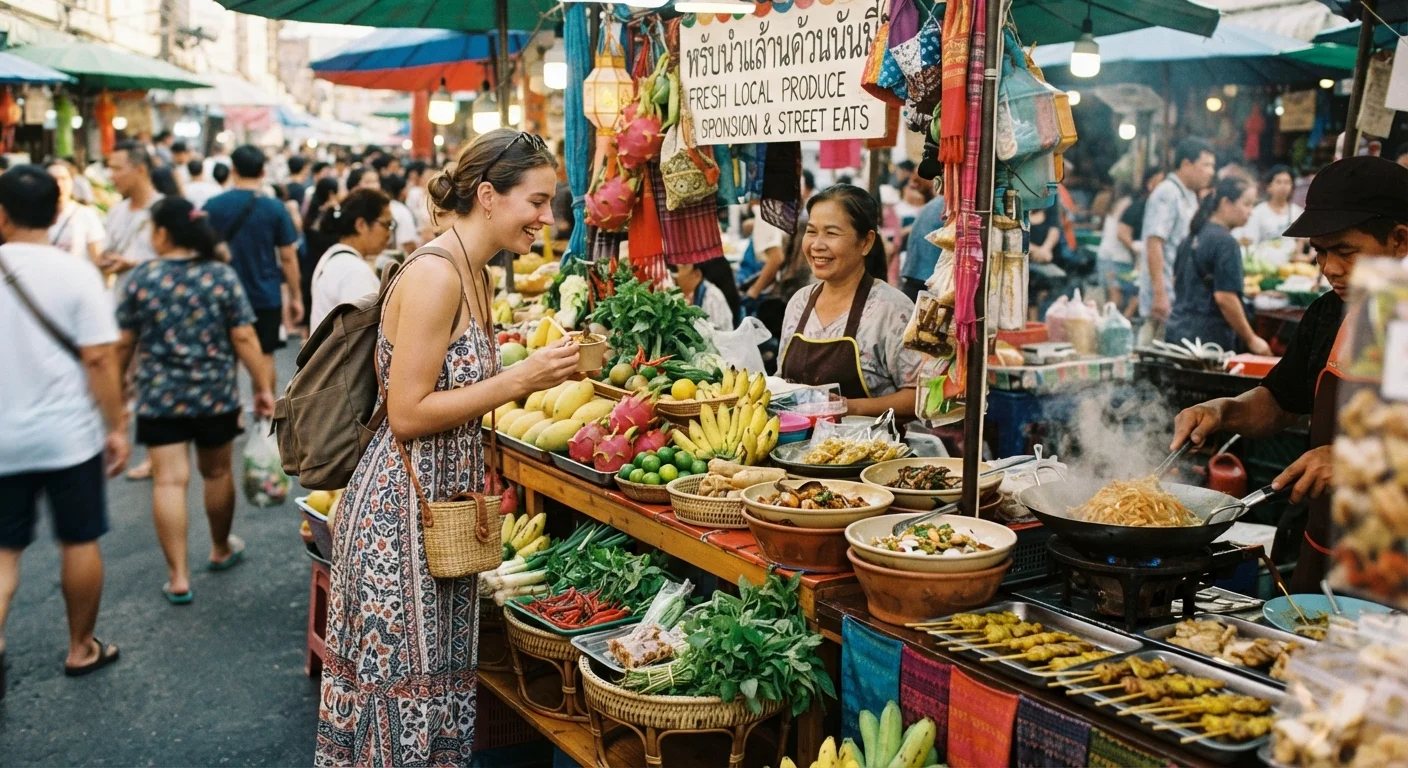
Shop at covered markets and street markets for at least one meal per day
Local markets offer prepared food, fresh ingredients, and regional specialties at prices set for local buyers. They're also one of the most direct ways to encounter food culture authentically, without a tourist markup built in.
Use self-catering strategically, especially for breakfast
Hotel breakfasts are frequently overpriced relative to their quality. Picking up coffee, bread, yogurt, or local pastries from a nearby bakery or convenience shop can cut morning food costs dramatically with minimal effort.
Walk away from the main square before sitting down
Foot traffic near landmarks allows restaurants to charge more simply because of location. Moving two or three blocks into a residential or commercial neighborhood consistently shifts both the price point and the clientele toward locals.
Learn the local eating schedule and follow it
Eating at the wrong time - lunch at 11am in Spain, dinner at 6pm in Italy - often means ending up in tourist-targeted restaurants that stay open for off-schedule visitors. Eating when locals eat puts you in the right places at the right prices.
For travelers who want to go deeper on destination-specific habits, reading a destination like a local covers how experienced travelers observe and adapt to unfamiliar places quickly.
Quick Wins You Can Use From Day One
You don't need to master local food culture on your first afternoon. A few immediate habits will start saving you money before you've even unpacked.
Food Safety Abroad: A Practical Note
Street food and market food are not inherently riskier than restaurant food - in many destinations they're fresher because of higher turnover. Look for stalls with visible cooking, a queue of local customers, and food prepared to order rather than sitting out. The US Centers for Disease Control and Prevention (CDC) publishes destination-specific health information, including food and water safety guidance, that's worth checking before you travel.
For more underused strategies that go beyond food, lesser-known ways travelers save money is worth a look before your next trip.
What the Numbers Actually Look Like
The financial gap between tourist-facing and locally-oriented dining is consistent across destinations, even if the absolute amounts vary by country.
2-3×
Price premium at tourist-zone restaurants
Travel researchers and consumer journalists consistently document that restaurants in high-traffic tourist zones charge two to three times the local price for equivalent meals.
30-40%
Estimated share of travel budget spent on food
Food and drink typically account for 30-40% of a traveler's total daily spend, making it one of the highest-leverage categories for cost control.
“The most authentic and affordable meals are almost never in the places built to attract strangers. They're in the places built to keep neighbors coming back.”
— Travel Smarter Editorial Team, Budget travel researchers and journalists
Travelers who build food strategy into their planning - rather than improvising every meal - consistently report lower overall trip costs. This connects directly to how well a travel budget holds together day to day. The spending wisely hub offers additional frameworks for making smarter spending decisions in general, not just while traveling.
This article provides general travel and budgeting information for educational purposes. Prices, availability, and local conditions vary by destination and change over time. Always verify current conditions through official sources before you travel.
The content provided on our blog site traverses numerous categories, offering readers valuable and practical information. Readers can use the editorial team’s research and data to gain more insights into their topics of interest. However, they are requested not to treat the articles as conclusive. The website team cannot be held responsible for differences in data or inaccuracies found across other platforms. Please also note that the site might also miss out on various schemes and offers available that the readers may find more beneficial than the ones we cover.