

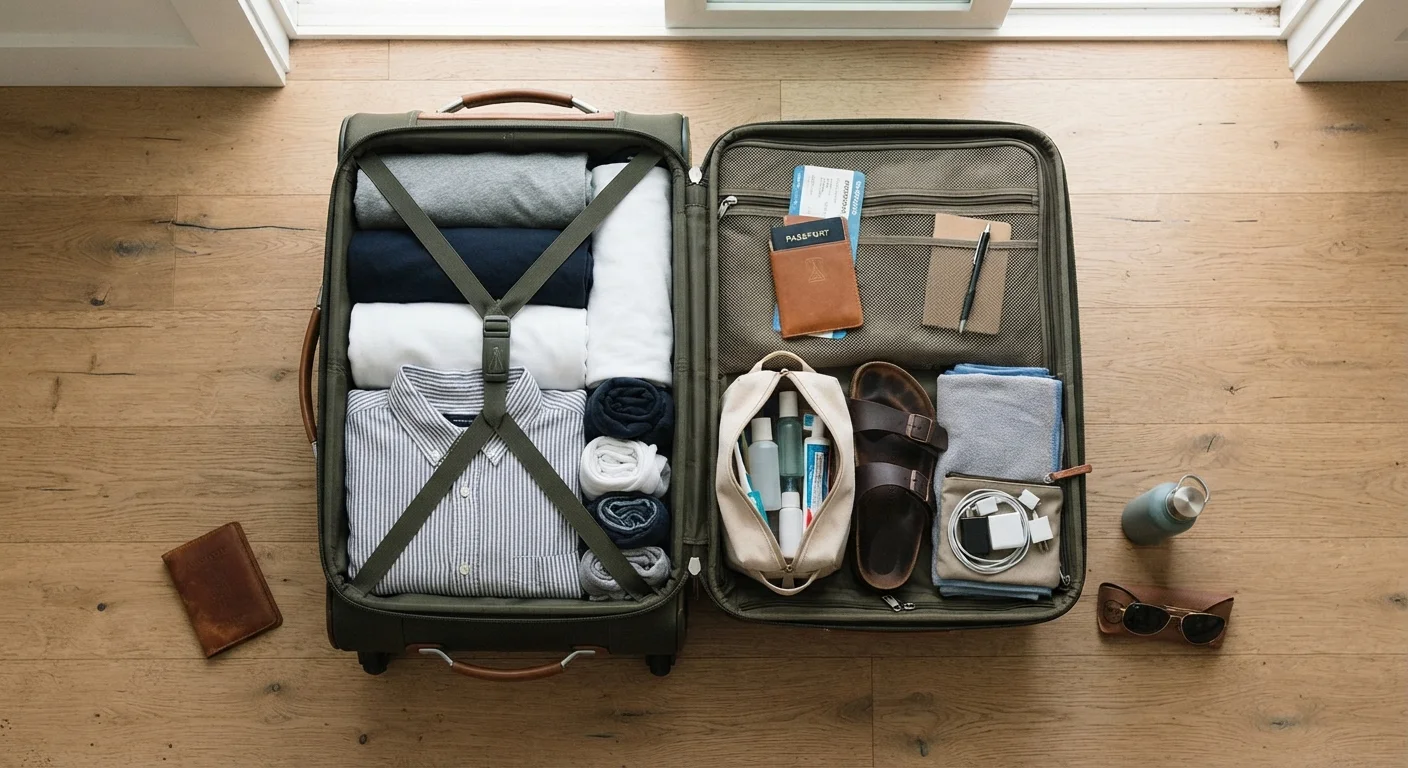
Start With the Container, Not the Contents
Most overpacking starts the same way: you pull out a bag, then fill it. The size of the bag becomes the default limit, which usually means you bring far more than necessary. Experienced travelers reverse this - they choose the smallest bag that could plausibly work for their trip, then figure out what fits.
Committing to a carry-on or a 40-liter backpack before you've packed a single item forces every decision to be a real decision. Nothing goes in on autopilot. This structural constraint does more work than any packing list.
See the carry-on-only packing walkthrough for a practical breakdown of which bag sizes work for different trip lengths, and how to think through clothing volume before you start folding.
Choose your bag size before choosing what to pack
Selecting the container first imposes a hard constraint that forces intentional decisions about every item. Without this, bag size expands to accommodate whatever you pull out, guaranteeing overpacking.
Apply a 'one function only' rule to eliminate single-use items
Items that serve only one purpose are the least efficient use of limited bag space. Multi-use items - a scarf that doubles as a blanket, shoes that work for both walking and dinner - earn their weight.
Build a laundry stop into trips longer than five days
Planning to do laundry mid-trip cuts clothing volume roughly in half. Most destinations have accessible laundromat or in-room washing options that cost far less than checked bag fees.
Do a final 'remove two items' pass before zipping the bag
Even well-intentioned packers tend to include borderline items that survive earlier cuts. A forced final pass - removing at least two items no matter what - surfaces the weakest entries.
Research destination-specific availability before packing
Many items travelers pack 'just in case' are readily available at the destination for comparable prices. Knowing this in advance eliminates the insurance logic behind bringing them.
The Items Most Travelers Regret Bringing
Overpacking isn't random - it clusters around predictable categories. Knowing them makes it easier to audit your bag honestly before you zip it up.
- Redundant toiletries: Multiple shampoos, conditioners, and skincare products account for a disproportionate share of bag weight. Most hotels and many short-term rentals stock basics. Solid toiletry bars eliminate leakage risk and condense volume significantly.
- 'Just in case' clothing: The fourth pair of shoes, the formal outfit for a dinner that isn't booked, the jacket for weather that probably won't happen. These items almost never get worn.
- Electronics redundancy: Bringing both a laptop and a tablet when your trip doesn't require both is common. Each device also brings its own charger, cable, and case.
The discipline isn't about deprivation - it's about honest probability. If you've packed it twice before and never used it, that's your answer. For a broader look at trip-cost decisions that compound before you even leave, the pre-trip checklist covers finances, documents, and packing in one place.
How Laundry Changes the Math
The single most effective way to pack fewer clothes is to plan one mid-trip laundry session. For any trip longer than five days, this almost always makes sense. Knowing you can wash clothes on day four means you only need four days of outfits - not ten.
Research the laundry situation before you go rather than assuming. Most urban destinations have laundromats within reasonable distance of tourist areas; many hostels and mid-range hotels offer coin-operated machines or in-room sink-washing space. A small packet of travel-size detergent adds almost no weight and opens up the option even when a laundromat isn't convenient.
Travelers who factor laundry into their plan almost always pack lighter than those who don't - and often save money on checked baggage fees in the process. For a broader set of cost-reduction strategies that don't require sacrificing experience, lesser-known traveler savings tactics covers underused approaches worth knowing about.
When Packing Light Has Real Limits
Carry-on-only travel works well for most leisure trips, city travel, and warm-weather destinations. It has genuine trade-offs in other contexts. Extended cold-weather trips require bulkier layers. Multi-climate itineraries may demand clothing that doesn't compress well. Trips involving formal events, specialized gear, or medical equipment have constraints that packing philosophy can't fully solve.
Being honest about those limits matters more than ideological commitment to a single bag. Some trips genuinely warrant checked luggage, and forcing a carry-on when it doesn't fit your actual itinerary creates problems - running out of weather-appropriate clothing, skipping activities for lack of gear - that aren't worth the baggage fee savings. Honest perspectives on carry-on-only trade-offs offers a balanced look at where the approach works and where it doesn't.
The goal isn't packing light as a principle - it's packing right for the specific trip in front of you.
The content provided on our blog site traverses numerous categories, offering readers valuable and practical information. Readers can use the editorial team’s research and data to gain more insights into their topics of interest. However, they are requested not to treat the articles as conclusive. The website team cannot be held responsible for differences in data or inaccuracies found across other platforms. Please also note that the site might also miss out on various schemes and offers available that the readers may find more beneficial than the ones we cover.