

Why Maintenance Myths Persist-and What They Cost You
Car maintenance advice is full of rules that were once reasonable but have outlived the technology that made them necessary. Some were good guidelines for 1970s carburetors and conventional oil. Others were never accurate to begin with. The problem is that repeating them costs real money-unnecessary oil changes, premium fuel markups, and unneeded fluid flushes add up quickly across years of ownership.
For a fuller picture of how deferred or misdirected maintenance affects your wallet, see why skipping routine maintenance costs far more than the service itself. The goal here is different: identifying the myths that cause drivers to overspend, not underspend.
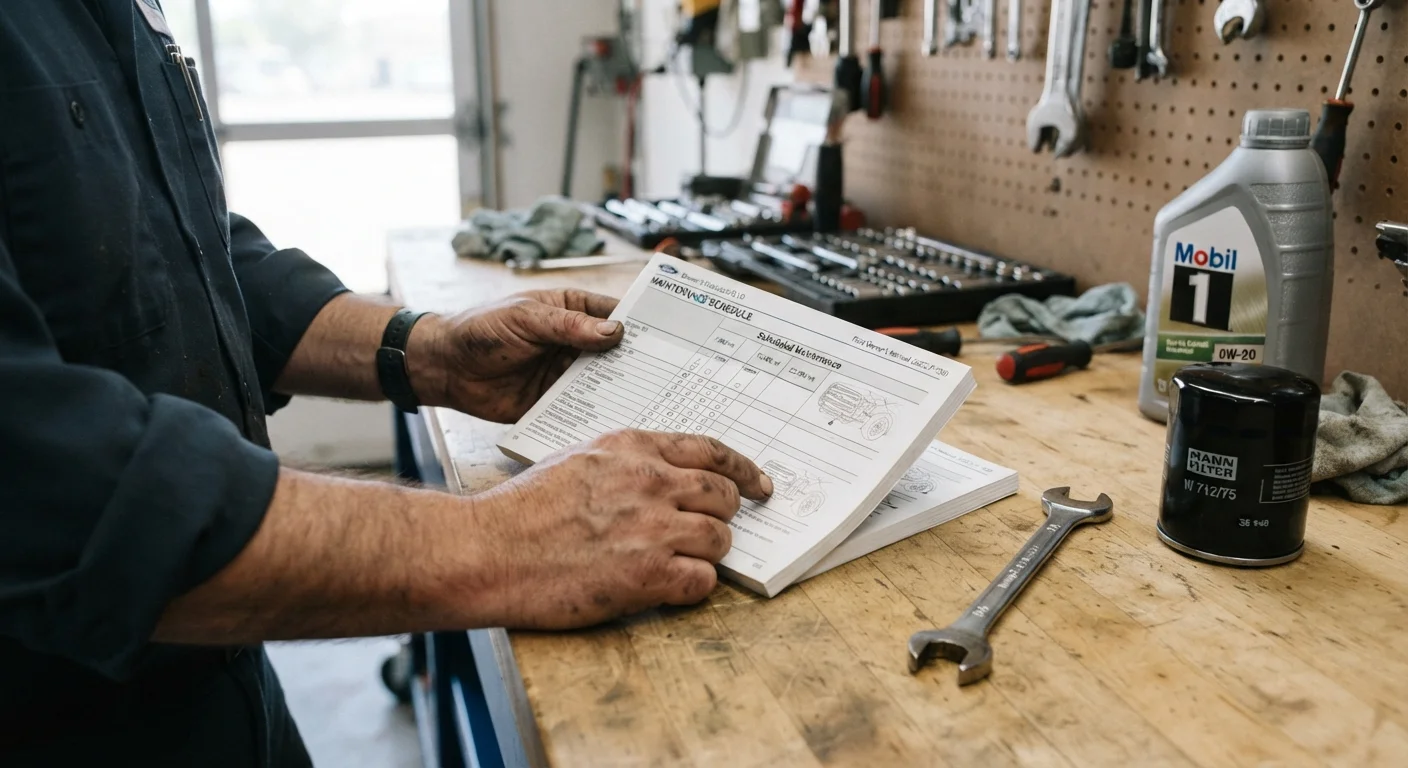
The most reliable source for your specific vehicle's maintenance needs is always the owner's manual. It reflects the manufacturer's engineering standards-not a service shop's revenue targets.
Myth
You need to change your oil every 3,000 miles, no matter what.
Fact
Most modern vehicles with conventional oil are designed for 5,000-7,500 mile intervals; many synthetic oil vehicles can go 10,000-15,000 miles between changes.
The 3,000-mile rule made sense when engine tolerances were looser and oil formulations were less refined. Today's engines and lubricants are engineered to last much longer between changes. Following an unnecessarily short interval wastes money and generates avoidable waste oil. Your owner's manual specifies the correct interval for your engine and oil type-that figure should be your baseline, not a generic rule of thumb. Understanding what each fluid does helps put oil's role in context alongside coolant, brake fluid, and transmission fluid.
Myth
Premium fuel makes any car run better and get more mileage.
Fact
Premium fuel only benefits engines specifically engineered for it. Using premium in a standard engine produces no measurable performance or efficiency gain.
Premium fuel has a higher octane rating, which resists pre-ignition (engine knock) in high-compression or turbocharged engines. If your vehicle's manual says "premium recommended" or "premium required," the distinction matters. "Required" means the engine needs it to run correctly; "recommended" means the manufacturer prefers it but the engine can adapt. If your manual specifies regular unleaded, premium is simply a more expensive choice with no functional benefit for your engine.
Myth
You should let your car idle for several minutes before driving in cold weather.
Fact
Modern fuel-injected engines reach operating temperature faster by being driven gently, not by idling at the curb.
Extended cold-weather idling was reasonable advice for carbureted engines, which needed time to atomize fuel properly. Fuel injection systems eliminated that requirement. Idling a modern engine for more than about 30 seconds wastes fuel, increases engine wear by running at sub-optimal temperature, and contributes to carbon buildup. The most effective warm-up strategy is to start driving with light throttle input until the temperature gauge reaches its normal operating range-typically within a few minutes.
Myth
If a fluid looks dirty, it always needs to be flushed immediately.
Fact
Fluid color and opacity vary by type and age in ways that are normal; the owner's manual interval and, where applicable, a test strip or professional assessment determine when replacement is actually needed.
Brake fluid darkening is normal and doesn't necessarily indicate failure, though moisture absorption (measured by boiling point) is the real concern. Transmission fluid darkening can indicate heat stress, but color alone isn't a reliable diagnostic. Coolant color depends on the formulation used. Shops sometimes present visual inspections as diagnostic certainty to justify services ahead of schedule. Cross-reference any recommendation against your owner's manual and ask what the specific test result shows, not just what the fluid looks like.
Myth
Tire pressure only matters if a tire looks visibly flat.
Fact
A tire can be significantly underinflated and still appear normal to the eye; only a gauge gives an accurate reading.
Tires can lose 1-2 PSI per month naturally, and temperature drops of 10°F cause roughly a 1 PSI decrease. A tire that is 10 PSI underinflated may show little visible deflection on a modern radial tire. That hidden underinflation increases fuel consumption, reduces handling precision, and shortens tire life measurably. Monthly pressure checks with a gauge-compared against the door jamb specification, not the tire sidewall maximum-is the reliable standard.
What the Data Actually Says About Common Maintenance Intervals
Behind each myth is a service interval that either no longer applies to modern vehicles or was never universally correct. Oil formulations, engine tolerances, and vehicle diagnostics have all advanced significantly since many of these rules entered popular culture.
5,000-10,000 mi
Typical modern oil change interval
Many vehicle manufacturers now specify intervals of 5,000 to 10,000 miles or more, depending on oil type and driving conditions, per owner's manual guidance.
~1-2 PSI
Monthly natural tire pressure loss
Tires lose roughly 1-2 PSI per month through normal permeation, making monthly gauge checks a practical standard for maintaining correct inflation.
30 seconds
Recommended cold-weather idle before driving
Most automakers and engineers suggest no more than 30 seconds of idling before gentle driving, which warms a modern fuel-injected engine more efficiently.
Tire pressure is another area where small habits matter more than most drivers realize. Underinflated tires increase rolling resistance, reduce fuel economy, and accelerate tread wear-yet the fix takes under two minutes. The correct pressure for your vehicle is printed on a sticker inside the driver's door jamb, not on the tire sidewall, which shows maximum pressure. See how to check your tire pressure correctly for a step-by-step approach.
If you're weighing oil type decisions alongside interval questions, synthetic vs. conventional oil: what actually matters for your engine walks through the practical trade-offs. And for a balanced look at longer intervals specifically, the real trade-offs of extended oil change intervals covers what you gain and what you risk. For related fuel economy misconceptions, gas mileage myths that cost drivers real money is worth a read.
Your Owner's Manual Outranks Shop Recommendations
When a service advisor recommends a flush, filter, or fluid replacement ahead of schedule, ask them to show you where the vehicle manufacturer specifies that interval. If the recommendation isn't supported by the owner's manual or a measurable test result, you have reasonable grounds to decline. This isn't about distrusting mechanics-it's about distinguishing manufacturer-specified maintenance from upsells that may not apply to your vehicle or driving conditions.
Keeping maintenance on schedule-using the right intervals-is also a sound long-term financial strategy. Drivers who manage maintenance well tend to get far more value from a paid-off vehicle. The financial case for keeping a car past 100,000 miles explains why. For a broader look at where ownership costs quietly accumulate, see where car owners lose the most money without realizing it.
The content provided on our blog site traverses numerous categories, offering readers valuable and practical information. Readers can use the editorial team’s research and data to gain more insights into their topics of interest. However, they are requested not to treat the articles as conclusive. The website team cannot be held responsible for differences in data or inaccuracies found across other platforms. Please also note that the site might also miss out on various schemes and offers available that the readers may find more beneficial than the ones we cover.