

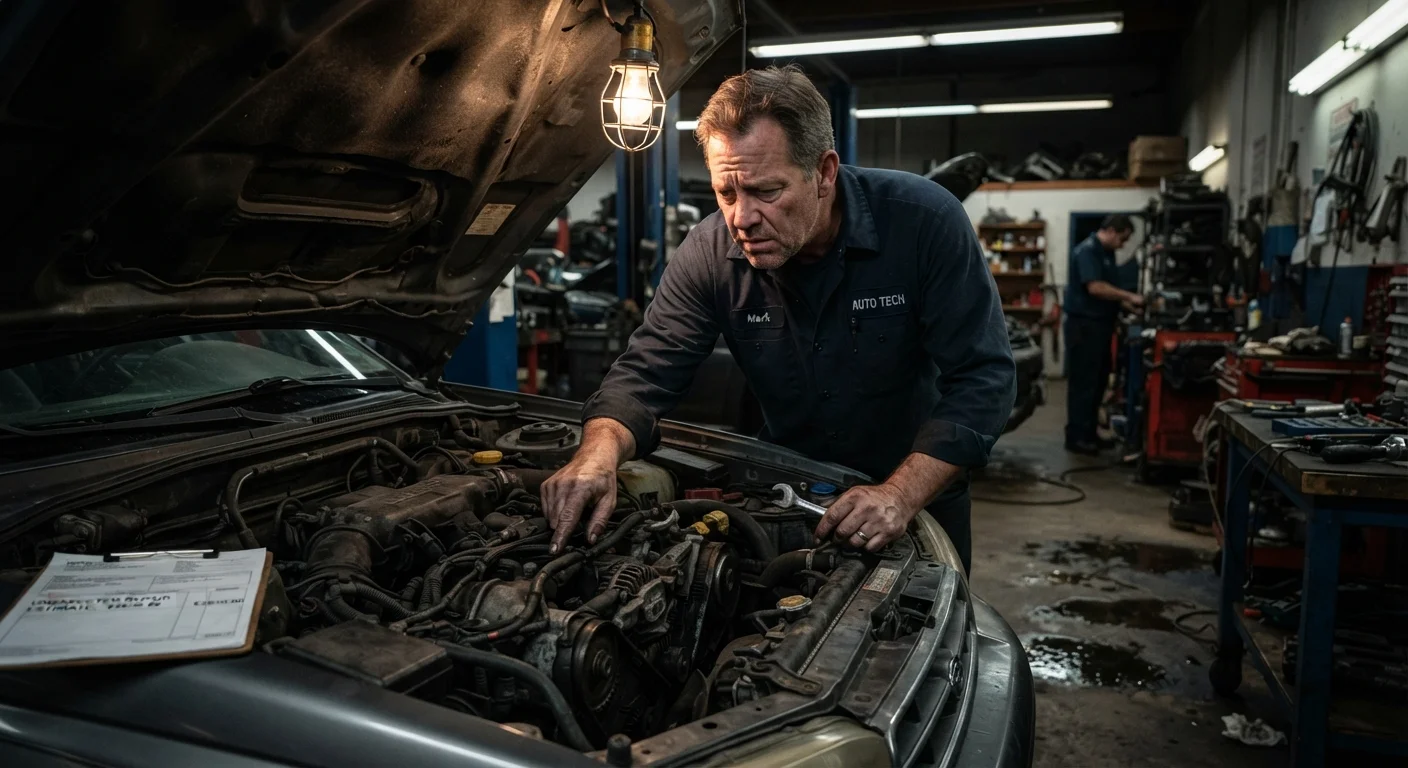
The Hidden Math Behind Deferred Maintenance
Routine maintenance feels like a recurring expense with no obvious payoff. The car runs today, so why spend money on it today? This logic is understandable - but it misreads how mechanical systems degrade. Components do not fail at the moment maintenance is skipped; they fail later, after cumulative stress has pushed them past a threshold. By that point, the original service cost is irrelevant. What matters is the repair bill in front of you.
The same compounding dynamic applies across home ownership - as explored in the real cost of deferred home maintenance. Vehicles follow the same pattern: a $60 oil change ignored becomes a $4,000 engine repair. A $40 rotation skipped becomes a $900 tire replacement. The math consistently favors maintenance over repair.
~$1,200
Average cost of a preventable engine repair
AAA has estimated that US drivers pay billions annually in vehicle repair costs that could have been avoided or reduced through routine maintenance.
3-4×
Cost multiplier when brake pads are ignored
Industry repair data consistently shows that worn brake pads allowed to damage rotors increase per-axle repair costs by three to four times compared to timely pad replacement.
$500+
Resale value lost due to incomplete service records
Vehicle valuation guides note that documented maintenance history can meaningfully increase private-party resale value, with gaps in records often prompting buyer price reductions.
Staying ahead of your vehicle's service schedule is one of the most direct strategies in any spending wisely approach to car ownership. For a broader view of where vehicle budgets quietly bleed money, see where car owners lose the most money without realizing it.
Common Maintenance Mistakes and How to Avoid Them
Most expensive vehicle repairs share a common origin: a routine service that was delayed, forgotten, or dismissed as unnecessary. The mistakes below are not exotic edge cases - they are the most frequent reasons everyday drivers end up facing four-figure repair estimates.
Stretching oil changes well beyond the manufacturer's recommended interval to save a small upfront cost.
Why it happens: Oil change reminders feel like they come around constantly, and the $50-$100 service fee adds up over a year. Drivers often assume that because the engine still sounds fine, the oil is still doing its job.
Ignoring tire rotation and alignment until uneven wear forces premature tire replacement.
Why it happens: Tires look the same from a distance, and rotation feels like an optional extra that shops push to pad the bill. Many drivers only notice a problem when handling degrades or a tire fails.
Delaying brake inspections until squealing or grinding forces emergency service.
Why it happens: Brake wear is gradual and easy to rationalize - drivers assume the noise will appear early enough to act. By the time metal-on-metal grinding starts, pad replacements have escalated into rotor replacements.
Skipping coolant flushes and fluid checks, then facing an overheating engine or transmission failure.
Why it happens: Coolant and transmission fluid don't have an obvious service reminder in many vehicles, so they get overlooked between the more visible oil and tire services. Drivers assume "topped off" means "healthy."
Ignoring minor warning lights or unusual sounds until a small fault becomes a major system failure.
Why it happens: Warning lights can linger for months without obvious consequences, leading drivers to assume they are not urgent. Shops charge for diagnostics, so it feels cheaper to wait and see.
Deferred Maintenance Can Void Your Warranty
Most vehicle warranties require that you follow the manufacturer's recommended maintenance schedule. Skipping services - and failing to document completed ones - can give a manufacturer legal grounds to deny a warranty claim. Keep every receipt and service record, even for work you do yourself.
One underlying pattern connects nearly every mistake on this list: drivers often operate on assumptions rather than their owner's manual. Manufacturer schedules are engineering documents, not marketing tools. They reflect how long components actually last under defined conditions. Treating them as optional is where the real financial risk begins. To understand how maintenance costs evolve over a vehicle's full life, see keeping maintenance costs in check over a vehicle's lifetime.
Low Fluid Warnings Are Not Suggestions
Dashboard warning lights for oil pressure, coolant temperature, or transmission fluid indicate a system already under stress. Continuing to drive without addressing these warnings can cause irreversible internal engine or transmission damage within miles. Pull over safely and address the issue before driving further.
Knowing which services to prioritize - and which widely repeated maintenance rules are actually myths - also matters. Car maintenance myths that cost drivers unnecessary money covers the rules that sound reasonable but regularly mislead drivers into either overspending or underservicing their vehicles.
The content provided on our blog site traverses numerous categories, offering readers valuable and practical information. Readers can use the editorial team’s research and data to gain more insights into their topics of interest. However, they are requested not to treat the articles as conclusive. The website team cannot be held responsible for differences in data or inaccuracies found across other platforms. Please also note that the site might also miss out on various schemes and offers available that the readers may find more beneficial than the ones we cover.