

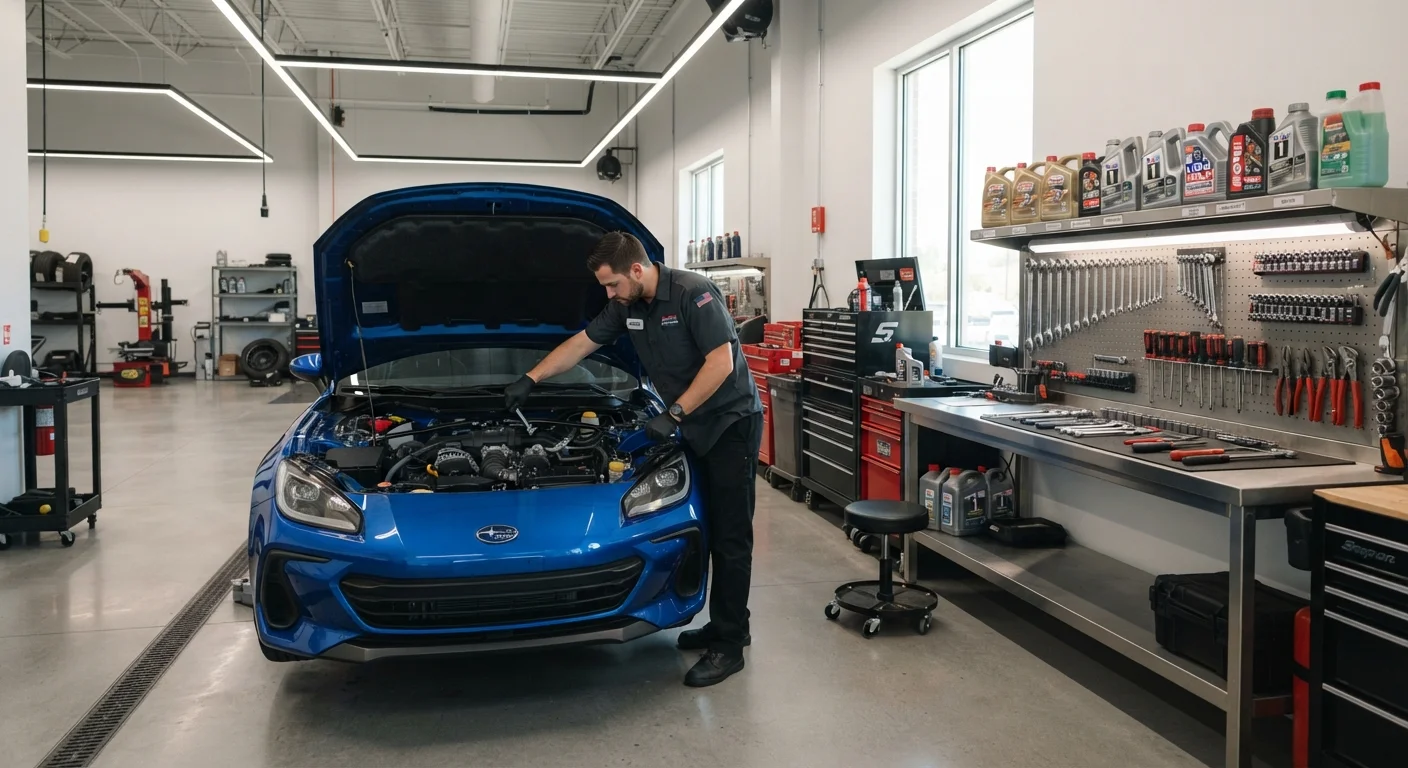
Why Routine Maintenance Is Non-Negotiable
Modern vehicles are engineered to last well beyond 150,000 miles - but that lifespan depends almost entirely on consistent upkeep. Skipping routine services doesn't just risk a breakdown; it can void warranty coverage, reduce resale value, and turn a $50 fluid change into a $2,000 component failure.
The logic is straightforward: internal combustion engines and their supporting systems operate under extreme heat, pressure, and friction. Lubricants degrade, filters clog, and seals wear. Maintenance intervals exist to replace these consumables before degradation reaches the threshold where it damages components. Catching a low coolant level costs nothing. Replacing a warped cylinder head costs significantly more.
For an overview of how safety habits and mechanical reliability work together, see the Driver Safety & Rules hub - keeping your car mechanically sound is foundational to keeping you safe on the road.
Check all six fluid levels on the same day each month - pick a date you'll remember, like the first of the month - so nothing gets overlooked between services.
Fluid degradation and leaks often develop gradually; monthly visual checks catch problems early enough to address them before they cause component damage.
Before authorizing any repair over $200, ask the mechanic to explain what they found, show you if possible, and confirm whether the repair is urgent or can safely wait.
Understanding the failure mechanism helps you prioritize spending and makes it harder for non-essential upsells to go unquestioned.
Under the Hood: Fluids and Filters You Need to Know
Six fluids keep your vehicle running safely, and every driver should be able to locate and check each one. Engine oil lubricates moving parts; transmission fluid manages gear shifts; coolant (antifreeze) regulates engine temperature; brake fluid transfers force through the hydraulic brake system; power steering fluid (where applicable) assists steering effort; and windshield washer fluid maintains visibility.
Engine oil is the one most drivers know - but the "every 3,000 miles" rule is outdated. Most modern engines with full-synthetic oil run 5,000-10,000 miles or more between changes; your owner's manual specifies the correct interval and viscosity grade. Using the wrong grade or exceeding the interval degrades lubrication faster than most drivers realize.
Air filters - both engine and cabin - are often overlooked. A clogged engine air filter restricts airflow, reducing combustion efficiency. A dirty cabin air filter degrades in-car air quality and strains the HVAC system. Both are typically inexpensive and straightforward to inspect.
For a plain-language walkthrough of every reservoir and component under the hood, the First-Time Owner's Hood Orientation is a useful starting point.
Tires, Brakes, and the Safety Systems That Depend on Them
Tires are the only part of your vehicle in contact with the road, which makes their condition a direct safety variable. Tire pressure should be checked monthly and before long trips - underinflated tires increase stopping distances, generate excess heat, and reduce fuel economy. Use the pressure listed on the driver's door jamb sticker, not the maximum figure printed on the tire sidewall.
Tread depth determines wet-weather grip. The penny test (insert a penny into the tread groove with Lincoln's head down - if you can see the top of his head, the tread is worn to approximately 2/32") identifies tires that need replacement. Many safety professionals recommend replacing tires at 4/32" for meaningful wet-road performance.
Brake pads typically last 25,000-65,000 miles depending on driving style and conditions. Squealing when braking is often a wear indicator making contact with the rotor - a deliberate signal built into most pads. Grinding indicates metal-on-metal contact, which means rotor damage is likely already occurring. Both warrant prompt inspection by a qualified mechanic.
Don't Ignore Brake Warning Signs
Squealing, grinding, a pulsing pedal, or a longer-than-usual stopping distance are all signals that brake components need inspection. Brakes are a safety-critical system - driving on worn pads or damaged rotors puts you and others at risk. Have any of these symptoms evaluated by a qualified mechanic promptly, not at the next scheduled service.
Reading and Using Your Maintenance Schedule
Your vehicle's owner's manual contains a maintenance schedule specific to your engine, drivetrain, and transmission. This schedule - not generic internet timelines - is the authoritative source for service intervals. Many manufacturers also distinguish between "normal" and "severe" service conditions; frequent short trips, stop-and-go city driving, towing, or extreme temperatures typically qualify as severe, requiring shorter intervals.
Modern vehicles often include an oil life monitoring system or a dashboard maintenance reminder. These systems use algorithms based on driving patterns rather than a fixed mileage counter, making them more accurate than calendar-based approaches. However, they typically only track oil changes - not every service item - so the manual still matters.
The Maintenance Schedule Decoded guide walks through how to read these schedules line by line and apply them to real driving patterns.
Decoding Repair Estimates and Working With Mechanics
When a repair shop presents an estimate, you're entitled to understand every line item. Labor charges are typically listed separately from parts costs. Labor rates vary significantly by region and shop type - dealership service departments generally charge more per hour than independent shops, though this varies. Neither is inherently better; quality depends on the specific shop and technician.
Ask for a written estimate before authorizing any work. In most US states, shops are legally required to provide one upon request and cannot exceed it without your approval. Request that replaced parts be returned to you - this confirms the work was actually done and lets you inspect what failed.
For unfamiliar repairs, a brief independent research check on the typical cost range for your vehicle's make and model can reveal whether an estimate is in a reasonable range. Diagnostic fees are common and usually legitimate - shops invest time to identify root causes accurately.
Your Rights Around Repair Authorization
Consumer protection laws governing auto repair vary by state, but most US states require written estimates and customer authorization before shops can exceed the quoted price. Some states also mandate that replaced parts be made available to the customer upon request. Check your state attorney general's office for the specific rules in your jurisdiction.
Controlling the True Cost of Car Ownership
Beyond fuel and insurance, maintenance and repairs are the largest variable in what a vehicle actually costs to own. The most reliable cost-control strategy is simple: follow the maintenance schedule, address small issues before they compound, and keep records.
A service logbook - physical or digital - documents what was done, when, and by whom. This history is useful when diagnosing future problems, supports warranty claims, and demonstrably increases resale value. Buyers and dealers both view documented service history as evidence of lower risk.
Understanding which services can reasonably be deferred and which cannot is also practical financial knowledge. Oil changes and tire rotations are high-priority; many cosmetic services (cabin air filter replacement, wiper blades) can be DIY'd at a fraction of the shop cost without mechanical risk.
For broader strategies on reducing what you spend on your vehicle over time, the Car Costs & Savings hub covers financing, insurance, fuel, and depreciation in practical terms. And if you want to go deeper on road-safety habits that reduce wear on your vehicle and your risk of an accident, Defensive Driving: Core Principles is a practical companion read.
The content provided on our blog site traverses numerous categories, offering readers valuable and practical information. Readers can use the editorial team’s research and data to gain more insights into their topics of interest. However, they are requested not to treat the articles as conclusive. The website team cannot be held responsible for differences in data or inaccuracies found across other platforms. Please also note that the site might also miss out on various schemes and offers available that the readers may find more beneficial than the ones we cover.