

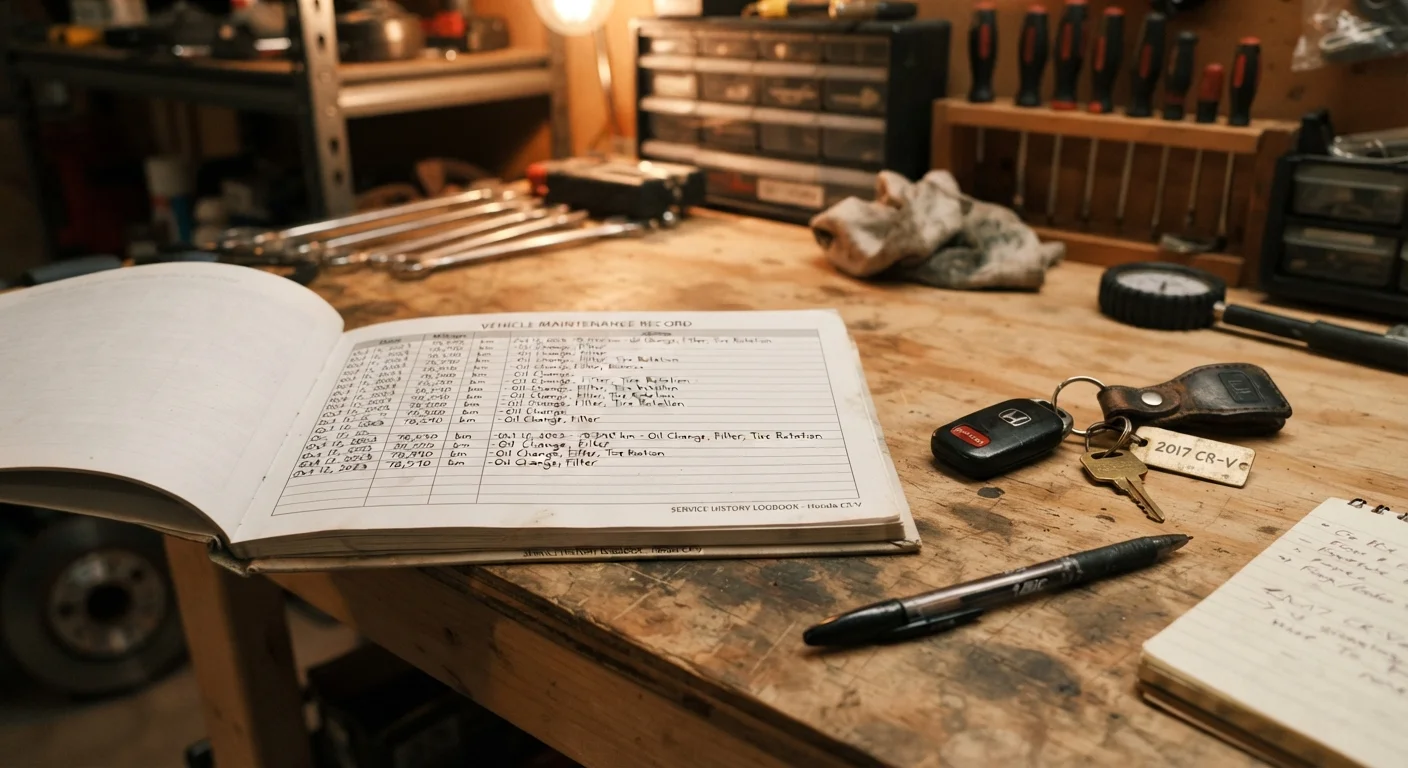
What a Maintenance Log Actually Does for You
A car maintenance log is a running record of every service event your vehicle has received - oil changes, brake jobs, tire rotations, fluid top-offs, and anything in between. It sounds mundane, but the practical payoff is real and compounds over time.
First, it prevents paying twice for the same work. Without written records, it's easy to forget whether the cabin air filter was replaced six months ago or two years ago. A log removes that guesswork. Second, patterns become visible: if you're topping off coolant every three months, the log flags that before a blown head gasket does. Third, when it's time to sell, a documented service history signals to buyers that the vehicle was cared for - which can support your asking price. See our guide to managing maintenance costs over a vehicle's lifetime for how scheduled upkeep connects to long-term savings.
What to Record - and How to Structure It
Every log entry should capture six things consistently: the date, the odometer reading, a description of the work performed, parts replaced (include part numbers if available), labor or parts cost, and who did the work - you, a shop, or a dealership. That last point matters if a warranty claim ever comes up.
For routine items like oil changes, note the oil grade and filter used. For tires, record the brand, size, and the position each tire was mounted. For brake work, note pad thickness or rotor measurements if your shop provides them. The more specific the entry, the more useful it becomes when you or a mechanic needs to trace back what was done and when.
Choosing a Format That You'll Actually Use
The format that works is the one you'll maintain. Three practical options exist:
- A dedicated paper logbook kept in the glove box. It's available at every service and never needs charging. The limitation is it can be lost and isn't searchable.
- A spreadsheet (stored in cloud sync) gives you sortable columns and is easy to back up. It's a reasonable middle ground for anyone already comfortable with basic spreadsheet tools.
- A mobile app designed for vehicle maintenance can send service reminders based on mileage intervals and store digital receipts. The trade-off is dependency on a platform that may change or charge fees over time.
Whichever format you choose, enter each service event within 48 hours - memory degrades fast. If you use a shop, ask for an itemized receipt and attach or transcribe it immediately.
Starting Mid-Ownership Is Still Worth It
If your vehicle already has 60,000 miles on it and you've never kept a log, don't let that stop you from starting now. Request a service history printout from your dealership or regular shop - many retain records for several years. Use that as your opening entries and build forward from there. An incomplete log is still far more useful than none.
For owners committed to keeping a vehicle well past 100,000 miles, a thorough log becomes especially valuable. Our article on the financial case for long-term vehicle ownership explains how documentation supports that strategy.
Connecting Your Log to the Bigger Picture
A maintenance log doesn't live in isolation. When paired with a full accounting of what you spend on your vehicle each year, it gives you a complete picture of true ownership cost - not just what you paid at the pump or dealer. Our annual car cost audit checklist is designed to work alongside maintenance records to surface the real numbers.
If you're new to hands-on car ownership or want a broader framework for maintenance decisions, the complete driver's reference guide covers the full lifecycle from routine checks to reading repair estimates. A maintenance log is one habit - but it anchors a larger system that keeps your vehicle safe, reliable, and less expensive to own over time.
The content provided on our blog site traverses numerous categories, offering readers valuable and practical information. Readers can use the editorial team’s research and data to gain more insights into their topics of interest. However, they are requested not to treat the articles as conclusive. The website team cannot be held responsible for differences in data or inaccuracies found across other platforms. Please also note that the site might also miss out on various schemes and offers available that the readers may find more beneficial than the ones we cover.