

Why Understanding Traffic Stops Matters
A traffic stop is one of the most common interactions between civilians and law enforcement in the United States - and one of the most misunderstood. Drivers who don't know their legal obligations risk making the situation more complicated than it needs to be. Equally, drivers who don't understand their rights may waive protections they're legally entitled to keep.
This walkthrough is general legal education, not legal advice. Laws vary by state and circumstances differ widely. If you face a legal issue stemming from a traffic stop, consult a licensed attorney in your jurisdiction. For a broader look at traffic laws that often precede a stop, see our guide on right-of-way rules most drivers misread.
What you will need
Step-by-Step: What to Do During a Traffic Stop
Each phase of a traffic stop carries specific obligations and rights. Following these steps in order keeps you legally protected and reduces the chance of misunderstanding.
Pull over safely and promptly
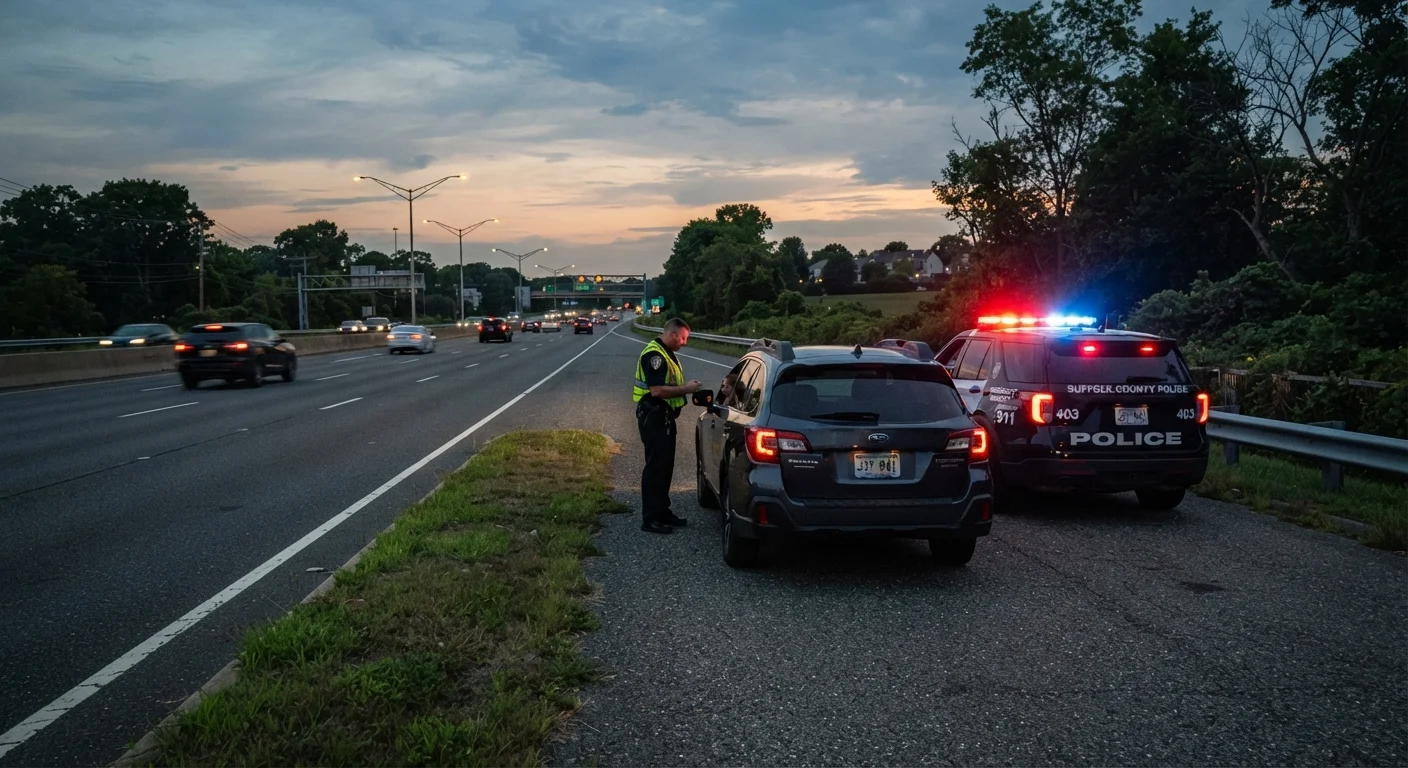
As soon as you notice a police vehicle signaling you - lights, siren, or both - activate your right turn signal to indicate you've seen them. Move to the right shoulder or nearest safe area and come to a complete stop. Avoid stopping in the middle of traffic or a dangerous curve.
If no safe spot is immediately available, slow down and use your hazard lights to signal compliance while you find one. Officers generally recognize this as cooperative behavior.
Secure the vehicle and stay calm
Once stopped, put the vehicle in park (or neutral with the parking brake engaged), turn off the engine, and roll down your window fully. Turn on interior cabin lights if it's dark - this reduces tension and improves visibility for everyone.
Keep your hands on the steering wheel where the officer can see them. Avoid reaching into the glove box or center console until instructed to do so.
Provide required documents when asked
In every U.S. state, drivers are legally required to present a valid driver's license, current vehicle registration, and proof of insurance upon an officer's request. Have these documents ready, but only retrieve them when asked and, ideally, after telling the officer where they are.
Example: "My registration is in the glove box - is it okay if I reach for it?" This kind of communication is practical and often appreciated.
Know what you are and aren't required to say
Beyond providing required identification documents, you have a Fifth Amendment right to remain silent. You are not legally required to answer questions such as "Do you know how fast you were going?" or "Where are you headed?" You can politely decline: "I'd prefer not to answer questions without a lawyer present."
Be respectful and non-confrontational throughout. Asserting a legal right is different from being uncooperative, and tone matters in these interactions.
Understand your rights if a search is requested
Officers generally need a warrant, your consent, or a recognized legal exception (such as probable cause) to search your vehicle. If asked for consent to search, you are legally permitted to decline. Say clearly and calmly: "I do not consent to a search."
If the officer proceeds anyway, do not physically resist. Complying in the moment does not waive your right to challenge the search's legality in court later.
Wait for the officer's instruction before leaving
Do not drive away until the officer has explicitly indicated the stop is over - typically by returning your documents and saying something like "You're free to go." Leaving before being dismissed, even if the interaction seems finished, can result in additional charges.
Once dismissed, signal carefully and merge back into traffic when safe to do so.
After the Stop: Citations, Warnings, and Next Steps
Once the officer returns your documents, one of several outcomes typically follows: a verbal warning, a written warning, a citation (also called a ticket), or in more serious cases, an arrest. Each carries different implications.
Written citations are not admissions of guilt - signing one typically only acknowledges receipt, not fault. Instructions on the citation itself explain how to respond, usually by paying the fine, requesting a hearing, or contesting it in traffic court.
If you believe the stop was unlawful or your rights were violated, document everything you remember immediately after: time, location, what was said, badge numbers if observed. This information is valuable if you later pursue a legal remedy. The place to challenge the stop is in court, not at the roadside.
Document the stop as soon as it ends
As soon as you're safely away, write down everything you remember: the officer's name and badge number (usually on the citation), the stated reason for the stop, the time and location, and any notable exchanges. This contemporaneous record can be essential if you decide to contest the citation or file a complaint. Memory fades quickly - notes taken immediately are far more reliable.
Traffic stops in high-stakes zones carry heightened legal consequences. Our article on school zones, construction zones, and emergency vehicles explains the specific rules and tougher penalties involved.
This article is for general informational purposes only and does not constitute legal advice. Traffic laws differ by state and individual circumstances vary. Consult a qualified, licensed attorney for guidance specific to your situation.
The content provided on our blog site traverses numerous categories, offering readers valuable and practical information. Readers can use the editorial team’s research and data to gain more insights into their topics of interest. However, they are requested not to treat the articles as conclusive. The website team cannot be held responsible for differences in data or inaccuracies found across other platforms. Please also note that the site might also miss out on various schemes and offers available that the readers may find more beneficial than the ones we cover.