

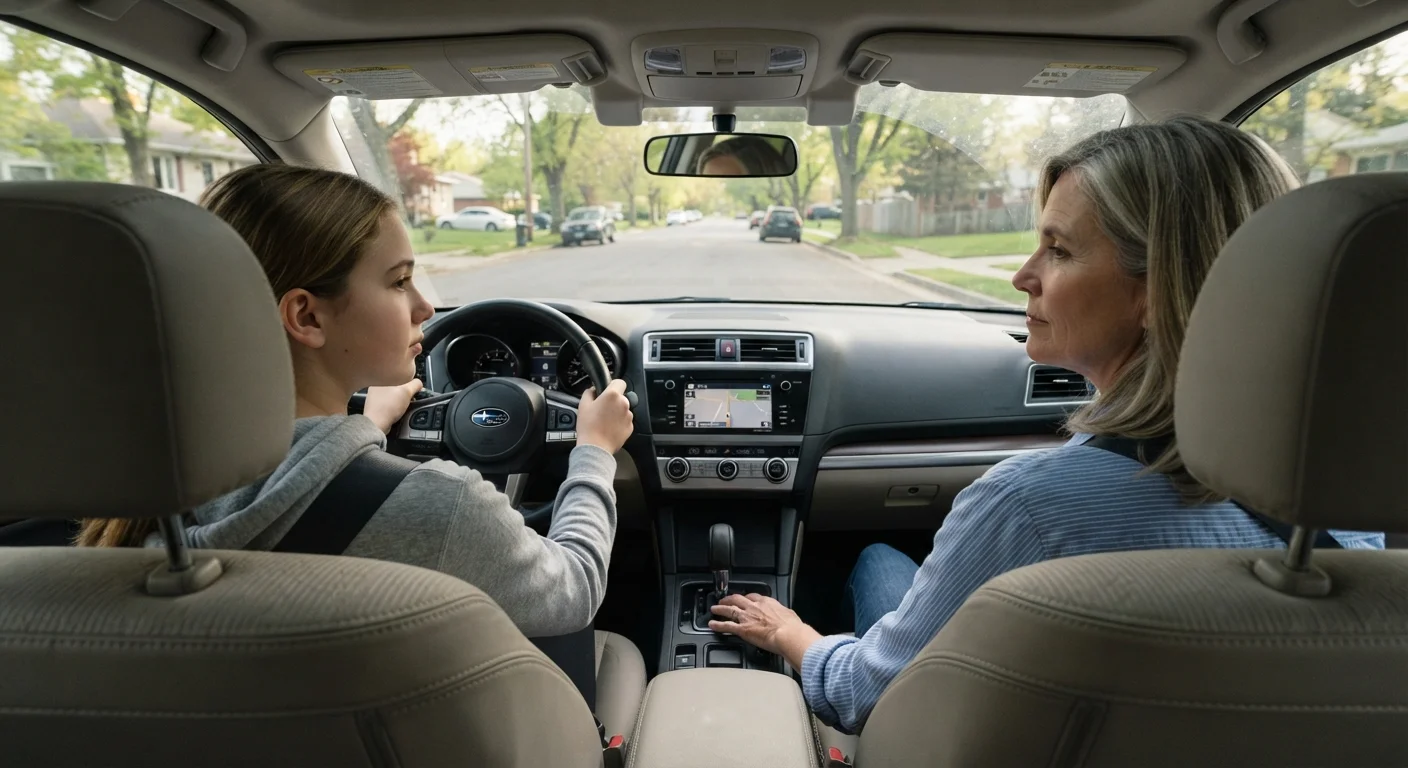
Why the GDL System Exists
Motor vehicle crashes remain a leading cause of death among teenagers in the United States. New drivers lack both experience and hazard-perception skills - two things that only develop through supervised time behind the wheel. GDL exists specifically to bridge that gap in a structured way, rather than placing inexperienced drivers in full-traffic situations immediately after passing a basic road test.
Research consistently links GDL implementation to reductions in teen crash rates. The Insurance Institute for Highway Safety and other organizations have documented this across multiple states over several decades. The system isn't punitive - it's a deliberate framework for building competence and reducing exposure to the highest-risk driving situations before a teen is fully on their own.
50-70%
Reduction in teen crash risk after GDL implementation
Multiple studies cited by the Insurance Institute for Highway Safety indicate GDL programs are associated with substantial reductions in crash rates among 16-year-old drivers.
40-65 hrs
Typical supervised driving hours required
Most U.S. states mandate this range of logged supervised practice during the learner's permit phase, with a portion required at night.
All 50
U.S. states with some form of GDL law
Every state and the District of Columbia has enacted GDL legislation, though the specific age thresholds and restrictions differ significantly.
The Three Standard Stages
Stage 1: Learner's Permit
The learner's permit phase begins after passing a written knowledge test on traffic laws and signs. During this stage, the new driver must be supervised by a licensed adult driver - typically 21 or older, though requirements vary - at all times. Most states mandate a minimum holding period of six months and require 40-65 logged hours of supervised practice, with a set number of those hours completed at night.
Stage 2: Intermediate (Restricted) License
Once the learner phase requirements are met and a road skills test is passed, the driver advances to an intermediate license. This stage allows unsupervised driving but typically includes a nighttime curfew (commonly no driving between 9 p.m. and 5 a.m.) and a passenger restriction limiting unsupervised teen riders in the vehicle. These rules target the conditions most correlated with teen crashes: low visibility and peer-influenced risk-taking.
Stage 3: Full License
After holding an intermediate license for the required period - usually six to twelve months - without violations, and reaching the state's minimum age (commonly 17 or 18), the driver qualifies for a full, unrestricted license. Some states require a separate application; others upgrade automatically.
State-by-State Variation: What to Actually Check
While the three-stage structure is consistent, the specific numbers differ enough between states that generalizations can mislead. Minimum permit ages range from 14 to 16. Supervised hour requirements vary from 30 to 65. Nighttime curfews start anywhere between 9 p.m. and midnight. Some states allow exceptions for work, school, or religious activities; others do not.
The only reliable source for your state's current requirements is your state's official Department of Motor Vehicles (DMV) or equivalent licensing authority. GDL laws are periodically revised, so even information that was accurate a few years ago may no longer reflect current rules.
Teen drivers should also be aware that other road rules apply alongside GDL restrictions. For instance, distracted driving laws - including phone and texting bans - apply during all GDL stages and often carry enhanced penalties for minor drivers.
What Happens When GDL Rules Are Violated
A traffic violation or at-fault crash during the learner or intermediate stage typically has consequences beyond a standard fine. Most states will extend the restriction period, reset the holding-period clock, or suspend the intermediate license outright. Because driving record points accumulate from this stage forward, violations during GDL can follow a driver into their full-license years.
Parents and guardians play an active role here. Many states require a parent or guardian to co-sign the GDL application, and some allow parents to request license cancellation if they believe their teen isn't ready. This is not a loophole - it's an intentional mechanism that reinforces supervised oversight during the most risk-prone years of a driving career.
This article provides general educational information about Graduated Driver Licensing systems in the United States. Specific requirements vary by state. Always verify current rules with your state's official DMV or licensing authority before applying or advising a new driver.
Frequently Asked Questions
In most states, learner's permits are available at age 15 or 16, though a few states allow them at 14. The minimum age varies by state, so check your state's DMV for the specific threshold.
Requirements range widely - most states mandate between 40 and 65 hours of supervised practice, with a portion typically required at night. Some states require a parent or guardian to certify the hours completed.
Common restrictions include a nighttime driving curfew (often between 9 p.m. and 5 a.m.) and a limit on the number of unsupervised teen passengers. Distracted driving rules also apply - see <a href="/car-ownership-guide/driver-safety-rules/distracted-driving-laws-by-state-what-counts-as-a-violation">distracted driving laws by state</a> for related phone and texting rules.
Yes. Most states extend the intermediate stage or reset the restriction period if a teen receives a traffic violation or license suspension. Understanding <a href="/car-ownership-guide/driver-safety-rules/points-systems-license-suspension-and-how-driving-records-work">how points systems and driving records work</a> is relevant even at this stage.
GDL requirements typically apply based on age rather than driving experience. Adults obtaining a first license usually face fewer restrictions, though they still must pass written and road tests. Check your state's DMV for adult first-license rules.
Most states grant full licensure at 17 or 18, provided the teen has held an intermediate license for a specified period - typically six to twelve months - without violations. The exact age and holding period differ by state.
The content provided on our blog site traverses numerous categories, offering readers valuable and practical information. Readers can use the editorial team’s research and data to gain more insights into their topics of interest. However, they are requested not to treat the articles as conclusive. The website team cannot be held responsible for differences in data or inaccuracies found across other platforms. Please also note that the site might also miss out on various schemes and offers available that the readers may find more beneficial than the ones we cover.