

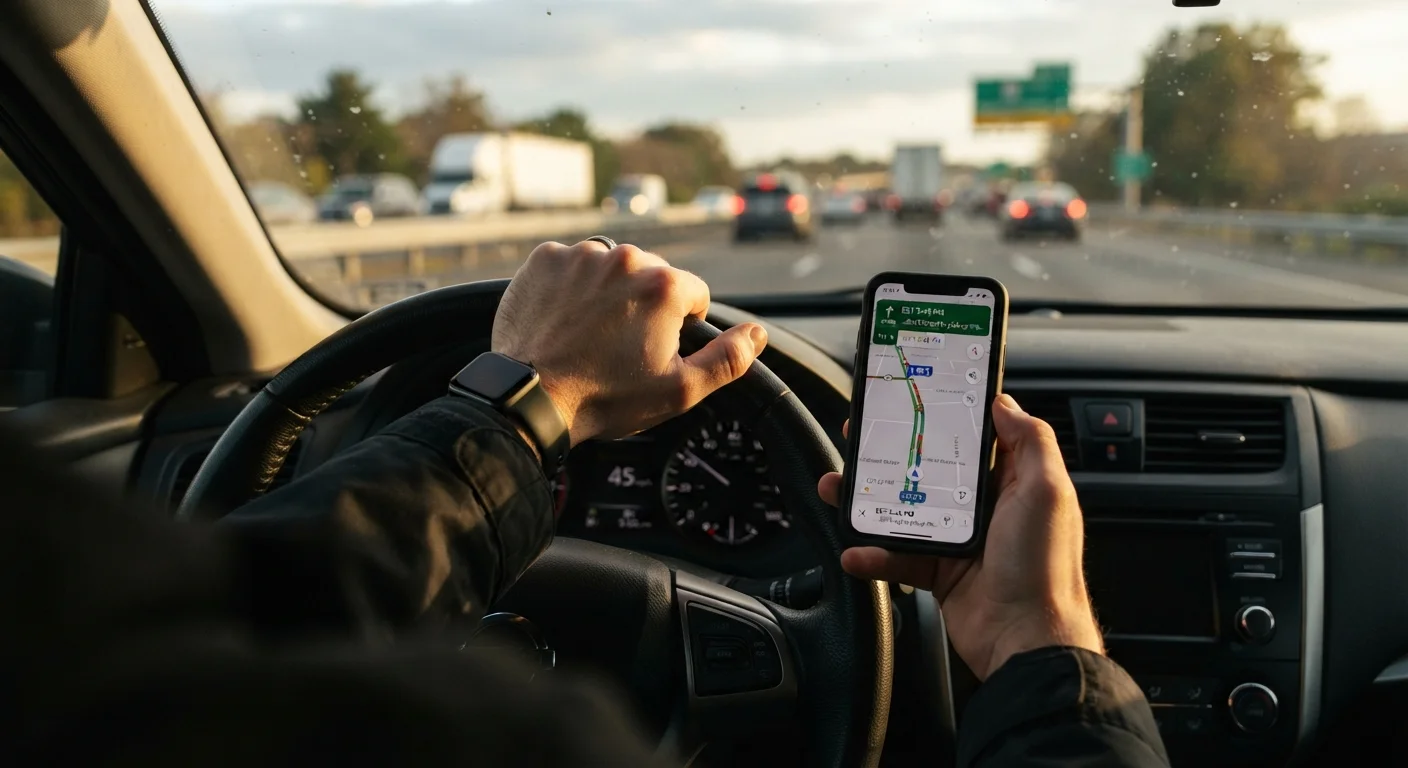
Why State Distracted Driving Laws Vary So Much
There is no single federal distracted driving law that applies uniformly to all motorists. Instead, each state sets its own rules - covering which devices are restricted, which behaviors are banned, and what penalties apply. The result is a patchwork of regulations that can change the moment you cross a state line.
At a broad level, most states regulate distracted driving along three axes: texting while driving, handheld device use, and hands-free requirements. These are related but legally distinct categories. A state can ban texting without banning handheld calls, for example. A hands-free mandate goes further - requiring all phone use to be conducted through a speakerphone, Bluetooth, or dash-mounted device.
Understanding which category applies to your situation matters. A driver who talks on a phone while holding it could be legal in one state and subject to a primary-enforcement fine in the next. See our guide on urban vs. highway driving rules for a broader picture of how road regulations differ by context.
The Three Main Categories of Violation
Texting Bans
As of this writing, texting while driving is banned for all drivers in 48 states and Washington D.C. Missouri and Montana have historically been outliers with narrower restrictions, though state legislatures revisit these rules regularly. Always verify current law with your state's DMV or department of transportation.
Handheld Device Bans
A texting ban does not automatically mean a handheld phone ban. Many states allow drivers to hold a phone to their ear for voice calls while prohibiting manual text entry. However, a growing number of states - including California, New York, Washington, Oregon, and others - have enacted full handheld bans that prohibit holding a phone for any purpose while the vehicle is in motion.
Hands-Free Mandates
The strictest category requires that all mobile device interaction occur through a hands-free system. Under these laws, even a brief glance at a map app while holding your phone can constitute a violation. Younger and newer drivers often face tighter restrictions than the general public regardless of the state's baseline rules - many states impose complete phone bans on drivers under 18 or those holding learner's permits.
Age-Based Restrictions Are Often Stricter
Even in states that allow adult drivers to use handheld phones for calls, drivers under 18 - and often those in a graduated licensing program - typically face a complete ban on all mobile device use. These restrictions apply regardless of whether the device is handheld or hands-free. Check the novice and juvenile provisions in your state's traffic code separately from the general adult rules.
Violations in these categories can feed into your driving record. Learn how points accumulate and what triggers suspension in your state.
What Counts as Distracted Driving Beyond Phones
State laws focus heavily on mobile devices, but distracted driving as a legal concept can extend further. Many states have broader statutes covering any activity that impairs a driver's attention, which courts have applied to eating, adjusting in-vehicle systems, or interacting with passengers in a way that causes erratic driving.
In-vehicle navigation systems and factory-installed infotainment screens are generally treated differently from handheld phones, but programming a GPS while in motion can still constitute a distraction-based violation under general reckless driving statutes. School zones and construction zones often carry elevated penalties for any distracted driving offense - see our reference on special zone rules and penalties for details.
Primary vs. secondary enforcement also shapes real-world risk. Under primary enforcement, an officer can pull you over solely for a distracted driving violation. Under secondary enforcement, they can only cite you for it if you were already stopped for another offense. Most states with handheld bans apply primary enforcement to those laws.
Primary enforcement
A traffic law enforcement standard that allows an officer to stop and cite a driver solely for the designated violation, without needing another reason to initiate the stop.
Secondary enforcement
An enforcement standard where an officer may only issue a citation for a specific offense if the driver was already pulled over for a separate, primary violation.
Handheld ban
A law prohibiting drivers from physically holding a mobile phone or device while operating a vehicle, regardless of whether they are talking, texting, or using an app.
Hands-free requirement
A legal standard requiring that any mobile device interaction while driving be conducted through a technology that does not require the driver to hold the device, such as Bluetooth or a dashboard mount.
Novice driver restriction
A rule applying stricter device or distraction prohibitions to drivers who hold learner's permits or have held a full license for less than a specified period, typically one to two years.
How to Stay Compliant Across State Lines
Because laws differ by state, the safest baseline is to adopt hands-free behavior universally - use a dash mount, connect via Bluetooth, or enable Do Not Disturb while driving. This approach keeps you compliant in the strictest states and eliminates the cognitive overhead of remembering each jurisdiction's rules.
Before traveling interstate, check the distracted driving statutes for each state you'll pass through. State DMV websites and the Governors Highway Safety Association (GHSA) publish regularly updated summaries of current laws. Relying on informal sources or outdated guides carries real risk given how frequently legislatures amend these statutes.
Distracted driving violations also matter beyond the immediate fine. Depending on your state, a citation can add points to your license and raise your insurance premiums. Understanding other commonly misread traffic rules is equally important for keeping your record clean.
The content provided on our blog site traverses numerous categories, offering readers valuable and practical information. Readers can use the editorial team’s research and data to gain more insights into their topics of interest. However, they are requested not to treat the articles as conclusive. The website team cannot be held responsible for differences in data or inaccuracies found across other platforms. Please also note that the site might also miss out on various schemes and offers available that the readers may find more beneficial than the ones we cover.