

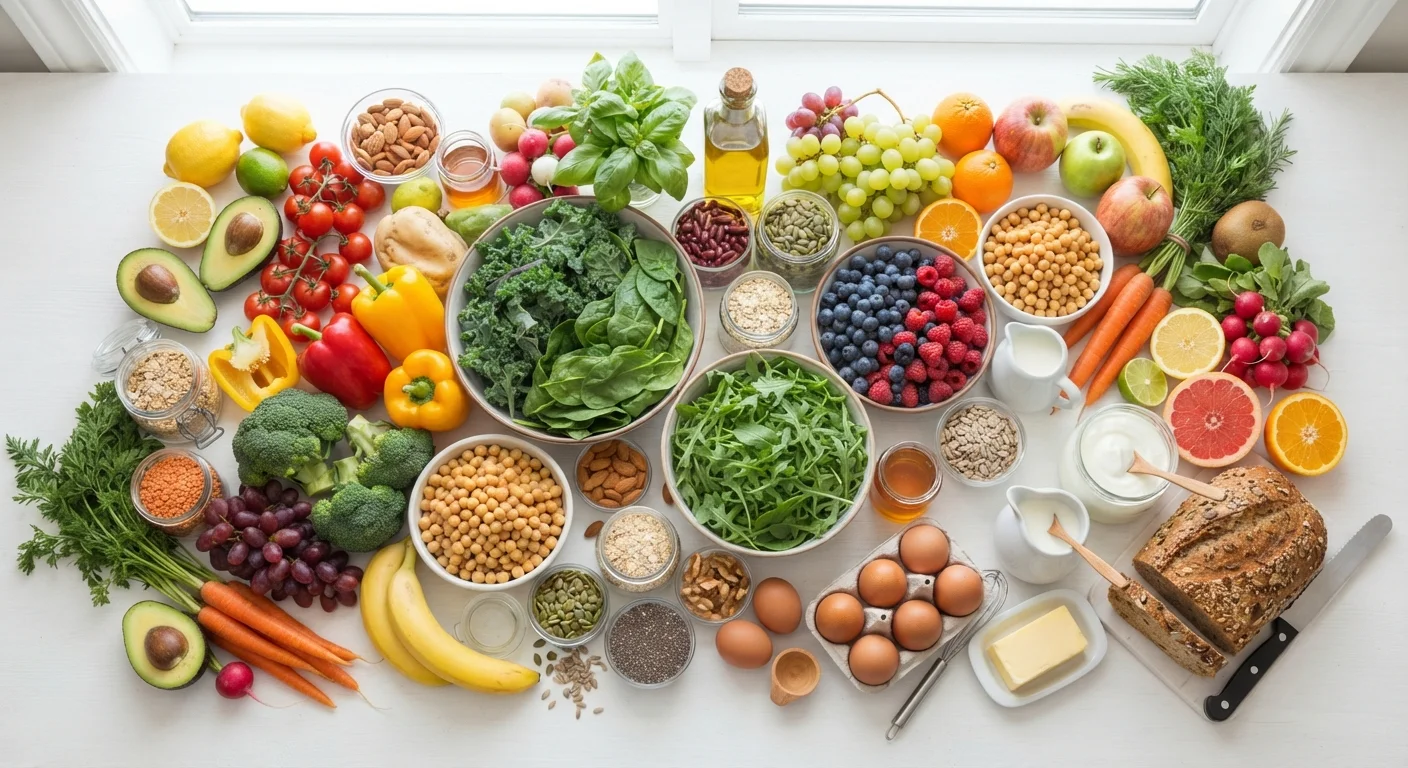
What Are Micronutrients?
Micronutrients are the vitamins and minerals your body needs in relatively small amounts to carry out thousands of biological processes - from converting food into energy to building bone, synthesizing hormones, and supporting immune defenses. Unlike macronutrients (carbohydrates, protein, and fat), micronutrients supply no usable calories; what they supply instead is regulatory power. For a broader look at how macros and micros work together, see our guide to macronutrients.
Vitamins are organic compounds, meaning they contain carbon and can be broken down by heat, air, or acid. Minerals are inorganic elements - calcium, iron, zinc - that retain their chemical structure through cooking. Both categories are further divided: vitamins split into fat-soluble (A, D, E, K) and water-soluble (C and the B-complex); minerals split into macrominerals (needed in larger amounts, e.g., calcium, magnesium) and trace minerals (needed in smaller amounts, e.g., iron, iodine, selenium).
Fat-soluble vitamins
Vitamins (A, D, E, K) that dissolve in fat and are stored in body tissues. Because they accumulate, excessive supplementation carries a higher risk of toxicity than water-soluble vitamins.
Water-soluble vitamins
Vitamins (C and all B vitamins) that dissolve in water and are generally excreted in urine when consumed in excess. Regular dietary intake is necessary to maintain adequate levels.
Dietary Reference Intake (DRI)
An umbrella term for the set of nutrient intake reference values established by the National Academies of Sciences, Engineering, and Medicine. DRIs include the Recommended Dietary Allowance (RDA) and Tolerable Upper Intake Level (UL), among others.
Trace minerals
Minerals required by the body in very small amounts - typically less than 100 mg per day - including iron, zinc, iodine, selenium, and copper. Small does not mean unimportant; deficiencies can have significant health consequences.
Bioavailability
The proportion of a nutrient that is actually absorbed and used by the body. Bioavailability varies by food source, preparation method, and what other nutrients are consumed at the same time.
Fortification
The deliberate addition of vitamins or minerals to food products (e.g., adding B12 to plant milks, iodine to table salt) to prevent deficiency at the population level.
Key Vitamins: Functions and Food Sources
The table below summarizes the vitamins most relevant to everyday health for US adults. Requirements vary by age, sex, and life stage - always refer to the Dietary Reference Intakes (DRIs) published by the National Academies of Sciences, Engineering, and Medicine, and consult a healthcare provider for personal guidance.
| Total essential vitamins | 13 (4 fat-soluble, 9 water-soluble) (National Institutes of Health, Office of Dietary Supplements) |
| Classified essential minerals | ~16, including 7 macrominerals and ~9 trace minerals (National Academies of Sciences, Engineering, and Medicine) |
| Most common US deficiency | Vitamin D (widespread insufficiency documented in national surveys) (NHANES data, CDC) |
| B12 absorption note | Absorption declines with age; adults over 50 may benefit from fortified foods or supplements (NIH Office of Dietary Supplements) |
| Iron absorption boost | Pairing plant-based iron with vitamin C can increase absorption up to 3-fold (American Journal of Clinical Nutrition, research consensus) |
| Folate in pregnancy | Adequate folate before and during early pregnancy is associated with reduced neural tube defect risk (CDC, US Preventive Services Task Force) |
| Vitamin | Primary Role | Reliable Food Sources |
|---|---|---|
| A (fat-soluble) | Vision, immune function, skin integrity | Liver, dairy, eggs; beta-carotene in sweet potato, carrots, spinach |
| D (fat-soluble) | Calcium absorption, bone health, immune modulation | Fatty fish, fortified dairy/plant milks, eggs; also synthesized via skin and sunlight |
| E (fat-soluble) | Antioxidant protection of cell membranes | Sunflower seeds, almonds, wheat germ oil, peanut butter |
| K (fat-soluble) | Blood clotting, bone protein activation | Kale, spinach, broccoli, soybean oil |
| C (water-soluble) | Collagen synthesis, antioxidant, iron absorption aid | Bell peppers, citrus, strawberries, broccoli, kiwi |
| B1 (Thiamin) | Energy metabolism, nerve function | Pork, whole grains, legumes, nuts |
| B12 | Red blood cell formation, nerve health, DNA synthesis | Meat, fish, dairy, eggs; fortified cereals and plant milks for vegans |
| Folate (B9) | DNA synthesis, cell division; critical in pregnancy | Legumes, leafy greens, fortified grains, asparagus |
Note: Individuals who are pregnant, nursing, elderly, or managing chronic conditions have specific micronutrient needs that differ from general population guidelines. Please consult a qualified healthcare professional for personal recommendations.
Essential Minerals: What They Do and Where to Get Them
Minerals participate in structural roles (bones, teeth), fluid balance, muscle contraction, and enzyme activity. Deficiency and toxicity thresholds differ widely by mineral, so food-first sourcing is generally safer than high-dose supplementation without clinical oversight.
| Mineral | Primary Role | Reliable Food Sources |
|---|---|---|
| Calcium | Bone and tooth structure, muscle contraction, nerve signaling | Dairy, fortified plant milks, tofu made with calcium sulfate, leafy greens, canned sardines |
| Iron | Oxygen transport in red blood cells; energy metabolism | Red meat, lentils, fortified cereals, tofu, spinach (pair with vitamin C to enhance absorption) |
| Magnesium | Enzyme reactions, muscle and nerve function, blood pressure regulation | Pumpkin seeds, legumes, whole grains, dark chocolate, leafy greens |
| Potassium | Fluid balance, nerve transmission, blood pressure support | Bananas, potatoes, beans, avocado, yogurt |
| Zinc | Immune defense, wound healing, protein synthesis | Oysters, beef, pumpkin seeds, chickpeas, fortified cereals |
| Iodine | Thyroid hormone production, metabolic regulation | Iodized salt, seafood, dairy, seaweed (variable) |
| Selenium | Antioxidant enzyme activity, thyroid function | Brazil nuts (1-2 per day typically sufficient), seafood, eggs, whole grains |
To understand how micronutrient needs shift across your lifespan, see our companion article on nutrition across life stages.
Getting Enough: Practical, Budget-Friendly Strategies
You don't need expensive supplements or specialty foods to cover most micronutrient bases. Research consistently shows that a diverse, minimally processed diet supplies adequate amounts of nearly every essential vitamin and mineral for most healthy adults.
- Eat a wide color range of vegetables and fruits. Different pigments signal different phytonutrients and vitamin profiles - orange and yellow foods tend to be rich in carotenoids; dark leafy greens supply folate, vitamin K, and magnesium.
- Include legumes regularly. Lentils, black beans, and chickpeas are among the most cost-effective sources of iron, folate, magnesium, and zinc simultaneously.
- Don't overlook fortified staples. Fortified breakfast cereals, iodized salt, and enriched grain products are intentionally designed to shore up common dietary gaps - they're genuinely useful, particularly for B12, folate, and iodine.
- Pair nutrients strategically. Vitamin C consumed alongside plant-based iron sources significantly enhances iron absorption - a classic example of food synergy.
When reading packaged food labels, the % Daily Value (% DV) column is your quickest indicator of a food's micronutrient contribution. Our guide to reading Nutrition Facts labels explains exactly how to use those numbers.
This article is for general informational and educational purposes only and is not a substitute for professional medical or dietary advice. If you have concerns about nutrient deficiencies or specific health conditions, please consult a registered dietitian or qualified healthcare provider.
The content provided on our blog site traverses numerous categories, offering readers valuable and practical information. Readers can use the editorial team’s research and data to gain more insights into their topics of interest. However, they are requested not to treat the articles as conclusive. The website team cannot be held responsible for differences in data or inaccuracies found across other platforms. Please also note that the site might also miss out on various schemes and offers available that the readers may find more beneficial than the ones we cover.