

Why Macronutrients Matter
Every diet debate - low-carb vs. low-fat, plant-based vs. omnivore - ultimately circles back to macronutrients. Yet most of these debates generate more heat than light, partly because the basic science gets lost in marketing. Understanding what carbohydrates, protein, and fat actually do inside the body cuts through a lot of that noise.
It's also worth noting what macronutrients are not: they are not a complete picture of nutrition on their own. Vitamins, minerals, fiber, and phytocompounds all matter too - see our guide to micronutrients for that side of the equation. But macronutrients form the foundation, and understanding them is the logical first step.
This article is general nutrition education, not personalized medical or dietary advice. Always consult a qualified healthcare provider or registered dietitian for guidance specific to your health needs.
Carbohydrates: The Body's Primary Fuel
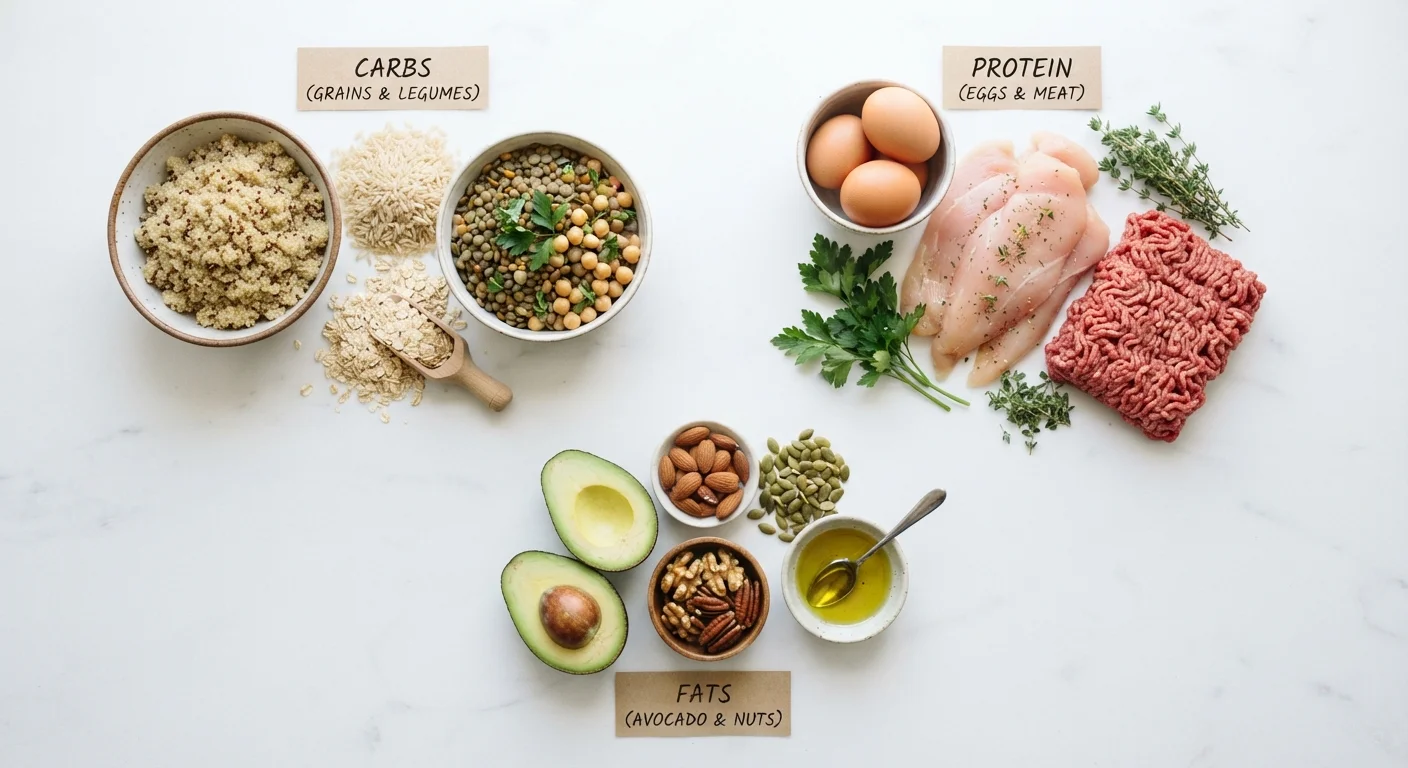
Carbohydrates are broken down into glucose, which serves as the body's primary and most readily available energy source. The brain alone consumes roughly 20% of the body's total glucose supply under normal conditions. During high-intensity physical activity, working muscles rely almost exclusively on carbohydrate-derived fuel.
Not all carbohydrates behave the same way. Simple carbohydrates - sugars found in fruit, dairy, and added sugars - are digested quickly. Complex carbohydrates - found in whole grains, legumes, and vegetables - digest more slowly and are typically accompanied by fiber, which supports digestive health, helps regulate blood sugar response, and promotes satiety.
Fiber is technically a carbohydrate, but one humans cannot digest for energy. It still plays a significant role in gut health and is associated with reduced risk of several chronic conditions according to multiple large observational studies.
45-65%
Recommended carbohydrate share of total daily calories
According to the Dietary Guidelines for Americans, established by the USDA and HHS.
10-35%
Recommended protein share of total daily calories
Per the Dietary Reference Intakes published by the National Academies of Sciences, Engineering, and Medicine.
20-35%
Recommended fat share of total daily calories
Per the National Academies' Acceptable Macronutrient Distribution Ranges for healthy adults.
When you encounter claims that carbohydrates are inherently fattening or harmful, it helps to remember that populations with very high carbohydrate intakes - such as traditional Okinawan or Blue Zone communities - have historically had low rates of chronic disease. Context, quality, and overall dietary pattern all matter more than the macronutrient category alone. For help interpreting how carbs appear on packaging, our guide to reading Nutrition Facts labels walks through every line on the panel.
Protein: Structure, Repair, and Beyond
Protein is made of amino acids - organic compounds that act as building blocks for virtually every tissue in the body. Muscle, skin, hair, enzymes, hormones, and antibodies are all protein-based structures. Of the 20 amino acids the body uses, nine are considered essential because the body cannot synthesize them and must obtain them from food.
The body uses protein for three broad purposes: building and repairing tissue, producing functional molecules (enzymes, hormones, transporters), and - as a last resort - generating energy when carbohydrate and fat intake is insufficient.
Vary Your Protein Sources
Relying on a single protein source - such as chicken breast alone - may leave gaps in your amino acid and micronutrient intake. Rotating among legumes, fish, eggs, dairy, and whole grains (for plant-based sources) helps ensure a more complete nutritional profile. This approach also tends to be more budget-friendly than relying heavily on meat at every meal.
Protein also has the highest thermic effect of food of the three macronutrients, meaning the body expends more energy digesting it compared to carbohydrates or fat. This is one reason higher-protein diets are associated with greater satiety in some research contexts, though it should not be interpreted as a universal prescription.
Protein quality matters as much as quantity. Thinking about where your protein comes from - and whether your overall diet covers all essential amino acids - connects directly to nutrient density, a more complete lens than calories alone.
Dietary Fat: Essential, Not Optional
Fat has been unfairly demonized for decades, largely due to oversimplified public health messaging in the latter half of the 20th century. Current nutritional science presents a more nuanced picture: dietary fat is essential, and eliminating it entirely would be harmful.
Fat serves several critical functions. It enables absorption of fat-soluble vitamins - A, D, E, and K - which cannot enter the bloodstream without a fat vehicle. It provides the structural material for every cell membrane in the body. It supports production of steroid hormones, including sex hormones and cortisol. And it acts as an energy reserve, providing more than twice the calories per gram compared to carbohydrates or protein.
The type of fat consumed matters significantly. Unsaturated fats (found in olive oil, nuts, seeds, avocado, and fatty fish) are associated with favorable cardiovascular outcomes. Saturated fats (found primarily in animal products and tropical oils) have a more complex relationship with cardiovascular risk - current evidence suggests moderating intake is prudent, though the picture is still evolving. Trans fats, largely produced through industrial partial hydrogenation, have been linked to increased LDL cholesterol and decreased HDL cholesterol; they are now largely banned from the US food supply under FDA regulations.
Fear of fat often leads people toward highly processed low-fat products that compensate for palatability by adding sugars. Understanding fat's actual role helps consumers make more informed choices without defaulting to fear-driven substitutions.
Frequently Asked Questions
Most people do not need to formally track macronutrients to maintain good health. Focusing on whole, minimally processed foods naturally provides a reasonable balance. Tracking can be useful for specific athletic or clinical goals but is not a requirement for a generally healthy diet.
Reducing refined carbohydrates may help some people manage calorie intake, but low-carb diets are not universally superior to other approaches. Research suggests that sustainable weight management depends more on overall dietary quality and consistency than on any specific macronutrient ratio. Speak with a healthcare provider before making major dietary changes.
The Recommended Dietary Allowance (RDA) set by the National Academies is 0.8 grams of protein per kilogram of body weight per day for sedentary adults. Needs are generally higher for active individuals, older adults, and those recovering from illness. A registered dietitian can help determine what's appropriate for your situation.
The relationship between dietary fat and heart health depends heavily on fat type. Replacing saturated and trans fats with unsaturated fats is associated with improved cardiovascular outcomes, according to research cited by the American Heart Association. Fat itself is not inherently harmful - source and quantity both matter.
A complete protein contains all nine essential amino acids in adequate amounts. Animal-based foods and some plant foods like soy and quinoa are complete proteins. Incomplete proteins lack one or more essential amino acids but can be complemented by eating a varied diet that includes different plant protein sources throughout the day.
The content provided on our blog site traverses numerous categories, offering readers valuable and practical information. Readers can use the editorial team’s research and data to gain more insights into their topics of interest. However, they are requested not to treat the articles as conclusive. The website team cannot be held responsible for differences in data or inaccuracies found across other platforms. Please also note that the site might also miss out on various schemes and offers available that the readers may find more beneficial than the ones we cover.