

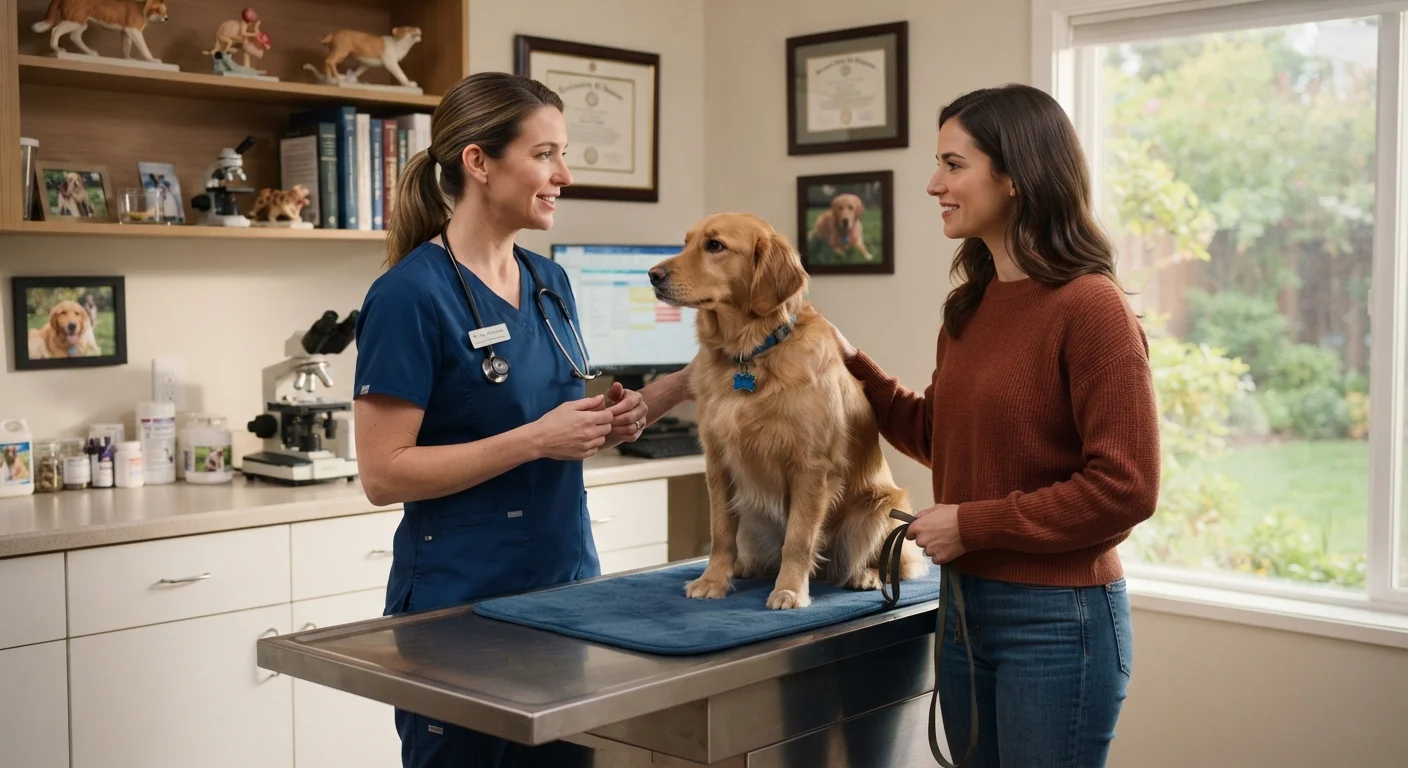
Why the Owner-Vet Relationship Matters
Your veterinarian brings years of medical training; you bring something equally important-an intimate, daily knowledge of your pet. When both forms of expertise are shared effectively, care decisions improve. Research in veterinary communication consistently shows that appointments where owners provide clear, structured observations lead to more accurate diagnoses and better treatment adherence.
Think of the appointment as a collaboration, not a brief consultation. Whether you're attending a routine checkup (see our guide on what actually happens at a wellness visit) or addressing a specific concern, how you prepare and communicate directly shapes what your vet can do for your pet.
“The most important diagnostic tool in veterinary medicine is still the history given by the owner. A thorough, accurate account of what you've observed at home tells us more than many tests.”
— Dr. Karen Overall, Veterinary behaviorist and author on applied animal behavior and learning
Best Practices for Every Vet Appointment
The following practices are grounded in veterinary communication guidance and will help you make the most of every interaction-whether it's a preventive visit, a sick call, or a follow-up.
Keep a written symptom log between appointments.
Memory is unreliable under the time pressure of a short appointment. A log gives the vet accurate timelines, frequency data, and specific behavioral details that are often the deciding factor in a diagnosis.
Prioritize your concerns before the appointment and lead with the most urgent.
Most appointments run 15-30 minutes. Stating your primary concern first ensures it gets full attention rather than being rushed at the end. Vets can better allocate exam time when they know the agenda upfront.
Ask for clarification until you fully understand the care plan.
Incomplete understanding of instructions leads to medication errors, missed follow-ups, and preventable complications. Vets expect questions and generally welcome owners who engage actively.
Bring a complete and current medication and supplement list.
Drug and supplement interactions are a real risk in veterinary medicine. Vets need a full picture to prescribe safely, and owners often forget items they've given for years.
Follow up promptly when your pet's condition changes after treatment.
Waiting until the next scheduled visit when something has changed can delay necessary adjustments. Proactive contact is both appropriate and expected in a good vet-client relationship.
Be honest about what your pet actually eats, does, and is exposed to.
Accurate history shapes every clinical decision. Omitting details-like table scraps, outdoor access, or missed doses-leaves the vet working with incomplete information.
Quick Wins You Can Apply Before Your Next Appointment
You don't need to overhaul your routine to become a more effective advocate for your pet. Even small changes in preparation can produce noticeably better appointment outcomes.
For new pet owners, pairing these habits with a structured health plan early on pays long-term dividends. Our New Pet Owner Health Checklist walks you through the critical first 90 days, including how to set up a productive vet relationship from the start.
Recognizing and Reporting Changes Accurately
Vets rely on owner-reported observations to fill in the gaps between physical exams. The quality of that information matters. Vague descriptions like "she seems off" are less actionable than specific, timestamped observations: "She's been eating about half her normal portion for four days and had loose stools twice."
Be Specific About Duration and Frequency
When describing symptoms, aim to include when they first appeared, how often they occur, and whether they're getting better or worse. Vague reports like "for a while" are harder to act on than "started about 10 days ago and happens every other day." If you're unsure of exact timing, a rough estimate is still more useful than no timeframe at all.
Pay particular attention to changes in appetite, water intake, elimination habits, energy level, and coat or skin condition. These are among the earliest indicators of systemic issues. If you notice that your pet's coat looks dull, energy has dipped, or digestion has become irregular, our article on signs your pet's diet might not be working can help you determine what's worth raising with your vet.
As pets age, the range of changes to monitor expands. Owners of dogs or cats approaching their senior years should familiarize themselves with how veterinary care needs shift after age seven, since reporting subtle changes early often has an outsized impact on outcomes in older animals.
This article is for general informational and educational purposes only and does not constitute veterinary or medical advice. Always consult a licensed veterinarian for guidance specific to your pet's health needs.
The content provided on our blog site traverses numerous categories, offering readers valuable and practical information. Readers can use the editorial team’s research and data to gain more insights into their topics of interest. However, they are requested not to treat the articles as conclusive. The website team cannot be held responsible for differences in data or inaccuracies found across other platforms. Please also note that the site might also miss out on various schemes and offers available that the readers may find more beneficial than the ones we cover.