

Why Pet Obesity Is a Bigger Problem Than It Looks
According to data from veterinary organizations including the Association for Pet Obesity Prevention, more than half of dogs and cats in the United States are estimated to be overweight or obese. Yet many owners don't recognize the problem - partly because a heavier body shape has become normalized in companion animals, and partly because the health consequences aren't always immediately visible.
What makes pet obesity particularly serious is the cascade of conditions it can trigger. Excess body fat is metabolically active tissue - it releases inflammatory compounds that can affect joint health, immune function, hormone regulation, and organ performance. The consequences go well beyond simple sluggishness.
Understanding the real mechanics of how excess weight affects your pet - and dispelling the myths that make it easy to dismiss - is a foundational step in responsible ownership. If you're uncertain whether your pet's diet is supporting a healthy weight, these physical signs may offer useful clues.
Myth
A chubby pet is just well-fed and happy - a little extra weight isn't really a health concern.
Fact
Even modest excess weight - as little as 10-20% above ideal - meaningfully increases disease risk, including osteoarthritis, type 2 diabetes, and certain cancers.
The idea that a round, well-padded pet is simply content is one of the most persistent misconceptions in pet care. In reality, adipose (fat) tissue is biologically active. It produces pro-inflammatory molecules called adipokines that contribute to systemic inflammation - a driver of joint degeneration, insulin resistance, and immune dysregulation. Veterinary research consistently links overweight status to reduced lifespan in both dogs and cats, often by 1.5 to 2 years or more in significantly obese individuals.
Myth
If my pet is energetic and eating well, they can't be overweight.
Fact
Energy level and appetite are poor indicators of weight status; many overweight pets appear active and enthusiastic while carrying measurable excess body fat.
Pets adapt to their body condition over time. An overweight dog may still show excitement for walks, play fetch, and maintain a healthy appetite - all behaviors owners naturally interpret as signs of good health. However, these behaviors don't reflect what's happening at a metabolic or structural level. A veterinary body condition assessment, not observed behavior, is the appropriate tool for evaluating weight status.
Myth
Cats are fine carrying a bit of extra weight - they're naturally sedentary.
Fact
Cats are obligate carnivores with specific metabolic needs; excess weight significantly increases their risk of diabetes mellitus, urinary disease, and fatty liver disease.
The assumption that cats are naturally low-energy creatures that don't need much physical activity leads many owners to overlook creeping weight gain. In fact, domestic cats evolved as active hunters, and indoor sedentary lifestyles combined with calorie-dense food create strong conditions for obesity. Feline diabetes is directly associated with overweight status, and the good news is that weight loss - achieved safely and gradually - has been shown in veterinary studies to enable remission in some diabetic cats.
Myth
Cutting back food drastically is the fastest and safest way to help an overweight pet lose weight.
Fact
Rapid calorie restriction is dangerous for pets and should never be attempted without veterinary guidance; gradual, supervised weight loss is both safer and more effective.
Unlike humans, certain pets - cats especially - face life-threatening risks from sudden caloric restriction. When a cat's body breaks down fat stores too quickly, the liver can become overwhelmed with fat deposits, leading to hepatic lipidosis (fatty liver disease), which can be fatal without treatment. For dogs, overly aggressive restriction can cause nutrient deficiencies and muscle loss. Effective weight management typically involves a modest caloric reduction, increased fiber to promote satiety, and structured monitoring over weeks to months.
Myth
My vet would tell me if my pet had a weight problem - since they haven't mentioned it, we're fine.
Fact
Weight discussions are sometimes underemphasized in brief appointments; proactively asking your vet for a body condition score puts you in control of this conversation.
Research on veterinary communication has found that weight concerns aren't always raised during routine visits, particularly when appointments are short or focused on other issues. Owners who are aware of body condition scoring can request an explicit evaluation at each visit and ask for a target BCS range for their individual pet. Being proactive - rather than waiting for the topic to arise - is the most reliable way to catch weight creep early.
How Vets Actually Measure Healthy Weight
The number on a scale tells only part of the story. Veterinarians primarily rely on a tool called body condition scoring (BCS) - a standardized 9-point or 5-point scale that evaluates visible and palpable fat deposits, muscle mass, and overall body shape. A pet at BCS 4-5 on a 9-point scale is considered ideal; scores of 6-7 indicate overweight, and 8-9 indicate obesity.
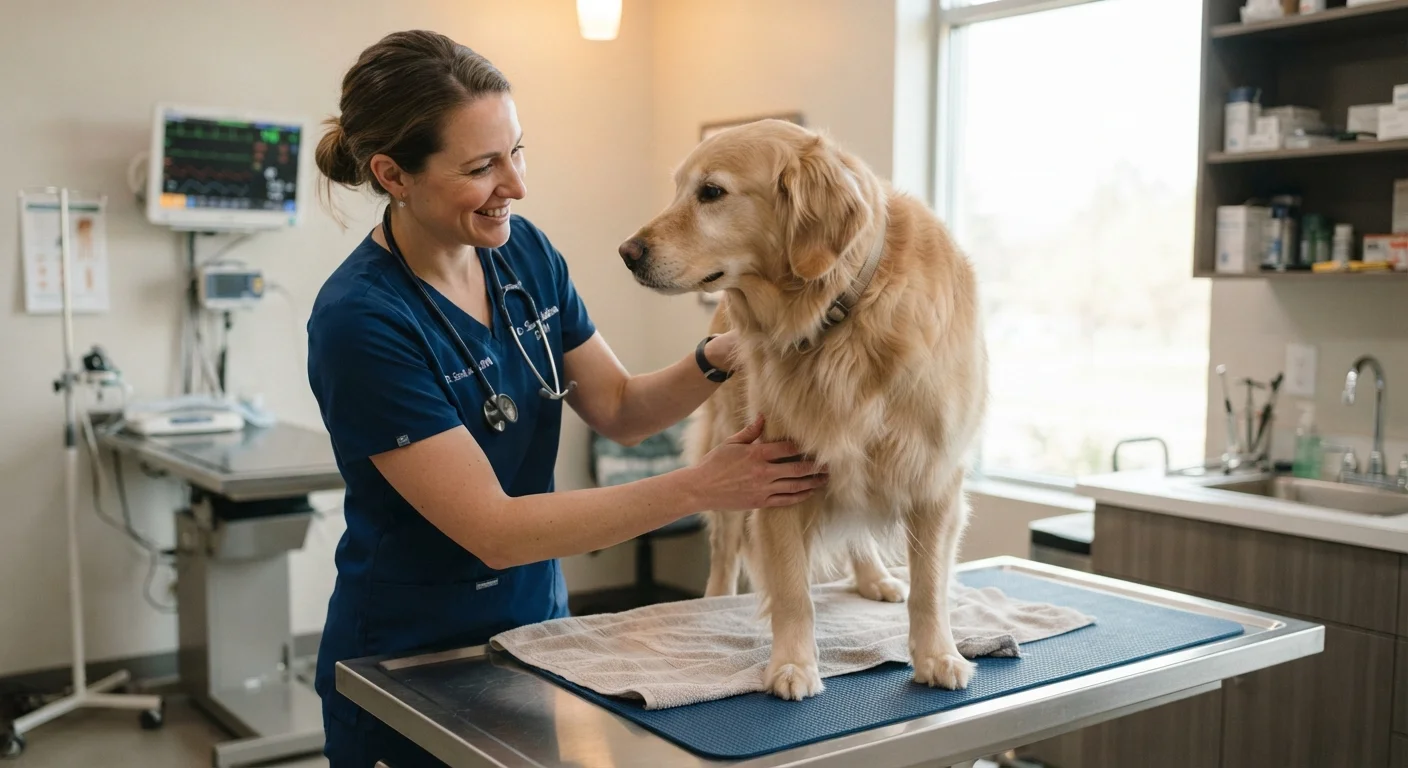
During a BCS assessment, a vet checks whether ribs can be easily felt without pressing hard, whether there's a visible waist when viewed from above, and whether the abdomen tucks upward behind the ribcage. These physical markers are more informative than weight alone because ideal weight varies significantly even within breeds.
59%
Dogs estimated to be overweight or obese in the US
The Association for Pet Obesity Prevention has estimated that the majority of US dogs are above their ideal body weight based on clinical surveys.
61%
US cats estimated to be overweight or obese
Similar survey data from veterinary organizations suggests cats face an even higher rate of excess weight than dogs in American households.
~2 years
Potential lifespan reduction from significant obesity
Veterinary epidemiological research suggests significantly obese dogs may live nearly two years less than their lean counterparts of the same breed.
This is also why annual wellness exams matter. A routine checkup includes a BCS evaluation that owners can't reliably replicate at home. Learn more about what these visits involve in our guide to your pet's annual wellness visit.
For older animals, weight management becomes especially nuanced. Muscle loss and fat gain can occur simultaneously in senior pets - a phenomenon sometimes called sarcopenic obesity - making regular professional assessment even more critical. See how veterinary care priorities shift in aging pets after age seven.
Practical Steps Owners Can Take
Weight management in pets requires a consistent, measured approach guided by your veterinarian. Abrupt calorie restriction can be harmful - particularly in cats, where rapid weight loss can trigger a serious liver condition called hepatic lipidosis. Any structured weight-loss plan should be developed with professional input.
That said, owners play a central role in daily execution. Key practices supported by veterinary guidance include:
- Measuring meals: Use a kitchen scale or a proper measuring cup rather than estimating. Free-feeding makes caloric control nearly impossible.
- Accounting for treats: Treats should make up no more than 10% of daily caloric intake. Many commercial treats are calorie-dense.
- Structured activity: Regular, appropriate exercise - tailored to your pet's age, breed, and joint health - supports both calorie burning and muscle retention.
- Consistent monitoring: Schedule regular weigh-ins at your vet's office and track body condition over time, not just body weight.
Never Restrict Calories Without Vet Guidance
Putting a cat on a crash diet or sharply cutting a dog's food without professional input can cause serious, even life-threatening complications. In cats, rapid weight loss can trigger hepatic lipidosis - a dangerous liver condition. Always develop a weight-loss plan in partnership with your veterinarian, who can recommend appropriate caloric targets, feeding schedules, and progress monitoring.
For a broader view of what your pet's nutritional needs look like day-to-day, the Pet Nutrition Guide offers straightforward, vet-aligned feeding guidance.
This article is for general informational purposes only and does not constitute veterinary medical advice. Always consult a licensed veterinarian for guidance specific to your pet's health needs.
The content provided on our blog site traverses numerous categories, offering readers valuable and practical information. Readers can use the editorial team’s research and data to gain more insights into their topics of interest. However, they are requested not to treat the articles as conclusive. The website team cannot be held responsible for differences in data or inaccuracies found across other platforms. Please also note that the site might also miss out on various schemes and offers available that the readers may find more beneficial than the ones we cover.