

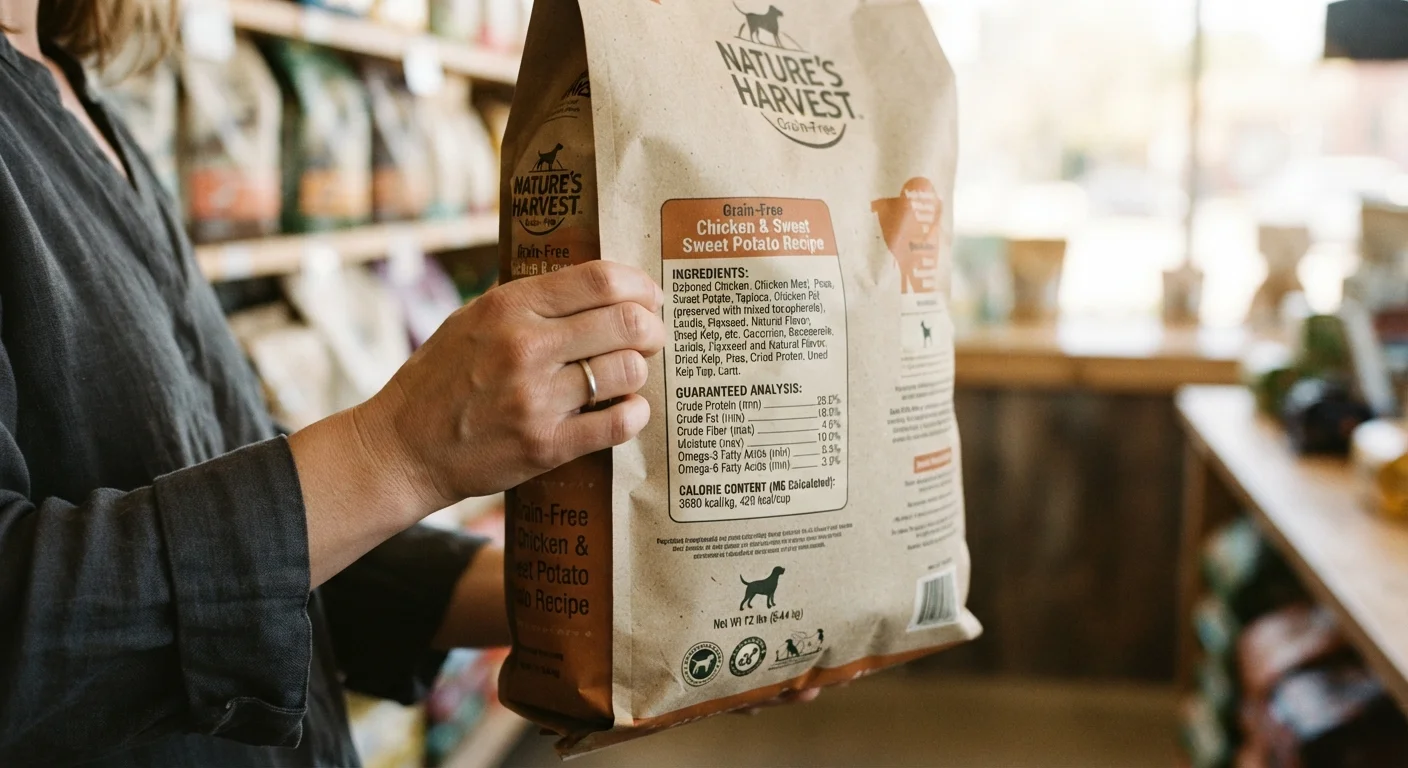
Why Pet Food Labels Are Worth Learning to Read
Pet food packaging is designed to attract buyers, but the regulatory label - distinct from front-of-bag marketing - contains standardized, verifiable information. The US pet food industry is regulated at both the federal level (by the FDA) and the state level (many states adopt AAFCO model regulations), which means labels must meet defined requirements for content and format.
That structure gives you real data to work with, but only if you know how each section functions. The ingredient list, guaranteed analysis, and AAFCO statement each answer a different question. Reading them as a set - rather than focusing on any one in isolation - gives you a more accurate picture of what you're feeding your pet. Our broader Pet Nutrition Guide covers how label reading fits into the larger picture of feeding pets a balanced diet.
What you will need
How to Work Through a Pet Food Label Step by Step
The five steps below follow a logical sequence: start with nutritional adequacy, confirm life-stage fit, examine ingredient transparency, interpret the numbers, and verify accountability. Taken together, they give you a practical framework you can apply to any bag or can in about ten minutes.
Pet food packaging (bag, can, or pouch)
The label itself is your primary source - all five key sections are printed directly on the packaging.
AAFCO nutrient profiles (publicly available)
The Association of American Feed Control Officials publishes minimum and maximum nutrient requirements for dogs and cats, useful as a reference benchmark.
Calculator or smartphone
Useful for converting guaranteed analysis figures to dry-matter basis when comparing wet and dry foods.
Find and Read the AAFCO Nutritional Adequacy Statement
Look for a small paragraph - often near the bottom of the label - that begins with a phrase like "[Product name] is formulated to meet the nutritional levels established by the AAFCO [Dog/Cat] Food Nutrient Profiles." This is the single most important sentence on the label.
The statement tells you two things: (1) whether the food meets a recognized minimum nutritional standard, and (2) which life stage it is formulated for - growth (puppies/kittens), adult maintenance, all life stages, or senior/supplemental. A food labeled "for supplemental feeding only" is not nutritionally complete and should not be a pet's sole diet. For a deeper look at what specific nutrients those standards are built around, see The Nutritional Building Blocks Every Pet Diet Needs.
Check the Life-Stage Designation Carefully
"All life stages" sounds inclusive, but it means the food must meet the nutritional demands of the most demanding stage - typically growth and reproduction. That is not inherently better for an adult or senior pet; it may mean higher calorie and mineral levels than a sedentary adult needs. Match the life-stage claim on the label to your specific pet's current life stage.
Read the Ingredient List with Context
Ingredients are listed in descending order by pre-cooking weight, including moisture. This means a fresh chicken listed first may weigh more than a meal ingredient before cooking, but after moisture is removed during processing, a named meal (like "chicken meal") can actually contribute more protein by weight. Neither is automatically superior - what matters is the overall nutrient profile the food achieves.
Look for named protein sources (e.g., "salmon," "turkey meal") rather than vague terms like "animal by-product meal." By-products are not inherently unsafe - organ meats are nutritionally dense - but specificity on the label reflects better manufacturing transparency. For context on how animal and plant protein sources compare, see plant-based vs. animal protein.
Interpret the Guaranteed Analysis Panel
The guaranteed analysis lists minimum percentages of crude protein and crude fat, and maximum percentages of crude fiber and moisture. These are regulatory minimums and maximums - not precise measurements of what is actually in each bag. Actual nutrient levels can differ.
Because wet foods contain 70-80% moisture and dry foods typically 10-12%, you cannot compare their guaranteed analysis numbers directly. Use the dry-matter calculation described in the tip callout above to make valid comparisons across formats. For a broader understanding of how key nutrients like taurine and omega-3s function once your pet consumes them, see What Taurine, Omega-3s, and Other Nutrients Actually Do Inside Your Pet's Body.
Verify the Manufacturer's Contact Information
Federal regulations require that pet food labels include the manufacturer's or distributor's name and address. This is more than a formality - it tells you who to contact with safety concerns and, in the event of a recall, enables you to confirm whether your specific lot is affected. Look for a toll-free number or website, and verify that the company responds to consumer inquiries. This transparency is a reasonable indicator of accountability.
Compare Foods on a Dry-Matter Basis
Wet and dry foods have very different moisture levels, making direct guaranteed analysis comparisons misleading. To compare accurately, subtract the moisture percentage from 100, then divide each nutrient percentage by the remaining number. This gives you the dry-matter content for a fair side-by-side look.
Marketing Claims Are Not Nutrition Claims
Words like 'premium,' 'holistic,' 'ancestral,' and 'human-grade' are largely unregulated on pet food packaging. They describe marketing positioning, not nutritional quality or safety standards. Learn more in our guide on reading between the lines on pet food marketing claims.
Labels Are Not a Substitute for Vet Guidance
This article provides general educational information about how to read pet food labels. It is not veterinary nutritional advice. Every pet has individual health needs, and dietary decisions - especially for pets with health conditions, obesity, allergies, or life-stage changes - should be made in consultation with a licensed veterinarian.
For foods that make specific marketing claims - grain-free, raw-inspired, limited ingredient - our companion article on what pet food labels are actually telling you goes deeper on how those claims are regulated and what evidence (if any) supports them. And if you're curious about which common household foods are safe to share with your pet, see our guide on human foods that are safe - and unsafe - for pets.
This article is for general informational and educational purposes only and does not constitute veterinary or nutritional advice. Always consult a licensed veterinarian before making significant changes to your pet's diet, especially if your pet has a health condition or specific nutritional needs.
The content provided on our blog site traverses numerous categories, offering readers valuable and practical information. Readers can use the editorial team’s research and data to gain more insights into their topics of interest. However, they are requested not to treat the articles as conclusive. The website team cannot be held responsible for differences in data or inaccuracies found across other platforms. Please also note that the site might also miss out on various schemes and offers available that the readers may find more beneficial than the ones we cover.