

Why Human Food Affects Pets Differently
Pets share our homes, and it's natural to share our food. But a dog or cat's digestive system, liver enzymes, and metabolic pathways differ substantially from ours. A compound harmless to humans can overwhelm a pet's ability to process it, sometimes with serious consequences.
This reference covers the most common household foods - organized by safety status - to help owners make informed decisions. For a broader look at how diet choices affect long-term health, see our comparison of homemade vs. commercial diets.
| Most reported pet toxin | Human food and household substances (ASPCA Animal Poison Control Center annual reports) |
| Toxic threshold: chocolate | Varies by type; dark chocolate is most dangerous (Merck Veterinary Manual) |
| Safe fruit for dogs | Blueberries, watermelon (seedless), banana (small amounts) (Veterinary general consensus) |
| Grapes/raisins | Toxic to dogs; exact mechanism still under study (ASPCA Poison Control guidance) |
| Safe vegetables for cats | Cooked peas, carrots, zucchini (Veterinary general consensus) |
| Species that cannot taste sweetness | Cats (obligate carnivores lack sweet taste receptors) (Published feline genomics research) |
Foods Generally Considered Safe (in Moderation)
The following foods are widely regarded by veterinary sources as low-risk for healthy adult dogs and cats when offered in small amounts as occasional additions - not dietary staples.
For Dogs
- Cooked lean meats (chicken, turkey, beef) - plain, unseasoned, and boneless. Avoid processed deli meats, which are high in sodium.
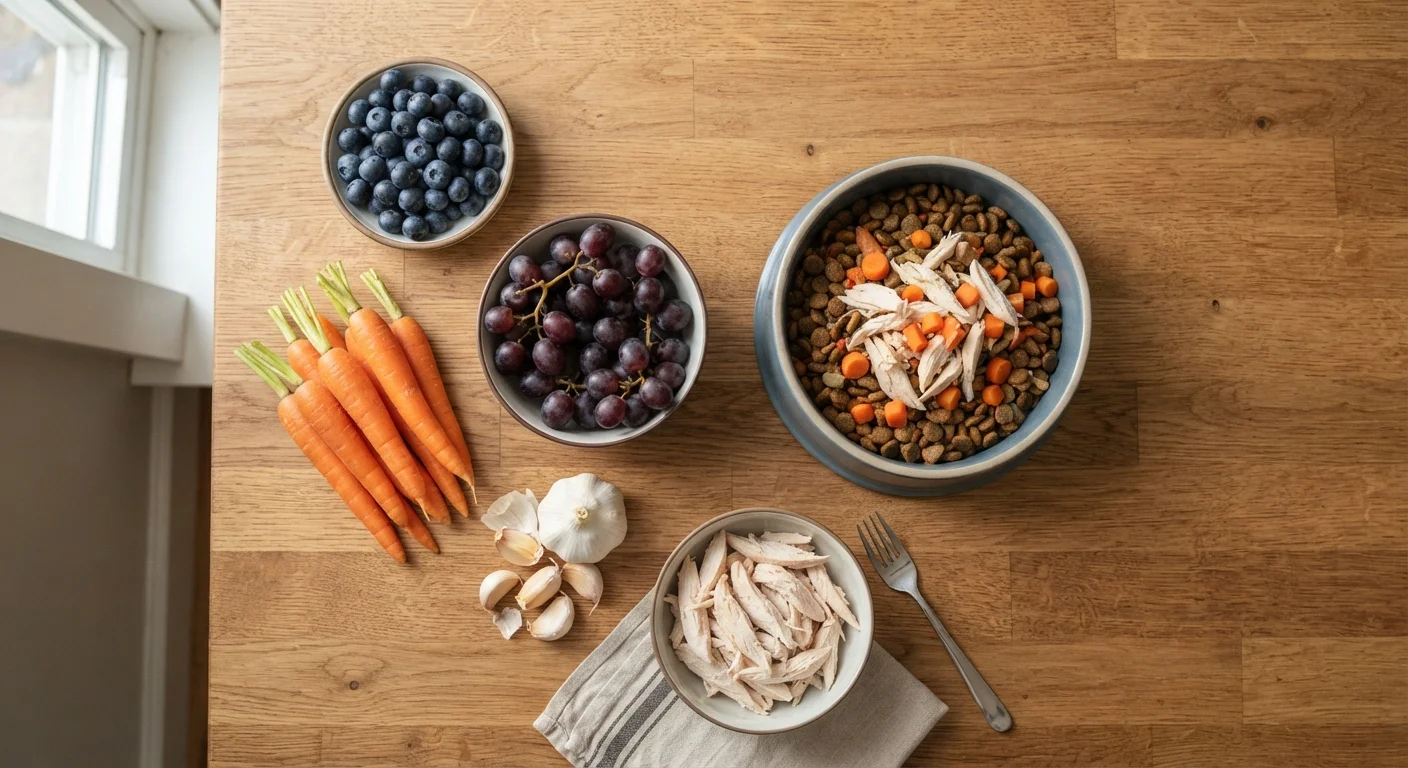
- Blueberries and watermelon - good sources of antioxidants and hydration; remove seeds and rind from watermelon.
- Carrots - low-calorie and fibrous; many dogs enjoy them raw as a chew treat.
- Plain cooked eggs - a source of protein; raw eggs carry a small salmonella risk and can deplete biotin over time if fed regularly.
- Plain cooked rice and oatmeal - easy to digest; sometimes recommended by vets during gastrointestinal upset (always follow your vet's guidance in those cases).
For Cats
- Cooked fish and chicken - plain, boneless, and served occasionally. Fish should not be a primary diet due to high mercury risk and thiamine interference.
- Cooked peas and carrots - tolerated well in small quantities; cats have limited ability to digest plant matter efficiently.
- Plain cooked eggs - same considerations as for dogs apply.
Even safe foods can cause gastrointestinal upset if introduced too quickly or given in large quantities. For guidance on dietary transitions, see how to transition your pet to a new food.
Foods That Are Toxic or High-Risk
The foods below should be kept away from pets entirely. Toxicity can depend on the species, size of the animal, and amount ingested - but no safe threshold has been established for most of these.
This Is General Information, Not Veterinary Advice
The information in this article is intended as educational reference for pet owners, not a substitute for professional veterinary guidance. If you suspect your pet has ingested something harmful, contact your veterinarian or the ASPCA Animal Poison Control Center (888-426-4435) immediately. Do not attempt to induce vomiting or treat your pet at home without professional direction.
Toxic to Dogs and Cats
- Chocolate - contains theobromine (see
), which dogs and cats cannot metabolize efficiently. Dark chocolate and baking chocolate carry the highest concentration.
Theobromine
A naturally occurring stimulant compound found in chocolate. Dogs and cats metabolize it far more slowly than humans, causing it to accumulate to toxic levels in their systems.
Allium toxicity
Poisoning caused by plants in the allium family - onions, garlic, leeks, and chives. These damage red blood cells in dogs and cats, potentially leading to hemolytic anemia.
Xylitol
An artificial sweetener used in sugar-free gum, peanut butter, and baked goods. Even small amounts can cause a rapid, dangerous drop in blood sugar in dogs.
Hemolytic anemia
A condition in which red blood cells are destroyed faster than the body can replace them, reducing the blood's ability to carry oxygen. Certain foods can trigger this in pets.
- Onions, garlic, leeks, and chives - all allium species cause allium toxicity (see
), damaging red blood cells. Toxicity applies to raw, cooked, and powdered forms.
Theobromine
A naturally occurring stimulant compound found in chocolate. Dogs and cats metabolize it far more slowly than humans, causing it to accumulate to toxic levels in their systems.
Allium toxicity
Poisoning caused by plants in the allium family - onions, garlic, leeks, and chives. These damage red blood cells in dogs and cats, potentially leading to hemolytic anemia.
Xylitol
An artificial sweetener used in sugar-free gum, peanut butter, and baked goods. Even small amounts can cause a rapid, dangerous drop in blood sugar in dogs.
Hemolytic anemia
A condition in which red blood cells are destroyed faster than the body can replace them, reducing the blood's ability to carry oxygen. Certain foods can trigger this in pets.
- Grapes and raisins - associated with acute kidney failure in dogs; the exact toxic compound is still being studied. No established safe dose exists.
- Xylitol - an artificial sweetener (see
) found in sugar-free gum, some nut butters, and baked goods. Causes severe hypoglycemia in dogs and is potentially liver-toxic.
Theobromine
A naturally occurring stimulant compound found in chocolate. Dogs and cats metabolize it far more slowly than humans, causing it to accumulate to toxic levels in their systems.
Allium toxicity
Poisoning caused by plants in the allium family - onions, garlic, leeks, and chives. These damage red blood cells in dogs and cats, potentially leading to hemolytic anemia.
Xylitol
An artificial sweetener used in sugar-free gum, peanut butter, and baked goods. Even small amounts can cause a rapid, dangerous drop in blood sugar in dogs.
Hemolytic anemia
A condition in which red blood cells are destroyed faster than the body can replace them, reducing the blood's ability to carry oxygen. Certain foods can trigger this in pets.
- Alcohol - including fermented foods. Causes central nervous system depression, respiratory distress, and can be fatal in small amounts.
- Macadamia nuts - toxic to dogs; signs include weakness, vomiting, hyperthermia, and tremors.
- Caffeine - coffee, tea, energy drinks, and some medications. Stimulates the nervous system and heart at dangerous levels.
Additional Risks for Cats Specifically
- Raw fish fed regularly - can deplete thiamine (vitamin B1) and lead to neurological problems over time.
- Dairy products - many adult cats are lactose-intolerant; cheese and milk commonly cause diarrhea.
Well-intentioned home remedies involving food ingredients are a common source of accidental harm. Our article on when home remedies for pets go wrong covers this in detail.
The Gray Zone: Foods That Depend on Quantity and Context
Some foods sit in a middle ground - not outright toxic at trace amounts, but problematic under certain conditions.
- Peanut butter - plain, xylitol-free peanut butter is generally tolerated by dogs in small quantities. Always check labels, as some formulations now contain xylitol.
- Cooked bones - cooked bones (as opposed to raw) splinter easily and pose a choking and perforation risk. Raw bones carry their own bacterial risks and should only be considered under veterinary guidance.
- Salt - small incidental amounts are unlikely to cause harm, but high-sodium foods (chips, pretzels, deli meats) can contribute to excessive thirst, urination, and in large amounts, sodium toxicity.
- Avocado - contains persin, which is toxic to birds and some mammals. Dogs and cats appear less sensitive, but the pit, skin, and leaves carry the highest concentration and should be avoided.
Understanding ingredient labels - both on pet food and shared human food - is an underappreciated skill. Our guide to reading a pet food label can help you apply similar scrutiny to ingredients generally.
#1
Category of pet poisoning calls
Human foods and household products consistently top ASPCA Animal Poison Control Center call volumes each year.
~400
Calls per day to pet poison hotlines
The ASPCA Animal Poison Control Center handles hundreds of calls daily related to potential pet exposure to toxins.
This article is intended for general educational purposes and does not constitute veterinary advice. Always consult a qualified veterinarian regarding your individual pet's health, diet, and any suspected toxic exposure.
The content provided on our blog site traverses numerous categories, offering readers valuable and practical information. Readers can use the editorial team’s research and data to gain more insights into their topics of interest. However, they are requested not to treat the articles as conclusive. The website team cannot be held responsible for differences in data or inaccuracies found across other platforms. Please also note that the site might also miss out on various schemes and offers available that the readers may find more beneficial than the ones we cover.