

Why Pet Food Labels Are Designed to Persuade
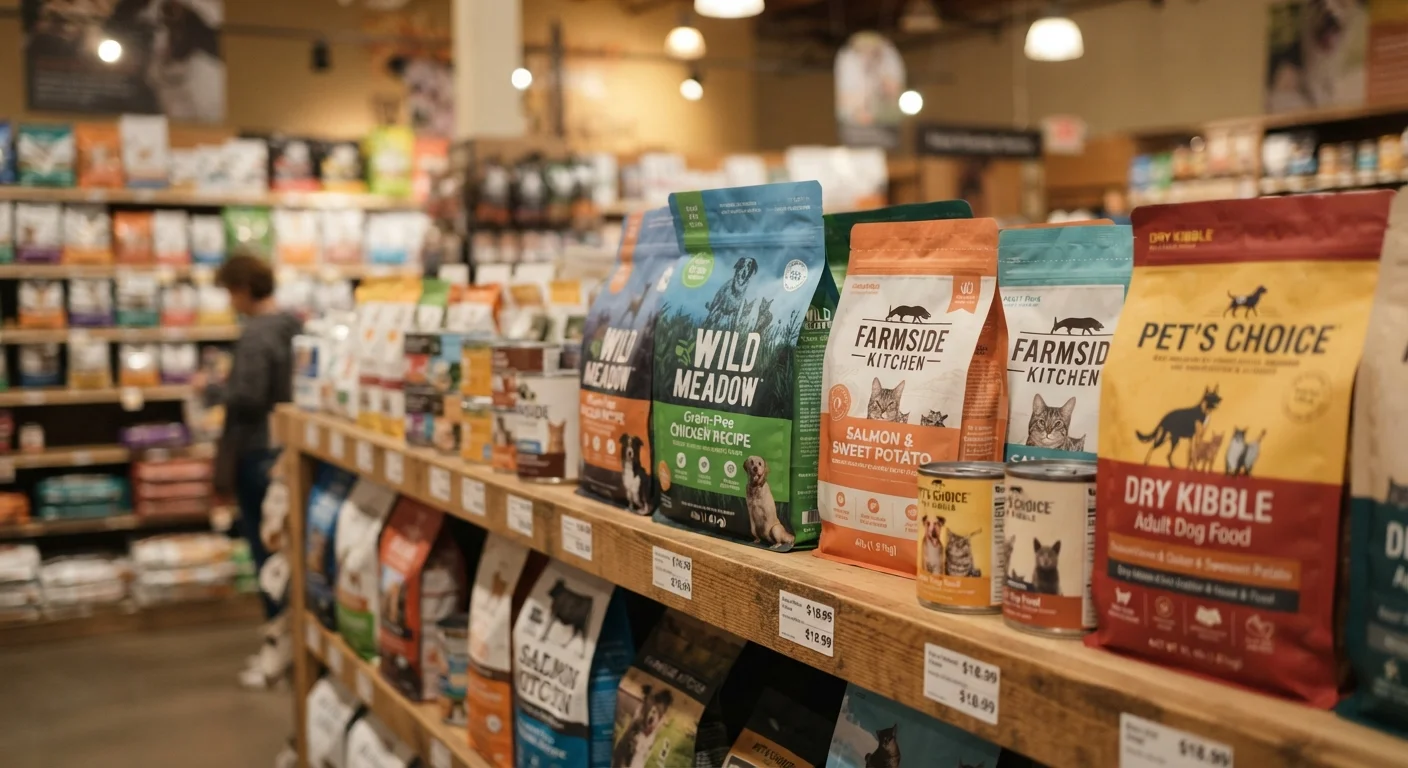
Pet food packaging is a highly competitive marketing space. Phrases like "ancestral diet," "grain-free," "superfood-infused," and "holistic" are chosen to appeal to owners who want the best for their animals - not necessarily to communicate verifiable nutritional facts. Understanding this distinction is the first step toward smarter purchasing decisions.
The Association of American Feed Control Officials (AAFCO) sets standards for nutrient profiles and product labeling in the US, but it does not regulate every term a manufacturer can use on packaging. This gap allows a range of emotionally resonant claims to appear without scientific backing. For a detailed breakdown of what label sections actually mean, see what pet food labels are actually telling you.
Myth
Grain-free diets are healthier for dogs because grains are unnatural fillers.
Fact
Grains are digestible, nutrient-dense ingredients for most dogs, and grain-free formulas have been associated with an ongoing FDA investigation into dilated cardiomyopathy in dogs.
Domesticated dogs have evolved over thousands of years alongside humans and have developed increased capacity to digest starches compared to wolves. Grains such as rice, oats, and barley provide energy, fiber, and B vitamins. The FDA began investigating a potential link between grain-free diets - particularly those high in legumes and potatoes - and dilated cardiomyopathy (DCM) in dogs in 2018. While the relationship remains under study, the concern is significant enough that many veterinary cardiologists advise caution. A grain-free label does not indicate superior nutrition; it indicates a different carbohydrate source, not the absence of carbohydrates.
Myth
"Natural" and "holistic" on the label mean the food meets a higher nutritional standard.
Fact
"Natural" has a limited AAFCO definition; "holistic" has no regulatory definition at all in pet food.
AAFCO defines "natural" to mean ingredients derived from plant, animal, or mined sources without chemically synthetic processes - but the term does not speak to nutritional quality, safety testing, or ingredient sourcing practices. "Holistic" carries no official meaning in pet food labeling whatsoever. Manufacturers use it freely because it resonates with health-conscious consumers. Neither term guarantees the food is complete, balanced, or safer than a conventionally labeled alternative. The AAFCO nutritional adequacy statement is a far more meaningful quality signal.
Myth
"Human-grade" pet food is meaningfully better for all pets than standard formulas.
Fact
"Human-grade" is a legitimate regulatory term, but the vast majority of pets live long, healthy lives on standard-grade, AAFCO-complete formulas.
When used accurately, "human-grade" means every ingredient and the finished product were manufactured, stored, and handled under conditions that meet federal standards for human food. This is a real distinction from "feed-grade." However, nutritional completeness - not ingredient grade - is the primary driver of long-term health outcomes in pets. Standard-grade AAFCO-compliant foods are formulated to meet pets' specific nutrient requirements and have extensive track records. Human-grade foods may cost significantly more without delivering proportionally better health outcomes for most healthy pets. If cost is a factor, stretching your pet food budget without cutting corners is worth reading.
Myth
An "ancestral" or "wild diet" formula better matches what pets are biologically meant to eat.
Fact
Domesticated dogs and cats have distinct nutritional needs shaped by millennia of co-evolution with humans - not by the diets of their wild ancestors.
Cats are obligate carnivores and do require animal-sourced protein and certain nutrients like taurine and arachidonic acid that cannot be synthesized adequately from plant sources. But this need is already addressed in any AAFCO-compliant cat food - it does not require a "wild" or "ancestral" formula. Dogs are omnivores with documented adaptations to human food environments. Romanticized claims about recreating a wolf's diet ignore that wild animals face significant nutritional stress, parasitic exposure, and shorter lifespans. The concept of an "ancestral diet" is a marketing narrative, not a nutritional standard.
Myth
A longer, more complex ingredient list signals a more complete and nutritious food.
Fact
Nutritional completeness is determined by nutrient profiles, not the length or variety of the ingredient list.
Manufacturers sometimes add a wide range of ingredients - exotic proteins, named fruits, superfoods - to make a product appear more sophisticated. In practice, many such additions are present in quantities too small to have meaningful nutritional impact. What matters is whether the final product delivers the right levels of protein, fat, vitamins, and minerals for the target species and life stage. The AAFCO statement, not ingredient count, is your benchmark. Reading a pet food label without getting confused can help you focus on the sections that matter.
What Actually Matters When Evaluating a Formula
Rather than chasing label buzzwords, focus on the elements that carry genuine regulatory weight. The AAFCO nutritional adequacy statement - often called the "complete and balanced" statement - confirms a food meets established nutrient profiles for a life stage, either through formulation or feeding trials. This single line tells you more about nutritional quality than most marketing copy combined.
Ingredient order matters too, but with nuance: ingredients are listed by weight before cooking, so a meat listed first may contribute less protein after moisture loss than a concentrated plant protein listed further down. This is not a flaw or deception - it's simply how ingredient lists work. For a closer look at how specific nutrients function in your pet's body, learn what nutrients like taurine and omega-3s actually do at the cellular level.
~40%
US pet food market share held by premium-positioned products
Industry analysts consistently note that "premium" and "natural" positioning commands a large share of the US pet food market, despite limited regulatory definitions for those terms.
2018
Year FDA opened DCM investigation linked to grain-free diets
The FDA announced its investigation into a potential dietary link to dilated cardiomyopathy in dogs in July 2018, specifically flagging grain-free, legume-heavy formulas.
If your pet is showing physical signs of poor diet fit - dull coat, low energy, or digestive irregularity - the issue is rarely solved by switching to a trendier label. recognize the signs your pet's diet might not be working and discuss them with your veterinarian before changing formulas.
This article is for general educational purposes only and does not constitute veterinary or nutritional advice. Always consult a licensed veterinarian or board-certified veterinary nutritionist for decisions about your pet's diet.
The content provided on our blog site traverses numerous categories, offering readers valuable and practical information. Readers can use the editorial team’s research and data to gain more insights into their topics of interest. However, they are requested not to treat the articles as conclusive. The website team cannot be held responsible for differences in data or inaccuracies found across other platforms. Please also note that the site might also miss out on various schemes and offers available that the readers may find more beneficial than the ones we cover.