

Start With What Your Pet Actually Needs
Before evaluating any food for affordability, it helps to understand what nutrients your pet genuinely requires. Dogs and cats have distinct dietary needs - cats, for example, are obligate carnivores that require taurine and cannot produce adequate amounts of certain nutrients on their own. Our guide to nutritional building blocks every pet diet needs walks through the core requirements in detail.
A useful practical shortcut: look for the AAFCO (Association of American Feed Control Officials) nutritional adequacy statement on any food label. This tells you whether a food is formulated to meet established nutrient profiles for your pet's life stage - puppy or kitten, adult, or senior. This baseline check costs nothing and prevents costly dietary mistakes down the line.
Life stage matters for budget planning too. Puppies and senior dogs have distinct caloric and nutrient needs, and feeding the wrong formula can mean either overfeeding or under-nourishing your pet - both of which carry real long-term costs.
Calculate Cost Per Serving, Not Cost Per Bag
A larger bag of food often has a higher sticker price but a significantly lower cost per day of feeding. To compare accurately, divide the total price by the number of servings the bag provides at your pet's recommended daily portion. This single habit can shift which options look affordable.
10%
Maximum caloric share for treats daily
Veterinary nutritionists broadly recommend treats represent no more than 10% of a pet's total daily calorie intake to preserve dietary balance.
20-30%
Typical food waste from eyeballed portions
Informal portion estimation frequently results in overfeeding; precise measuring often extends a bag's lifespan noticeably without changing feeding frequency.
Serving size guidance on packaging is typically based on average activity levels and body weight ranges. A sedentary indoor cat or a less active adult dog may need less than the label suggests - always confirm appropriate portions with your veterinarian, especially if your pet is gaining weight. Our article on why pets gain weight even on the right food explains how misread serving sizes quietly inflate both your costs and your pet's waistline.
Proven Practices for Budget-Conscious Pet Feeding
These practices help owners maintain nutritional quality while avoiding unnecessary spending. None require drastic changes - most are adjustments to existing habits.
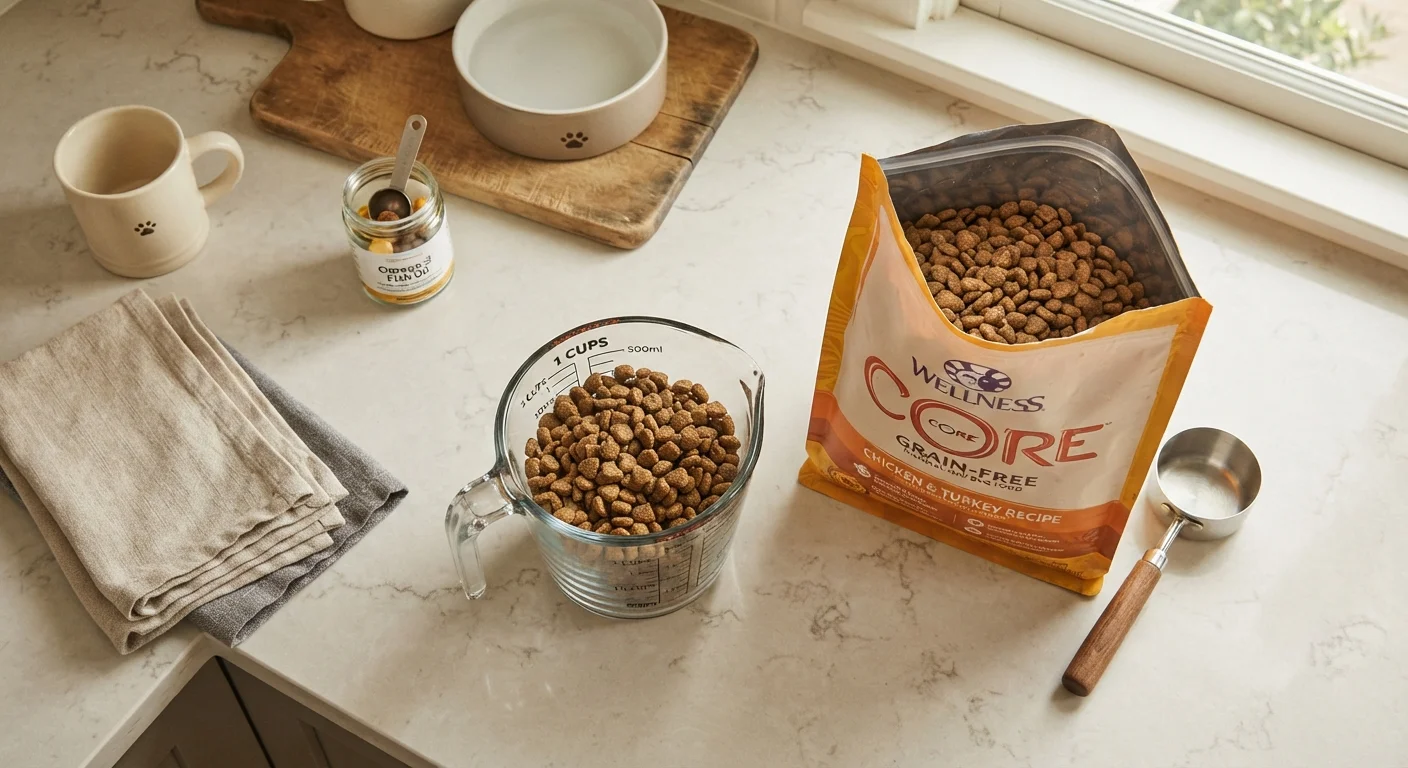
Use a kitchen scale or measuring cup for every meal, every time.
Eyeballing portions consistently leads to overfeeding, which increases food costs and raises the risk of weight-related health problems. Precise measuring ensures your bag lasts exactly as long as it should.
Prioritize foods with an AAFCO 'complete and balanced' statement for your pet's life stage.
This label language signals the food meets established minimum nutrient standards, reducing the risk that a lower-priced option leaves nutritional gaps that trigger vet visits later.
Monitor your pet's body condition score monthly rather than relying on weight alone.
Body condition scoring - a simple hands-on assessment of fat coverage over ribs and spine - tells you more about whether your pet is being appropriately fed than a scale reading. Catching creeping weight gain early saves on both food and future health costs.
Limit treats to no more than 10% of your pet's daily caloric intake.
Treats are typically calorie-dense and nutritionally incomplete. Overuse inflates food costs, disrupts dietary balance, and contributes to excess weight. The 10% guideline is widely supported by veterinary nutritionists as a practical ceiling.
Research label claims critically before paying a premium for marketing terms.
Terms like 'grain-free,' 'ancestral diet,' or 'human-grade' have variable or loosely regulated meanings and do not automatically indicate superior nutrition. Paying more for these labels may not benefit your pet.
Watch for physical signs that the current diet is or isn't working.
A coat that loses luster, persistent digestive irregularity, or consistently low energy can signal nutritional shortfalls that need addressing - either by adjusting portions or consulting a vet - before minor issues become costly health problems.
Evaluating Food Format Trade-Offs
Dry kibble typically costs less per calorie than wet food and has a longer shelf life once opened. However, wet food contributes meaningfully to hydration, which matters especially for cats prone to urinary issues. A mixed approach - primarily dry with some wet food - can balance cost with health considerations.
Understanding these trade-offs in depth is worth the time. See our comparison of dry kibble vs. wet food for a detailed breakdown across cost, hydration, dental health, and shelf life.
Transitioning Food? Go Slowly
When switching to a more affordable food, a gradual seven-to-ten-day transition - mixing increasing amounts of the new food with the old - dramatically reduces the chance of digestive upset. Abrupt switches can cause temporary gastrointestinal issues that may be mistaken for a food intolerance, leading owners to abandon an otherwise suitable option unnecessarily.
When switching formats or brands to save money, a gradual transition over seven to ten days reduces the risk of digestive upset. Our guide to transitioning pets to new food covers the step-by-step process. And if you're evaluating the food you currently use, the pre-switch checklist can help you flag nutritional gaps before committing to a change.
This article provides general educational information about pet nutrition and is not a substitute for personalized veterinary advice. Always consult a licensed veterinarian for guidance specific to your pet's health and dietary needs.
The content provided on our blog site traverses numerous categories, offering readers valuable and practical information. Readers can use the editorial team’s research and data to gain more insights into their topics of interest. However, they are requested not to treat the articles as conclusive. The website team cannot be held responsible for differences in data or inaccuracies found across other platforms. Please also note that the site might also miss out on various schemes and offers available that the readers may find more beneficial than the ones we cover.