

Our Verdict
Both dry kibble and wet food can form the foundation of a nutritionally complete diet when chosen carefully. The right format depends on your pet's hydration needs, dental health, life stage, and your realistic budget. Many owners find that a thoughtful combination of both formats offers the broadest benefits.
Owners of adult pets in good general health on a tight budget will typically find dry kibble the most practical daily staple, while wet food becomes especially valuable for cats, seniors, or pets with urinary or kidney concerns.
What Sets These Two Formats Apart
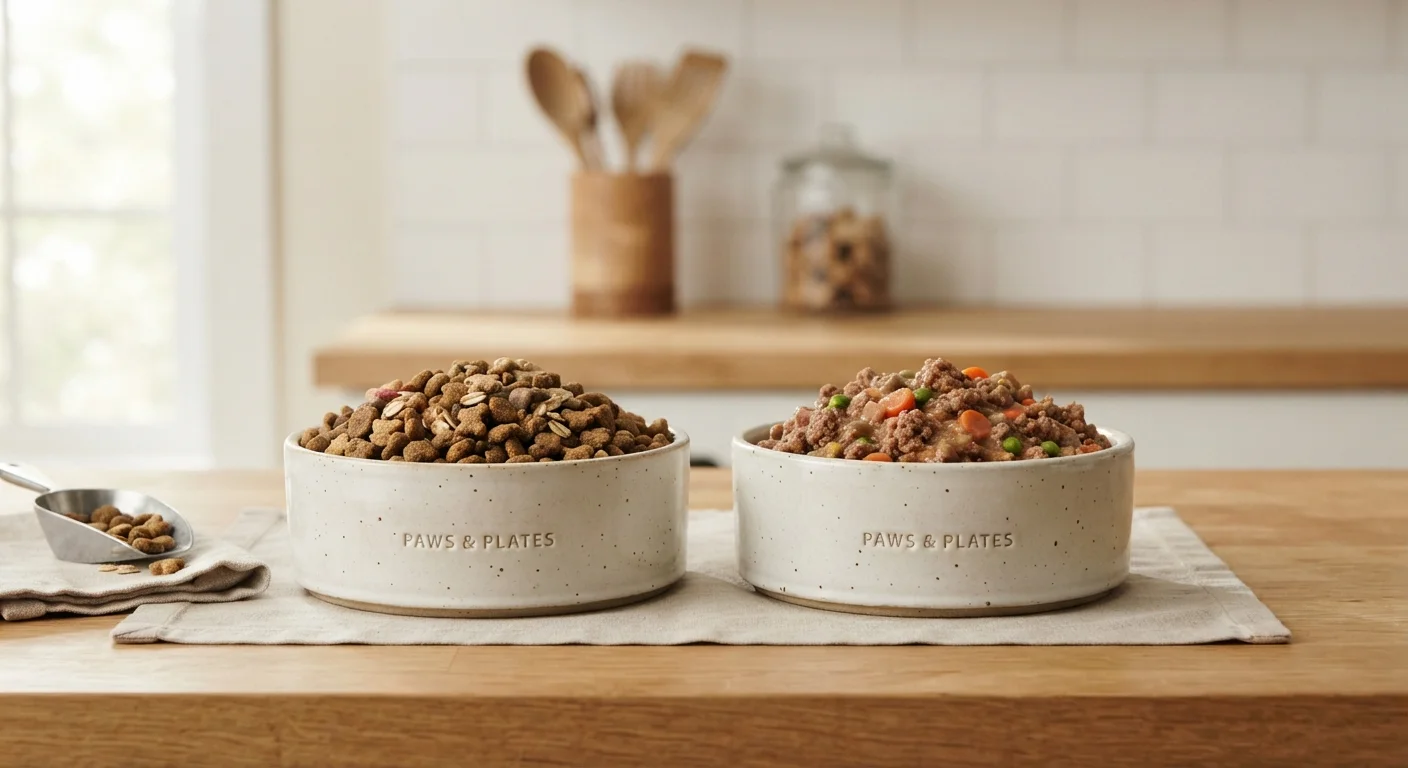
Dry kibble and wet food start from similar raw ingredients - meat, grains or legumes, vitamins, and minerals - but their manufacturing processes diverge sharply. Kibble is cooked at high temperatures and extruded into shelf-stable pieces containing roughly 10% moisture. Wet food is cooked inside a sealed can or pouch, retaining 70-80% moisture and requiring no preservatives to stay safe at room temperature until opened.
That moisture gap is the single biggest functional difference between the two formats, and it drives most of the trade-offs explored below. For a deeper look at what nutrients your pet actually needs from either format, see The Nutritional Building Blocks Every Pet Diet Needs.
Lower cost per serving than wet food
Kibble delivers more calories per dollar spent, making it the more budget-friendly daily option for most households.
Long shelf life after opening
An opened bag of kibble remains usable for several weeks when stored in an airtight container, reducing waste significantly.
May support dental health through chewing
The abrasive texture of dry food can help slow plaque accumulation on teeth, though it does not replace dedicated dental hygiene routines.
Easy to measure and portion
Consistent kibble size makes calorie counting and portion control straightforward, which is useful for weight management.
Where Dry Kibble Has the Edge
Cost and convenience are kibble's strongest arguments. A pound of dry food typically provides far more servings than an equivalent weight of wet food, making it substantially cheaper on a per-calorie basis. An open bag stays usable for weeks when stored properly in an airtight container away from heat and humidity.
Dental health is another frequently cited advantage. The mechanical action of chewing kibble can help reduce plaque and tartar buildup compared with softer foods, though it is not a substitute for active dental care. Veterinary dental chews and tooth brushing remain the gold standard for oral hygiene. For budget-focused owners, Stretching Your Pet Food Budget Without Cutting Nutritional Corners offers practical strategies for maximizing value without compromising nutrition.
Where Wet Food Has the Edge
Hydration is wet food's defining advantage. Cats in particular evolved as desert animals with a low thirst drive and are prone to chronic dehydration on dry-only diets, which veterinary research has linked to higher rates of urinary tract issues and kidney disease over time. Wet food can meaningfully increase daily water intake without requiring a cat to drink more from a bowl.
Wet food also tends to be more palatable, which matters for picky eaters, seniors with diminished senses of smell and taste, or pets recovering from illness. Its softer texture makes it easier for animals with missing teeth, jaw discomfort, or swallowing difficulties to eat comfortably.
Low moisture content risks dehydration
At roughly 10% moisture, dry food provides almost no dietary water, which can be a meaningful concern for cats and pets prone to kidney or urinary issues.
Less palatable for picky or unwell pets
Pets with diminished appetite, dental pain, or illness often find wet food easier and more appealing to eat than hard kibble.
Higher cost per serving than dry food
Wet food is typically two to four times more expensive on a per-calorie basis, which adds up quickly for owners of large dogs or multi-pet households.
Short refrigerator life once opened
An opened can or pouch must be refrigerated and used within one to three days, which increases both waste and the need for careful meal planning.
It's worth noting that species-specific nutritional needs play a role here too - cats and dogs process food differently, and format choices can interact with those differences. See Dog Food vs. Cat Food: Why the Difference Matters More Than You Think for context.
Mixing Formats: A Practical Middle Ground
Many veterinary nutritionists acknowledge that combining dry and wet food can capture benefits of both. A common approach is using kibble as the primary daily ration for cost control, then supplementing with wet food to boost moisture intake and palatability - particularly for cats or older pets.
Check for AAFCO Adequacy Statements
Regardless of format, look for an Association of American Feed Control Officials (AAFCO) nutritional adequacy statement on the label. This confirms the food has been formulated to meet minimum nutrient requirements for a specific life stage - such as growth, adult maintenance, or all life stages. Foods labeled 'for supplemental or intermittent feeding only' are not designed to serve as a complete daily diet.
If you are considering a format change or a full diet switch, use a structured approach to evaluate your pet's current nutritional status first. The Before You Change Your Pet's Diet: A Pre-Switch Checklist walks through key considerations and transition steps. For owners exploring alternatives beyond commercial formats entirely, Homemade Pet Food vs. Commercial Diets: What the Evidence Shows offers a balanced evidence-based comparison.
This article is for general informational purposes only and does not constitute veterinary advice. Consult a licensed veterinarian before making significant changes to your pet's diet, especially if your pet has a health condition.
The content provided on our blog site traverses numerous categories, offering readers valuable and practical information. Readers can use the editorial team’s research and data to gain more insights into their topics of interest. However, they are requested not to treat the articles as conclusive. The website team cannot be held responsible for differences in data or inaccuracies found across other platforms. Please also note that the site might also miss out on various schemes and offers available that the readers may find more beneficial than the ones we cover.