

Summary
18 items · 20-40 minutes
Why Preparation Makes or Breaks Your First Session
Walking into a training session without a plan is one of the most common reasons first-time pet owners feel like training "isn't working." In reality, most early frustrations come down to preventable setup problems: a distracted environment, inconsistent cues, or a pet that isn't physically or emotionally ready to engage. Running through a pre-session checklist takes under an hour the first time and just a few minutes on subsequent sessions - and it dramatically increases the chance that your pet leaves each session having learned something useful.
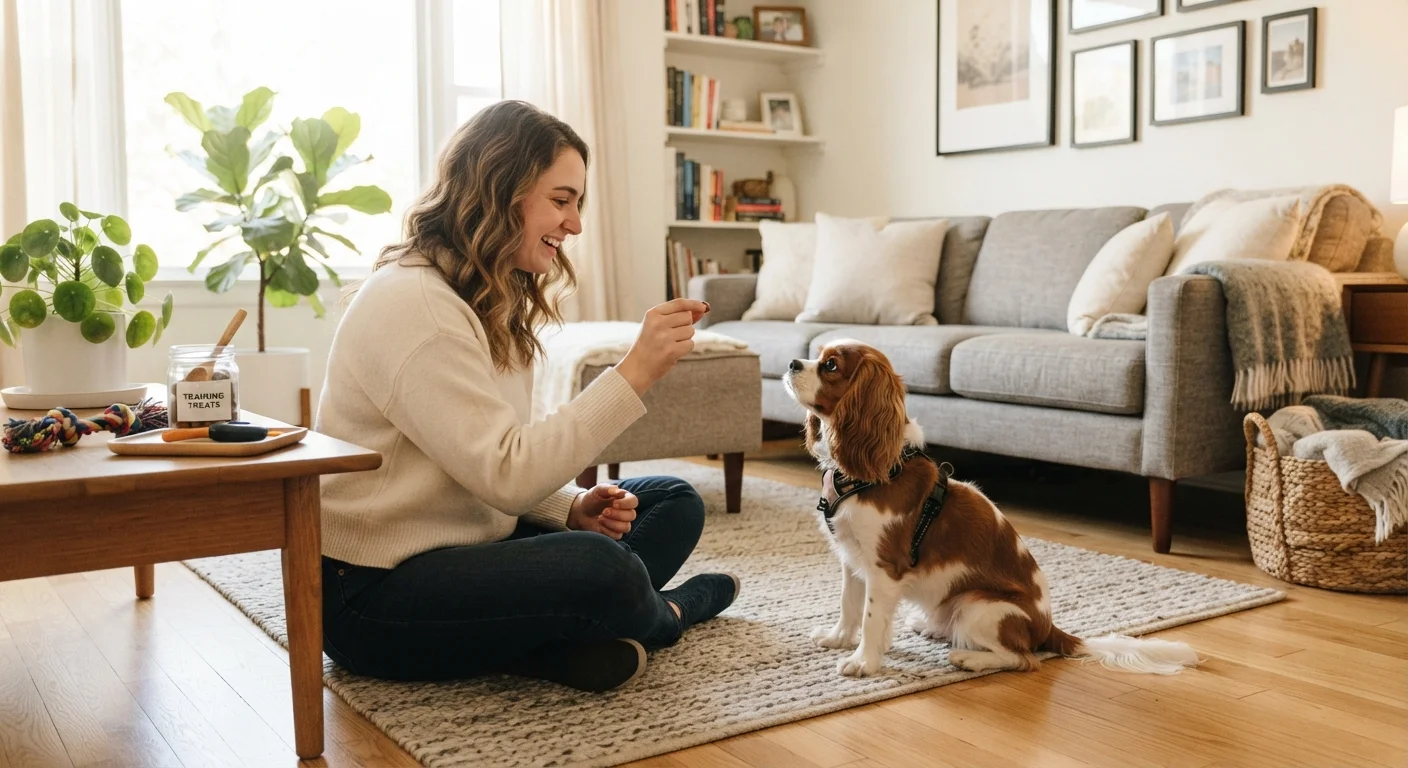
Positive reinforcement training - rewarding desired behaviors with something your pet values - is the approach most consistently supported by animal behavior science. But that science also makes clear that timing, consistency, and environment are not minor details. They are the mechanism through which learning actually happens. This checklist is built around those principles.
If you're working with a new dog and want a broader roadmap for early training milestones, see our guide for first-time dog owners. And if your pet is brand new to your home, our new pet owner health checklist covers the foundational health steps that should happen alongside early training.
Never Train a Stressed or Unwell Pet
A pet that is in pain, ill, overly anxious, or recently traumatized cannot learn effectively and may associate training with negative experiences. If your pet is showing signs of stress - such as panting without physical exertion, excessive yawning, or avoidance behaviors - postpone the session and consult your veterinarian if symptoms persist. Forcing sessions under these conditions can set back progress significantly.
How to Use This Checklist
Work through the four groups below before your very first session and revisit the key items - particularly your pet's readiness and your session goal - before every subsequent one. Items marked must are non-negotiable for effective and safe training. Items marked should are strongly recommended and will noticeably improve your results. Items marked nice to have add structure and polish as you build a longer-term routine.
High-value training treats
Used as immediate positive reinforcement; small, soft pieces your pet finds highly motivating work best.
Treat pouch or small container
Keeps rewards accessible so you can mark and reinforce behavior within the critical one-to-two second window.
Clicker or verbal marker
Provides a precise, consistent signal to communicate to your pet exactly which behavior earned the reward.
Leash or long line
Maintains safe control during recall, boundary, or outdoor training exercises.
Non-slip mat or rug
Gives your pet a stable surface, which helps them focus on position-based cues without slipping.
Session log (notebook or app)
Tracks what was practiced and your pet's response so each session builds meaningfully on the last.
Environment Setup
Tools and Supplies
Your Pet's Readiness
Owner Mindset and Planning
Consistency Matters More Than Duration
Research in animal learning consistently shows that frequent, brief training sessions outperform infrequent, lengthy ones. A five-minute session done daily will produce more reliable results than a 30-minute session done once a week. Decide on a regular time that fits your schedule and protect it - your pet learns to anticipate and engage with training when it becomes a predictable routine.
Your pet's nutritional status also plays a role in training responsiveness. A pet that is well-nourished but not overfed is more motivated by food rewards. For guidance on balanced feeding, visit our Pet Nutrition Guide. If you've recently changed your pet's diet, our article on pre-switch diet planning can help ensure the transition doesn't disrupt your pet's energy or digestion during this learning phase.
Finally, keep your veterinarian in the loop - especially if you notice behavioral concerns that don't resolve with consistent training. Our article on getting the most from vet appointments offers practical tips for making those conversations as productive as possible.
This article is for general informational and educational purposes only. It does not constitute veterinary or professional behavioral advice. Consult a licensed veterinarian or certified animal behaviorist for concerns specific to your pet's health or behavior.
The content provided on our blog site traverses numerous categories, offering readers valuable and practical information. Readers can use the editorial team’s research and data to gain more insights into their topics of interest. However, they are requested not to treat the articles as conclusive. The website team cannot be held responsible for differences in data or inaccuracies found across other platforms. Please also note that the site might also miss out on various schemes and offers available that the readers may find more beneficial than the ones we cover.