

How Zero-Based Budgeting Works
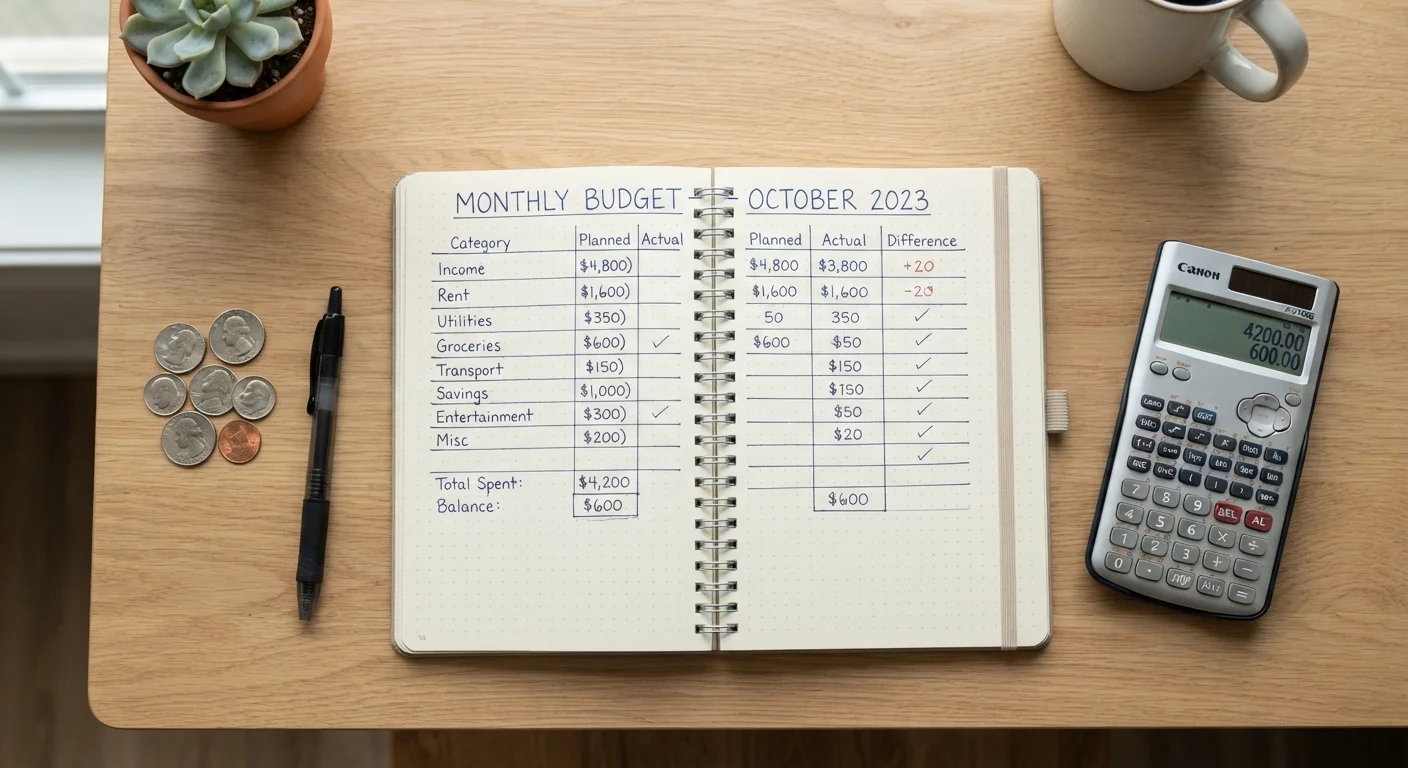
The mechanic is straightforward: add up your total take-home income for the month, then distribute it across every spending and saving category until the sum of all allocations equals your income. Income minus allocations equals zero.
Critically, zero doesn't mean broke. A category labeled Emergency Fund: $200 is just as valid as Groceries: $400. Savings, retirement contributions, and debt payments are all legitimate line items - they simply need to be named and numbered before the month starts.
Each month begins fresh. Rather than carrying last month's figures forward, you look at what you actually expect to earn this cycle and rebuild from there. This is what separates ZBB from most default budgeting habits, where spending patterns tend to repeat on autopilot. For a thorough primer on why starting with a clean plan matters, see Budgeting from Scratch.
65%
Americans living paycheck to paycheck
A 2023 LendingClub and PYMNTS report found roughly 65% of U.S. consumers were living paycheck to paycheck, underscoring the widespread need for more intentional spending frameworks.
~$300
Average monthly untracked discretionary spend
Budgeting research consistently finds households underestimate discretionary spending by hundreds of dollars monthly, often due to small, frequent, uncategorized purchases.
Who Benefits Most from This Method
Zero-based budgeting suits readers who want full visibility into where their money goes - and are willing to invest a bit of time each month to get it. It tends to work especially well in three situations:
- Variable or irregular income: Freelancers, contractors, and gig workers can't rely on a fixed paycheck. ZBB adapts naturally because you budget what you actually receive, not what you hope to receive.
- Active debt repayment: When eliminating credit card balances or loans is the priority, ZBB forces a deliberate allocation to debt - making it harder to underfund repayment by accident.
- Spending awareness gaps: If you consistently reach the end of the month unsure where your money went, the granular category structure of ZBB surfaces that spending in a way that broad percentage rules don't.
It's a less natural fit for people who find detailed tracking stressful or whose finances are already on autopilot in a way that's working. There's no single correct method - a side-by-side look at different frameworks is available in our ZBB vs. 50/30/20 comparison.
Putting It Into Practice
Getting started doesn't require special software - a spreadsheet or even a notepad works fine. The core steps are:
- Calculate net income. Use actual take-home pay, not gross salary. Include all income sources.
- List every spending category. Start with fixed obligations (rent, utilities, loan payments), then variable necessities (groceries, transportation), then discretionary spending (dining, subscriptions, entertainment).
- Assign a dollar amount to each category. Work through each line until allocations sum to your total income.
- Track throughout the month. As money is spent, deduct it from the relevant category. This is where the plan stays honest.
- Reset at month-end. Review what was over or underspent, adjust next month's categories accordingly, and start fresh.
The monthly reset is where most people see the biggest gains over time. Our Monthly Budget Reset Checklist walks through exactly what to review before rebuilding. If you're budgeting for the first time, the Your First Monthly Budget in Six Steps guide is a practical companion to this framework.
This article provides general financial education and is not personalized financial advice. Consider consulting a qualified financial professional for guidance specific to your situation.
Frequently Asked Questions
No. It means allocating every dollar to a category - including savings, emergency funds, and debt payments. The goal is intentional planning, not zero savings.
The 50/30/20 rule divides income into broad percentage buckets, making it simpler and less time-intensive. ZBB is more granular, requiring category-by-category planning each month. See a full comparison in our <a href="/smart-money-moves/budgeting-basics/the-503020-rule-vs-zero-based-budgeting">50/30/20 vs. ZBB breakdown</a>.
Yes - it's one of ZBB's strengths. Because you build the budget using actual income each period, it naturally adjusts to fluctuating paychecks rather than relying on a fixed assumed income.
Any surplus should be reallocated before the month closes - into savings, an emergency fund, or extra debt payments. This prevents unplanned drift in spending.
A spreadsheet, a notebook, or any budgeting app that allows custom categories and tracks running balances will work. The key feature needed is the ability to assign specific amounts to named categories.
Expect 30-60 minutes for the first month while you identify all spending categories. After the initial setup, monthly resets typically take 15-20 minutes, especially with a checklist approach.
The content provided on our blog site traverses numerous categories, offering readers valuable and practical information. Readers can use the editorial team’s research and data to gain more insights into their topics of interest. However, they are requested not to treat the articles as conclusive. The website team cannot be held responsible for differences in data or inaccuracies found across other platforms. Please also note that the site might also miss out on various schemes and offers available that the readers may find more beneficial than the ones we cover.