

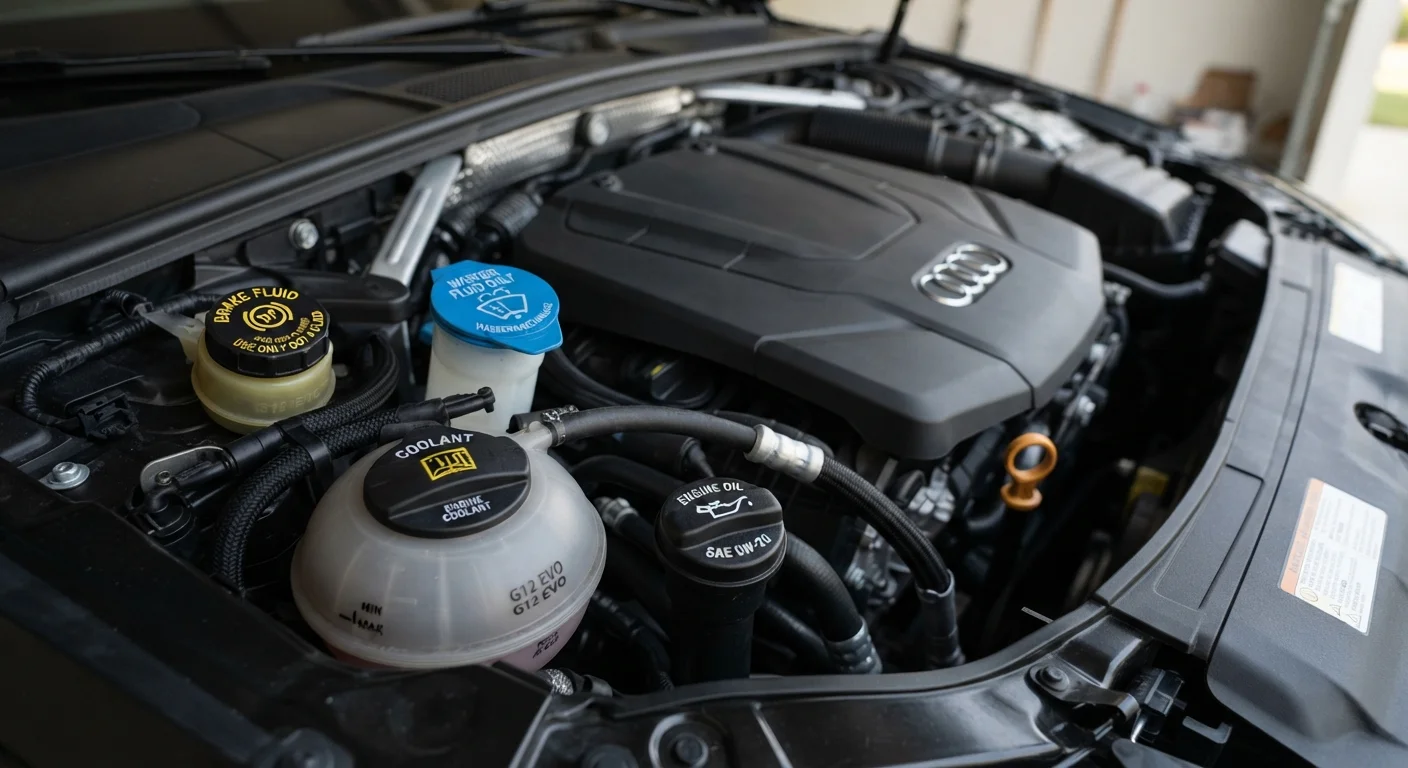
Why Fluids Matter More Than Most Drivers Realize
A modern vehicle depends on six to eight fluids to keep its systems running safely. Each one has a specific job-lubrication, cooling, hydraulic force, or visibility-and when one degrades or runs low, the consequences range from reduced performance to outright component failure. Understanding what each fluid does (and what a problem looks like) is one of the most cost-effective habits a driver can build.
For a broader orientation to what lives under your hood, see our first-time owner's under-the-hood guide. And if you want to understand the financial side of maintenance costs, the Car Ownership Cost Glossary covers relevant terms like warranty coverage and service contracts.
| Number of key vehicle fluids | 6-8 depending on drivetrain |
| Typical engine oil change interval (modern vehicles) | 5,000-10,000 miles (Manufacturer owner's manuals; varies by oil type and vehicle) |
| Brake fluid replacement interval | Every 2-3 years (General industry guidance; always check your owner's manual) |
| Coolant flush interval | Every 30,000-50,000 miles (Varies significantly by coolant type and manufacturer spec) |
| Transmission fluid interval (automatic) | 30,000-60,000 miles (Manufacturer-dependent; some sealed units have no scheduled change) |
| Windshield washer fluid | Top off as needed; no set interval |
The Six Fluids You Need to Know
1. Engine Oil
Engine oil lubricates moving metal parts, reduces heat from friction, and helps carry contaminants to the filter. It degrades over time from heat cycles and combustion byproducts. Warning sign: dark, gritty oil on the dipstick, or a low level reading. Oil change intervals vary by vehicle and oil type-check your owner's manual rather than relying on the outdated 3,000-mile rule. (See which maintenance rules are actually myths.)
2. Coolant (Antifreeze)
Coolant circulates between the engine and radiator, absorbing heat and dissipating it. It also prevents freezing in cold weather. Warning sign: the temperature gauge climbing toward the red, a sweet smell from the engine bay, or visible leak stains (often orange, green, or pink) under the car. Never open the coolant reservoir cap on a hot engine-pressurized fluid can cause serious burns.
3. Brake Fluid
Brake fluid transmits the force from your pedal through hydraulic lines to the brake calipers. Because it is hygroscopic-it absorbs atmospheric moisture over time-its boiling point drops gradually, which can cause brake fade under hard use. Warning sign: a spongy or sinking brake pedal, or the brake warning light illuminating. Most manufacturers recommend replacement every two to three years.
~40%
Engine failures linked to lubrication issues
Industry maintenance data consistently identifies inadequate lubrication-often from neglected oil changes-as a leading cause of premature engine wear.
3°F
Boiling point drop per 1% moisture in brake fluid
The hygroscopic nature of DOT brake fluid means absorbed water meaningfully lowers its boiling point, increasing fade risk under hard braking.
4. Transmission Fluid
This fluid lubricates and cools the transmission's internal components and enables smooth gear shifts. In automatic transmissions it also acts as a hydraulic fluid. Warning sign: delayed or rough shifting, slipping gears, or a burnt smell. Some factory-sealed transmissions are labeled "lifetime fill," but many technicians recommend periodic checks regardless.
5. Power Steering Fluid
Present only on vehicles with hydraulic (not electric) power steering, this fluid powers the assist mechanism that makes turning easier. Warning sign: a whining or groaning noise when turning, or stiff steering. Check the reservoir under the hood-many are translucent so you can read the level without removing the cap.
6. Windshield Washer Fluid
Washer fluid removes road grime and road salt from your windshield. Plain water is a poor substitute-it can freeze in winter and may not cut through oily film. Warning sign: streaky, ineffective cleaning or the low-fluid indicator light on the dashboard. Top off regularly; it's the easiest fluid to maintain.
Always Consult Your Owner's Manual
Every vehicle has manufacturer-specified fluid types, capacities, and service intervals. Generic guidelines are a useful starting point, but your owner's manual is the definitive source for your specific make and model. Using the wrong fluid spec-even accidentally-can void warranties or cause component damage.
For seasonal fluid considerations-especially coolant concentration in winter and washer fluid in freezing temperatures-see our seasonal car care guide.
Viscosity
A fluid's resistance to flow. Engine oil viscosity ratings (e.g., 5W-30) indicate how the oil behaves at cold start and operating temperature. Using the wrong viscosity can reduce lubrication efficiency.
Coolant (Antifreeze)
A liquid-usually a mixture of ethylene glycol and water-that circulates through the engine to regulate temperature. It prevents both freezing in winter and overheating in summer.
Hygroscopic
The property of absorbing moisture from the surrounding air. Brake fluid is hygroscopic, which is why it degrades over time even in a sealed system and must be replaced periodically.
Differential Fluid
A gear oil that lubricates the differential, the component that splits engine torque between wheels. Found in rear-wheel-drive and four-wheel-drive vehicles, it requires periodic replacement.
Power Steering Fluid
A hydraulic fluid that transfers force in conventional power steering systems, allowing the driver to turn the wheel with less effort. Many newer vehicles use electric power steering and do not require this fluid.
Transmission Fluid
A lubricant and hydraulic fluid used in automatic and manual transmissions to reduce friction, cool internal components, and enable smooth gear changes.
The content provided on our blog site traverses numerous categories, offering readers valuable and practical information. Readers can use the editorial team’s research and data to gain more insights into their topics of interest. However, they are requested not to treat the articles as conclusive. The website team cannot be held responsible for differences in data or inaccuracies found across other platforms. Please also note that the site might also miss out on various schemes and offers available that the readers may find more beneficial than the ones we cover.