

Summary
22 items · 30-60 minutes per seasonal inspection
Why Seasonal Transitions Are Hard on Vehicles
Most mechanical failures don't happen randomly - they happen after a season changes. Cold contracts metal, thickens oil, and saps battery reserves. Heat accelerates rubber degradation, strains cooling systems, and thins fluids past safe operating ranges. Knowing what stress each transition introduces lets you get ahead of it instead of reacting to it.
This checklist focuses on the two most demanding transitions for US drivers: the shift into winter and the return to warmer weather. Work through it in a driveway with the engine cold for the most accurate readings. For a deeper look at how maintenance timing affects long-term costs, see our guide to managing vehicle maintenance costs.
Don't Skip the Cold Engine Check
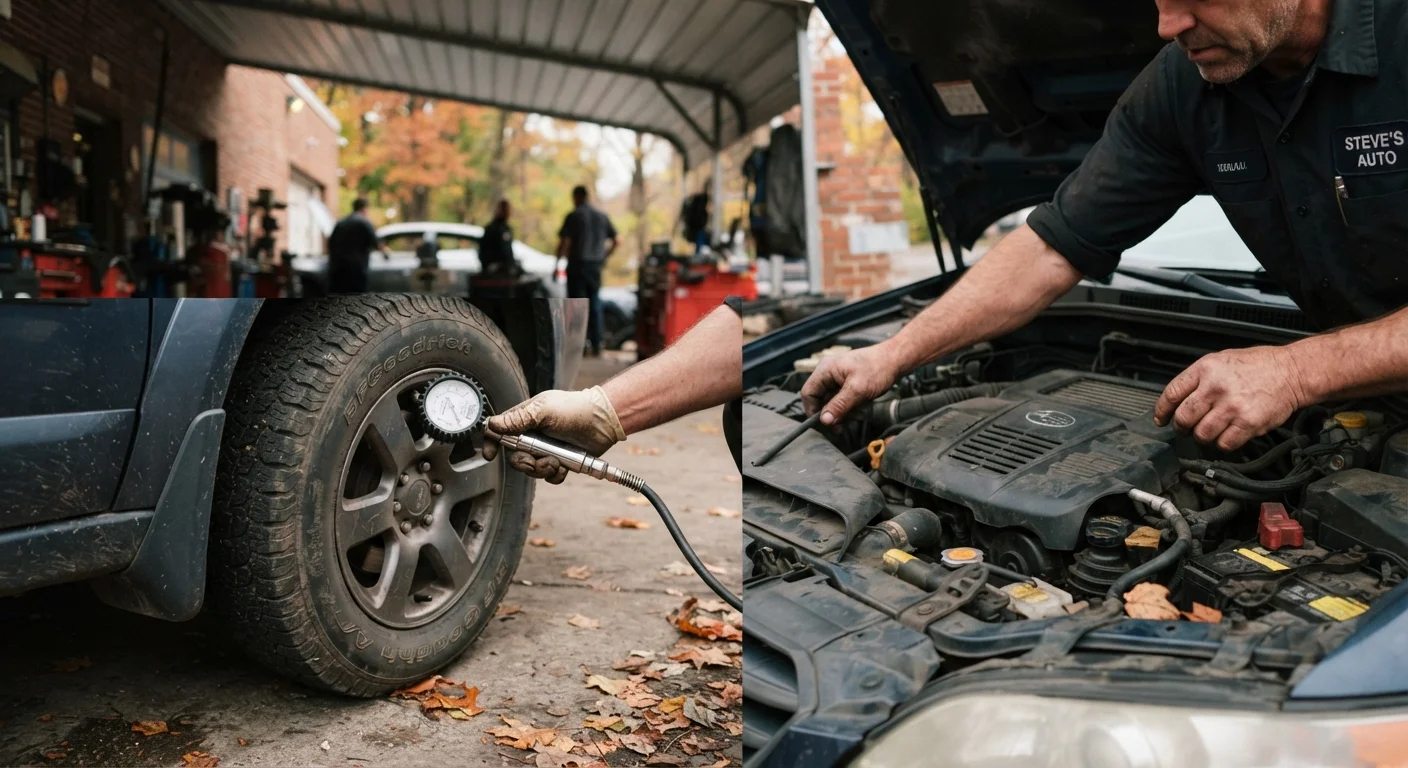
Several critical readings - tire pressure, oil level, and coolant - are most accurate when taken with a cold engine (not driven for at least two hours). Checking tire pressure on a warm tire after a highway drive can give readings 4-6 PSI higher than the actual cold-inflation figure, leading you to believe pressure is adequate when it isn't. Plan your inspection for early morning or after the vehicle has sat overnight.
Tools You'll Need Before You Start
You don't need a full shop setup to run a seasonal inspection, but a few basic tools make the job accurate rather than guesswork.
Tire Pressure Gauge
Provides an accurate PSI reading - more reliable than the gauges built into gas station air pumps.
Tread Depth Gauge
Measures remaining tread depth precisely; a coin works as a rough backup but a gauge gives a numeric reading.
Coolant Test Strips or Hydrometer
Checks the freeze-point and boil-over protection level of your coolant without draining the system.
Battery Load Tester
Tests whether the battery can deliver adequate cranking amps under real-world load, not just resting voltage.
Flashlight or Inspection Light
Lets you see into the engine bay, under the vehicle, and around tire sidewalls clearly.
Multimeter
Useful for checking battery voltage and diagnosing basic electrical issues if a load tester isn't available.
The Seasonal Inspection Checklist
Work through the groups below in order. Items marked must are non-negotiable safety checks. Items marked should are strongly recommended. Nice-to-have items improve preparedness but can be deferred if time is short.
For help reading the maintenance intervals in your owner's manual alongside this checklist, see how to decode your car's maintenance schedule.
Tires
Battery and Electrical
Fluids
Wipers, Visibility, and HVAC
Brakes and Belts
Understanding the Fluid and Battery Checks
Fluids: Engine oil viscosity ratings (e.g., 5W-30) describe how the oil flows at cold start versus operating temperature. Some vehicles specify a lighter-viscosity oil for winter operation - check your owner's manual, not a general recommendation. Coolant (antifreeze) protects against both freezing and boiling; an inexpensive test strip or hydrometer can tell you the current protection range. Windshield washer fluid is often overlooked: summer formulas can freeze solid in the reservoir and crack the pump. For a full breakdown of what each fluid does and how to read its condition, see fluid types every car owner should know.
Battery: Cold temperatures slow the chemical reaction inside a lead-acid battery, reducing the available cranking amps precisely when the engine needs the most help to start. A battery that tests at marginal capacity in October may fail entirely in January. Most auto parts retailers offer free load testing - it takes about five minutes and gives you a clear pass/fail reading. Learn more about the warning signs in our guide to recognizing a fading battery.
When to Call a Mechanic Instead
This checklist covers inspection and basic maintenance tasks that most drivers can handle safely. However, brake servicing, cooling system flushes, belt replacement, and any electrical diagnosis beyond a simple visual check should be handled by a qualified mechanic. Attempting these tasks without the proper tools or experience can result in vehicle damage or a safety risk. If you're unsure whether a finding warrants professional attention, err on the side of having it inspected.
Before Every Bad-Weather Drive
A seasonal inspection covers the calendar-level preparation, but individual storms and temperature extremes require a shorter pre-trip check. Rain, ice, and fog each create different traction and visibility challenges that go beyond what a twice-yearly inspection can address. Our bad-weather pre-trip checklist walks through what to verify before you pull out of the driveway in hazardous conditions.
Staying on top of seasonal prep is also one of the most cost-effective habits a driver can build. Small issues caught during a routine inspection - a cracking belt, marginal brake pads, a battery at 60% capacity - rarely cost much to address early. The same problems caught after a failure often mean towing fees, rental cars, and emergency labor rates. For a broader framework on this approach, the complete car ownership and maintenance reference covers the full lifecycle of keeping a vehicle road-ready.
The content provided on our blog site traverses numerous categories, offering readers valuable and practical information. Readers can use the editorial team’s research and data to gain more insights into their topics of interest. However, they are requested not to treat the articles as conclusive. The website team cannot be held responsible for differences in data or inaccuracies found across other platforms. Please also note that the site might also miss out on various schemes and offers available that the readers may find more beneficial than the ones we cover.