

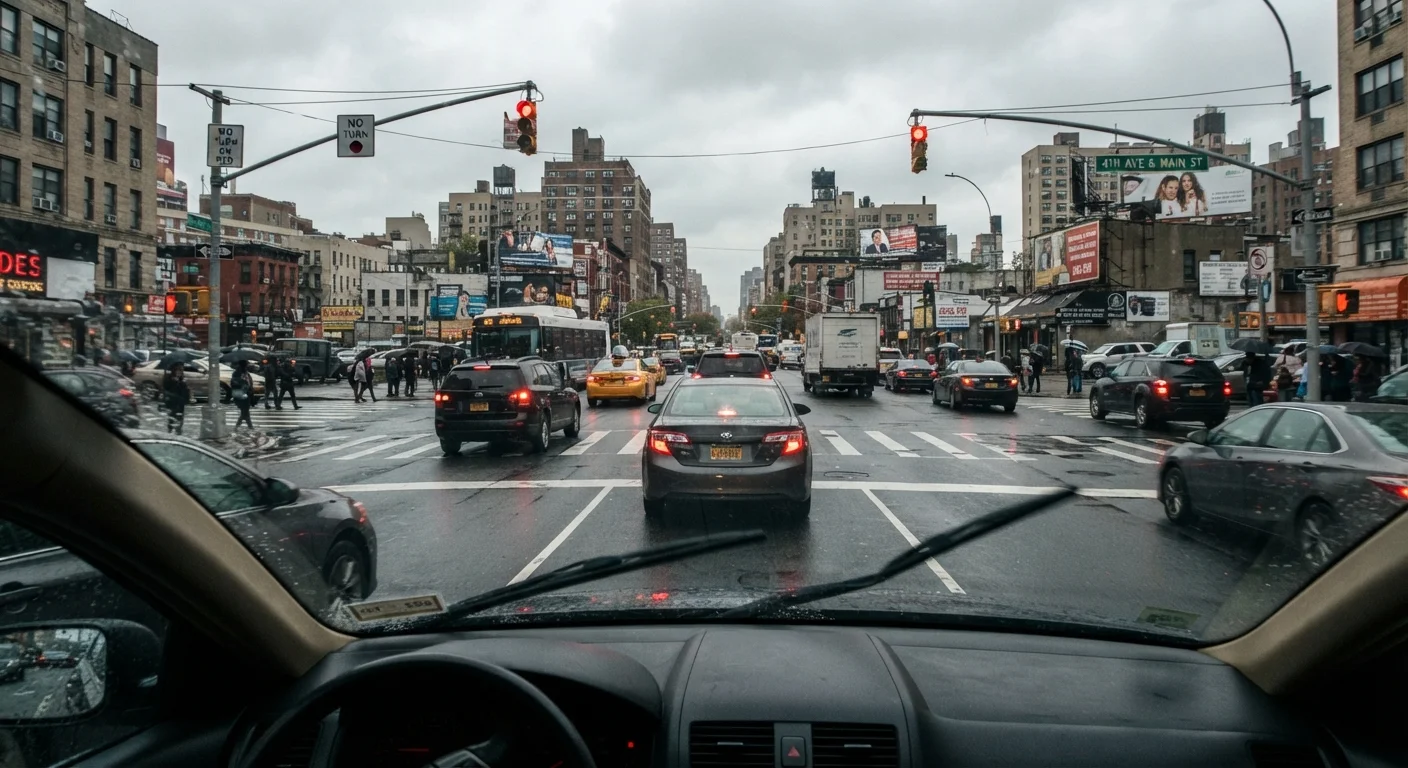
Why Assumptions Form - and Why They're Dangerous
The human brain is wired to take shortcuts. After thousands of hours behind the wheel, driving becomes largely automatic - which is both useful and risky. Automaticity lets you manage speed, lane position, and mirrors without conscious effort, but it also means your brain starts filling in gaps rather than observing what's actually happening around you.
This is how assumptions form. You expect the car at the stop sign to wait. You expect the merging vehicle to check its mirror. You expect the light to stay green long enough. These expectations are usually correct - which is precisely what makes them dangerous when they're not.
According to the National Highway Traffic Safety Administration (NHTSA), driver error is a contributing factor in the vast majority of U.S. crashes, and recognition errors - failing to properly perceive what's happening - are among the most common categories. Many of those recognition failures trace back to assumption-driven inattention.
Defensive driving is specifically designed to counteract this tendency. Its core principle is treating assumptions as liabilities, not conveniences.
Assuming a driver at a stop sign will actually stop.
Why it happens: Drivers with the right-of-way often stop scanning cross-traffic because they expect compliance. The legal right to proceed becomes a psychological permission to stop watching.
Assuming a turn signal means the other driver has checked their blind spot.
Why it happens: Signals are interpreted as a complete communication - intent plus execution. In reality, many drivers signal while already mid-merge, or without checking for vehicles already in the target lane.
Assuming familiar routes carry the same risk level every time.
Why it happens: Repetition builds comfort, and comfort reduces vigilance. Drivers on commutes they've driven hundreds of times are more likely to operate on autopilot and miss changed conditions.
Assuming pedestrians will wait for you to clear the crosswalk.
Why it happens: Drivers focus on vehicle traffic and underweight the unpredictability of foot traffic, especially when turning. Pedestrians, particularly children and older adults, don't always follow expected patterns.
Assuming your vehicle is visible to all other drivers in all conditions.
Why it happens: Drivers project their own visibility standards outward - if they can see well, they assume others can see them equally well. This breaks down in low light, rain, fog, and glare.
Where Assumptions Cause the Most Crashes
Certain driving environments amplify assumption-driven risk because they involve multiple variables converging at once.
Intersections
Intersections are the single most dangerous location on U.S. roads. The Federal Highway Administration reports that roughly 40% of all crashes occur at or near intersections. A large share of these involve a driver assuming the cross-traffic has stopped, yielded, or seen them. Our guide to right-of-way rules breaks down exactly where drivers misread who goes first - and how costly that misread can be.
Highway Merging
Merging lanes demand that at least one driver adjusts speed or position. Crashes happen when both parties assume the other will adapt. On high-speed roads, the margin for error is razor-thin. For a side-by-side breakdown of how urban and highway risks differ, see Urban Driving vs. Highway Driving.
Night Driving
After dark, reduced visibility makes assumptions even more hazardous. Drivers routinely overestimate how well they can see pedestrians, cyclists, and stopped vehicles. Night driving risks deserve specific attention, because daytime confidence simply doesn't transfer.
Special Zones
School zones, construction zones, and areas with emergency vehicles present unpredictable human behavior. Assuming a child will wait, or that a worker is visible to all lanes, has deadly consequences. Review the special rules for these zones to understand the legal and safety expectations in each.
~40%
of U.S. crashes occur at or near intersections
According to Federal Highway Administration data, intersection-related crashes represent a disproportionate share of serious injuries and fatalities on U.S. roads.
94%
of serious crashes involve driver error
NHTSA research attributes approximately 94% of serious crashes to driver error, with recognition failures - including assumption-driven inattention - among the leading categories.
Breaking the Assumption Habit
Eliminating assumptions entirely isn't realistic - but you can replace passive assumptions with active verification. A few consistent habits make a measurable difference:
- Cover the brake at intersections - move your foot from the accelerator before you enter, not after you sense a problem.
- Make eye contact when yielding to pedestrians or cyclists; don't proceed until you're sure they've seen you.
- Wait one second after a light turns green before moving - red-light runners most often appear in that window.
- Never assume a turn signal means a lane change is complete - wait until the vehicle actually moves.
- Adjust following distance dynamically - tailgating is essentially an assumption that the car ahead won't stop unexpectedly.
These aren't dramatic changes. They're small friction points you deliberately insert into automated behavior. Over time, they become their own habits - ones that actively protect you rather than expose you.
Familiarity Doesn't Equal Safety
Research consistently shows that drivers are more likely to crash on routes they know well than on unfamiliar roads. Familiarity breeds inattention, and inattention creates blind spots to changed conditions - a construction barrier that wasn't there last week, a school zone now active. Treat every drive as if the road could surprise you, because it can.
The content provided on our blog site traverses numerous categories, offering readers valuable and practical information. Readers can use the editorial team’s research and data to gain more insights into their topics of interest. However, they are requested not to treat the articles as conclusive. The website team cannot be held responsible for differences in data or inaccuracies found across other platforms. Please also note that the site might also miss out on various schemes and offers available that the readers may find more beneficial than the ones we cover.