

What a Bathroom Renovation Actually Costs
Bathroom remodels are among the most common home improvement projects - and among the most frequently underbudgeted. A cosmetic refresh (new fixtures, paint, mirror) can run a few hundred to a couple of thousand dollars. A full gut renovation of a standard full bathroom typically ranges from roughly $10,000 to $25,000 or more, depending on your location, material choices, and the scope of structural or plumbing changes involved.
Those numbers carry wide variance for a reason: scope drives cost more than almost anything else. Keeping the same footprint and fixture locations is far less expensive than reconfiguring where the toilet, tub, or vanity sits. Even a seemingly simple layout change can require a licensed plumber to re-route supply and drain lines, which raises both labor costs and permit requirements.
For context on how renovation budgets can expand unexpectedly once work begins, see our guide on the real cost of deferred home maintenance - the same compounding dynamics apply here.
Where the Money Really Goes
Understanding cost breakdown helps you make deliberate trade-offs rather than being surprised mid-project.
40-60%
Share of remodel cost that is labor
Industry estimates consistently show skilled trade labor - plumbers, tile setters, electricians - as the dominant cost driver in bathroom renovation projects.
15-20%
Recommended contingency buffer
Home renovation professionals commonly advise homeowners to reserve this share of their total budget for unexpected discoveries once walls and floors are opened.
$10K-$25K+
Typical full bathroom remodel range
This range reflects a standard full bathroom gut renovation in the US; costs vary significantly by region, scope, and material selections.
- Labor: Typically 40-60% of total project cost. Tile setters, plumbers, and electricians bill by the hour or by project scope. In high cost-of-living metros, skilled trade labor is significantly pricier.
- Tile and flooring: Material costs vary enormously - from under $2 per square foot for basic ceramic to $20+ for natural stone. But installation labor often costs more than the tile itself, particularly for intricate patterns or large-format slabs.
- Vanity, toilet, and fixtures: Entry-level versions of each exist, but mid-grade options that balance durability and aesthetics sit in a noticeably higher range. Faucets, shower heads, and hardware add up quickly.
- Shower or tub surround: A prefab acrylic insert is the most budget-friendly option. Custom tile showers are significantly more expensive but last decades when properly waterproofed.
- Permits: Required in most jurisdictions for plumbing, electrical, and structural work. Skipping them creates insurance liability and can complicate a future home sale.
The DIY vs. Contractor Decision
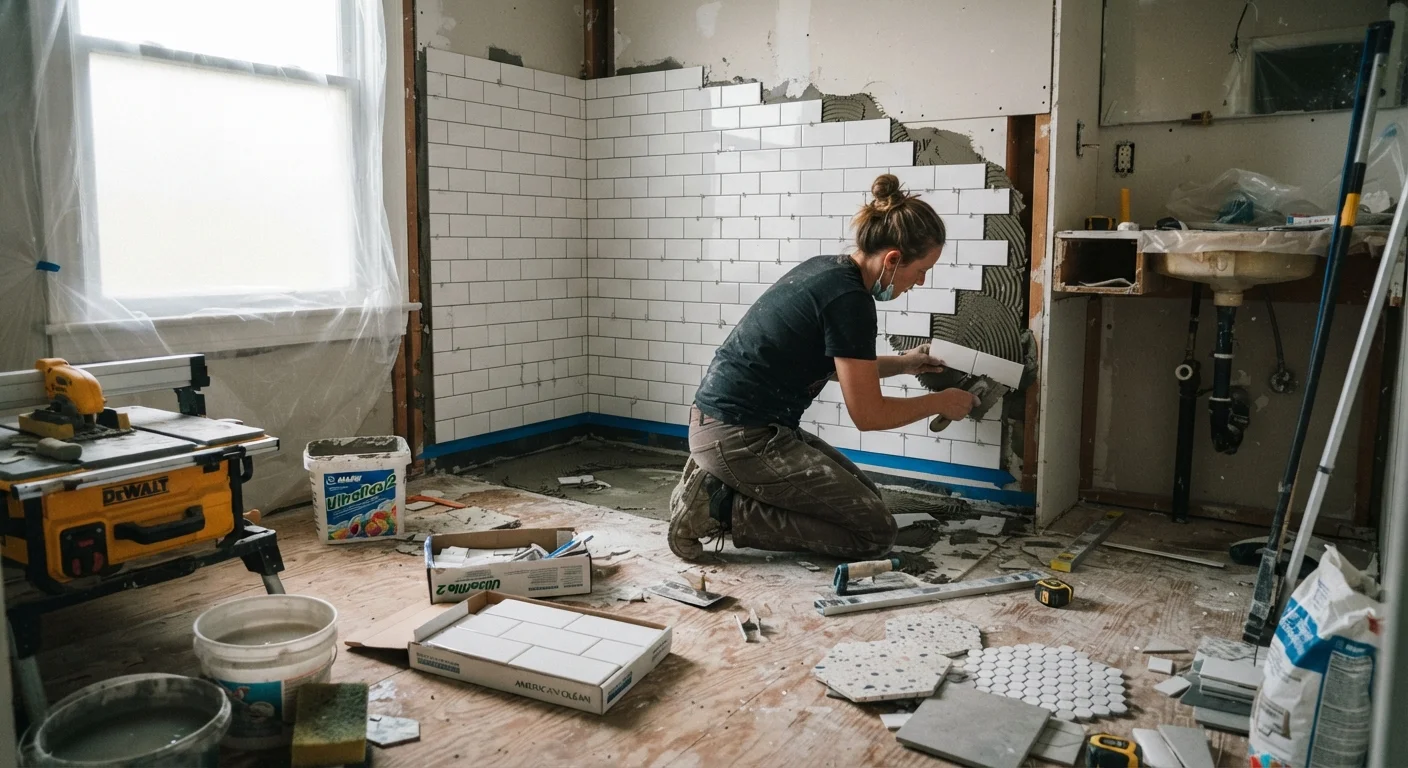
Not all bathroom tasks carry the same risk profile. Painting, installing a new mirror, swapping a toilet, or caulking are generally within reach for a careful DIYer. Tile installation has a steeper learning curve but is manageable with patience and proper substrate prep.
However, waterproofing membranes in wet areas, electrical work (especially adding circuits or GFCI outlets near water), and any plumbing that connects to your main supply or drain lines should be handled by licensed professionals in most cases. Many jurisdictions require permits and inspections for this work regardless of who performs it.
Before any tile is purchased, confirm your substrate is waterproofed correctly - cement board alone is not a waterproofing layer. A failed membrane behind the tile is invisible until the damage is severe.
Improper waterproofing in wet areas is one of the leading causes of structural damage in bathrooms, often not discovered until a full second renovation is required.
Ask your contractor for a detailed demolition report before finalizing the scope - what they find behind the walls in the first two days should inform your final budget, not your initial signed contract.
Many budget overruns are locked in because change orders are negotiated under pressure mid-project; a pre-demo check-in gives you room to adjust scope before costs escalate.
A hybrid approach - hiring out the technical trades and doing finish work yourself - is often where homeowners find the best balance of cost and quality. Just make sure your sequencing is right: tile goes in after rough plumbing is inspected and approved, not before.
If you're new to owning a home and unsure where your limits are, the home improvement guide for first-time owners is a useful starting point for building realistic expectations.
Common Budget Killers to Watch For
The most predictable source of cost overruns isn't bad planning - it's what gets discovered once walls and floors are opened up.
- Subfloor damage: Moisture infiltration from an old wax ring, a slow leak, or failed caulk often causes rot that isn't visible until tile is removed. Replacing subfloor adds materials, labor, and delays.
- Outdated wiring: Older homes may have wiring that doesn't meet current code for bathroom circuits, particularly near water sources. Upgrades are non-negotiable for safety and permit approval.
- Mold remediation: Found behind tile or in wall cavities, mold requires professional assessment and remediation before new materials can be installed.
- Supply chain or lead times: Specialty tile or custom vanities can have 6-10 week lead times, delaying your project and sometimes requiring temporary fixture adjustments.
Budgeting a 15-20% contingency from the outset isn't pessimism - it reflects the realities of working inside walls. The same thinking that applies to common kitchen remodel misconceptions holds here: surprises aren't the exception in renovation work, they're the norm.
How to Scope Your Remodel Smartly
The most effective way to control bathroom renovation costs is to define scope before you talk to contractors - not after. Start by sorting your wish list into three tiers: must-haves (functional needs like a working shower and adequate ventilation), strong preferences (layout or aesthetic upgrades you'd pay for), and nice-to-haves (extras that get cut first if costs rise).
Then get at least three itemized bids, not lump-sum estimates. An itemized bid shows you where labor and materials are priced and makes comparison meaningful. Ask each contractor how they handle discovered problems mid-project - a reputable pro will have a clear change-order process.
Keeping plumbing fixtures in their existing locations is one of the single most effective ways to hold down costs. Even moving a toilet six inches can require significant drain line work under the floor. If you want a layout change, get a plumber's assessment before you commit - the cost may or may not fit your budget once it's quantified.
Financing Your Bathroom Remodel
How you pay for a bathroom remodel matters almost as much as what you spend. Paying with savings avoids interest entirely, but depleting an emergency fund to fund a renovation leaves you exposed if something else breaks. A dedicated home improvement savings plan - setting aside a fixed monthly amount - is the most financially conservative approach for non-urgent upgrades.
For larger projects, homeowners often consider home equity lines of credit (HELOCs), personal loans, or cash-out refinancing. Each carries different cost structures, risk profiles, and qualification requirements. Our overview of home improvement financing options walks through how each mechanism works and what to weigh before committing.
General budgeting principles from resources like budgeting basics apply directly here: know your real numbers before you sign a contract, and don't let excitement about a finished result push you into financing terms you haven't fully evaluated. A bathroom remodel should improve your home's livability, not strain your financial footing for years afterward.
This article is for general informational and educational purposes only. It does not constitute financial, legal, or professional contracting advice. Always verify local permit requirements with your municipality and consult licensed professionals for electrical, plumbing, and structural work.
The content provided on our blog site traverses numerous categories, offering readers valuable and practical information. Readers can use the editorial team’s research and data to gain more insights into their topics of interest. However, they are requested not to treat the articles as conclusive. The website team cannot be held responsible for differences in data or inaccuracies found across other platforms. Please also note that the site might also miss out on various schemes and offers available that the readers may find more beneficial than the ones we cover.