

Start here
Start with a Home Assessment, Not a Wishlist
Next
Which Projects to Prioritize First
Then
DIY vs. Hiring a Professional: Drawing the Line
Build the habit
Building a Maintenance Habit That Sticks
Plan your spending
Budgeting for Home Improvement Without Overextending
Start with a Home Assessment, Not a Wishlist
Most first-time homeowners arrive with a mental list of upgrades they want - new countertops, fresh paint, maybe a deck. That enthusiasm is understandable, but acting on it before understanding what your home actually needs is one of the most common and costly mistakes new owners make.
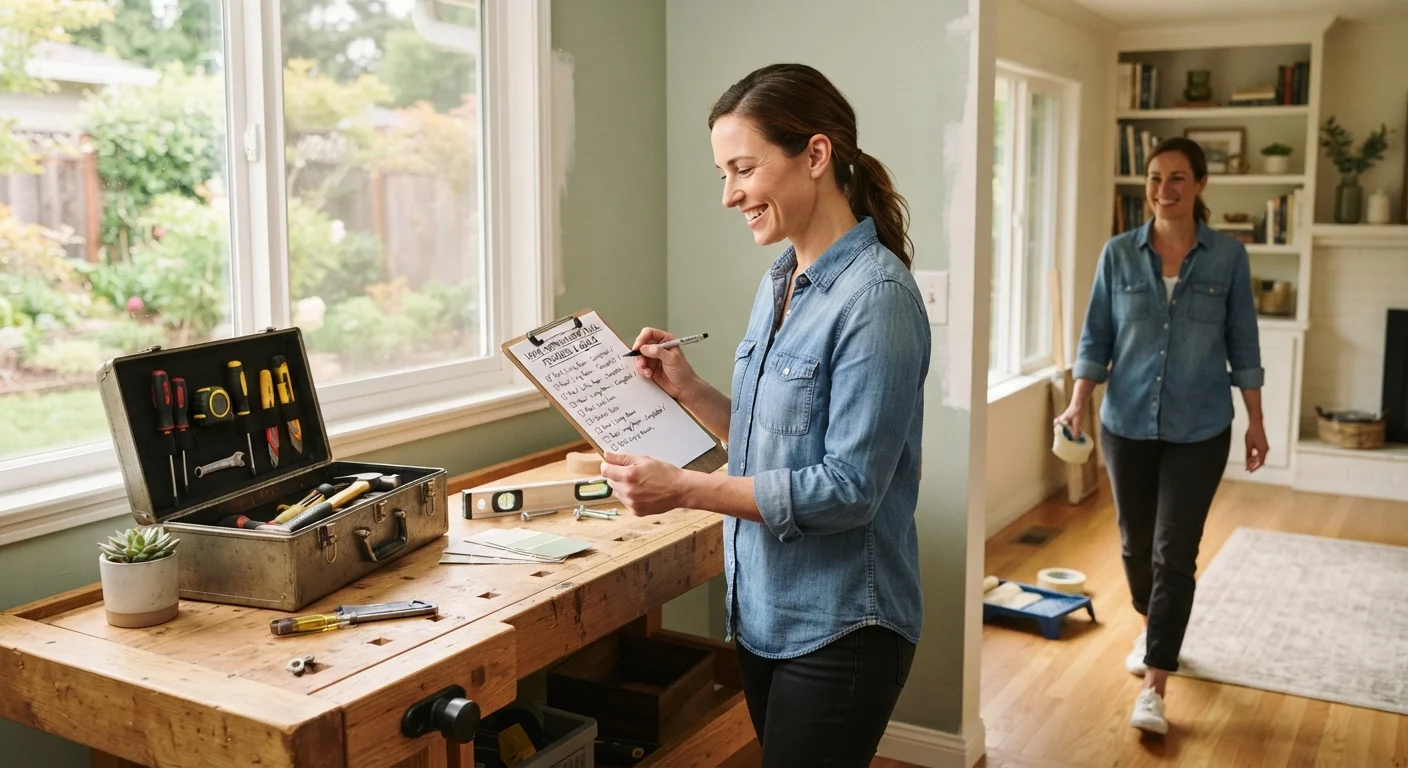
Before spending a dollar on improvements, do a methodical walkthrough of every room, the basement or crawl space, the attic, and the exterior. You're looking for signs of water damage, soft or uneven floors, cracks in the foundation, faulty outlets, aging roofing, and deteriorated caulk or weatherstripping. Document everything with photos and notes.
If the home didn't come with a recent inspection report - or if the report is more than a year old - consider hiring a licensed home inspector to produce a fresh one. This investment typically costs a few hundred dollars and gives you a prioritized, professional view of your home's condition. It's the clearest starting point available.
Home inspection
A professional evaluation of a home's condition, covering structure, systems, and safety. A licensed inspector provides a written report identifying issues that need attention.
Deferred maintenance
Repairs or upkeep that have been postponed. Small deferred tasks tend to worsen over time, often resulting in significantly higher repair costs later.
GFCI outlet
A ground-fault circuit interrupter outlet that shuts off power automatically if it detects a potentially dangerous electrical imbalance. Required by code in kitchens, bathrooms, and other wet areas in most US homes.
Building permit
Official approval from a local government authority to perform specific construction or renovation work. Permits ensure work is inspected and meets safety codes.
Load-bearing wall
A wall that supports the weight of the structure above it. Removing or altering a load-bearing wall without professional guidance can cause serious structural damage.
HELOC
A home equity line of credit - a revolving loan secured by the equity in your home. It is a borrowing tool, not a savings product, and carries financial risk if not managed carefully.
Which Projects to Prioritize First
Once you have an accurate picture of your home's condition, use a simple framework: safety first, structure second, systems third, cosmetics last.
- Safety: Smoke and carbon monoxide detectors, GFCI outlets in wet areas, secure railings, and any identified hazards in older homes. If your home was built before 1980, read our guide on working safely with old homes before touching any walls or insulation.
- Structure: Roof, foundation, load-bearing walls, and drainage around the home's perimeter. Problems here affect everything above them.
- Systems: HVAC, electrical, plumbing, and water heater. These degrade quietly and fail at the worst moments. See how deferred maintenance compounds costs in our article on the real cost of deferred home maintenance.
- Cosmetics: Paint, fixtures, landscaping, and aesthetic updates. These matter for comfort and enjoyment, but they should come after the fundamentals are sound.
This sequence protects your investment and avoids the painful situation of renovating a kitchen only to discover a foundation drainage problem six months later.
DIY vs. Hiring a Professional: Drawing the Line
Not every project belongs on your weekend to-do list. Knowing where your skills and safety end - and where a licensed professional must begin - is one of the most important judgments you'll make as a homeowner.
Generally safe for capable DIYers: interior painting, caulking and weatherstripping, minor drywall repairs, replacing outlet covers, installing light fixtures (when the circuit is off and you're comfortable with basic electrical safety), basic landscaping, and simple tile work.
Leave to licensed professionals: any work on the electrical panel, gas lines, load-bearing structures, main plumbing lines, roofing on steep pitches, and HVAC system replacements. These tasks are regulated for good reason - errors can be life-threatening, violate building codes, or invalidate your homeowner's insurance.
Always Pull the Permit
Even for projects that feel minor, check whether a permit is required before starting. Unpermitted work can cause complications when you sell your home and may void your homeowner's insurance in the event of a related claim. Your local building department's website is usually the fastest place to verify requirements.
Our full breakdown of DIY vs. hiring a pro walks through specific scenarios with more detail. When you do hire, consult our guidance on hiring a contractor without getting burned to avoid common pitfalls. And remember: many projects require permits - our article on permits, inspections, and codes explains when you need one and what happens if you skip it.
Building a Maintenance Habit That Sticks
The homeowners who spend the least over time are usually those who catch small problems early. A seasonal maintenance routine is the most practical tool for this - it doesn't require expertise, just consistency.
Think in four seasonal passes: spring (inspect roof and gutters after winter, check exterior caulk, service HVAC before summer), summer (trim vegetation away from the house, check for pest entry points, test outdoor outlets), fall (clean gutters after leaves drop, drain exterior hoses, service furnace before cold weather), and winter (check insulation and weatherstripping, test smoke detectors, clear drainage around the foundation).
Our seasonal home maintenance checklist gives you a detailed task list for every season. Pair it with a shared calendar or a simple home binder where you log completed work, contractor contacts, appliance manuals, and warranty information. That record becomes genuinely valuable when you eventually sell or need to file an insurance claim.
Budgeting for Home Improvement Without Overextending
Home improvement spending is one area where it's easy to let enthusiasm outpace resources. A few financial guardrails help.
A common rule of thumb - though not a guarantee - is to set aside roughly 1%-2% of your home's value each year for maintenance and repairs. A home valued at $300,000 might therefore call for $3,000-$6,000 annually in a dedicated fund. Older homes, those in harsh climates, or those with deferred maintenance may require more.
Financing Home Improvements Carries Real Risk
Borrowing against your home - through a HELOC, cash-out refinance, or personal loan - can make large projects accessible, but it also increases your financial exposure. If your circumstances change, that debt remains. Always consult a licensed financial adviser before taking on home-secured debt, and treat financing as a tool of last resort rather than a first move.
For larger projects - a bathroom remodel, a roof replacement, or an HVAC upgrade - costs can exceed what a maintenance fund covers. Our overview of home improvement financing options explains how loans, HELOCs, and cash-out refinancing work in general terms, so you can have an informed conversation with a qualified financial adviser before committing to any borrowing. For spending strategy more broadly, spending wisely offers useful framing for prioritizing home costs alongside other financial goals.
The core principle: fund the necessary before the desirable, and don't borrow against your home for cosmetic improvements unless you have a clear and realistic repayment plan.
Frequently Asked Questions
Address safety hazards and structural issues before anything cosmetic. Check for water intrusion, roof condition, HVAC function, and electrical panel safety. Deferred maintenance on these systems tends to compound into far more expensive problems over time.
Most painting, caulking, minor drywall patching, weather-stripping, fixture swaps, and basic landscaping are reasonable DIY tasks. Anything involving the electrical panel, gas lines, structural elements, or major plumbing should generally be handled by a licensed professional.
Permit requirements vary by municipality, but structural changes, electrical upgrades, HVAC replacements, and additions almost always require one. Skipping permits can complicate home sales and void insurance claims. Check with your local building department before starting any significant project.
A commonly cited guideline is setting aside roughly 1%-2% of your home's purchase price annually for maintenance and repairs. Older homes or those in harsh climates may require more. This is a general heuristic, not a guarantee - actual costs vary widely by home condition and location.
Get at least three written estimates, verify licensing and insurance, and check references before signing anything. Be cautious of contractors who demand large upfront cash payments or push you to skip permits. Our guide on <a href="/home-garden/home-improvement/hiring-a-contractor-without-getting-burned">hiring a contractor without getting burned</a> covers the full vetting process.
A repair restores something to working condition - fixing a leaky faucet or patching a hole in drywall. A renovation changes, upgrades, or expands a space. Repairs should almost always come before renovations, since upgrading a room that has underlying water damage or failing systems wastes money.
The content provided on our blog site traverses numerous categories, offering readers valuable and practical information. Readers can use the editorial team’s research and data to gain more insights into their topics of interest. However, they are requested not to treat the articles as conclusive. The website team cannot be held responsible for differences in data or inaccuracies found across other platforms. Please also note that the site might also miss out on various schemes and offers available that the readers may find more beneficial than the ones we cover.