

Start here
Choosing the Right Site
Next
Understanding Your Soil
Then
Planning What to Grow
When you're ready
Planting and Early Care
Final step
Keeping Costs Down
Choosing the Right Site
Location is the decision that most determines whether your vegetable garden thrives or struggles. Vegetables are sun-hungry plants - most require a minimum of six hours of direct sunlight daily, and fruiting crops like tomatoes, peppers, and squash perform best with eight or more. Before breaking ground, spend a day tracking shadows across your yard at two-hour intervals to identify which patches get genuine, unobstructed sun.
Beyond light, consider these site factors:
- Drainage: Avoid low spots where water pools after rain. Standing water suffocates roots quickly.
- Proximity to water: A garden far from a hose or spigot is one you're less likely to water consistently. Convenience matters.
- Access and visibility: Plots you walk past daily get tended more reliably than remote corners of the yard.
- Flat or gently sloped ground: Steep slopes cause erosion and uneven watering. Mild grades are fine.
If your best sunny spot has mediocre soil or drainage, a raised bed is worth considering - though it comes with material costs to weigh upfront.
Understanding Your Soil
Soil is the foundation of every productive garden. Most vegetables prefer a loamy, well-drained soil with a pH between 6.0 and 7.0. Before spending anything on amendments, test your soil - inexpensive DIY test kits are widely available, and many county cooperative extension offices offer low-cost lab testing that returns detailed results.
Soil pH
A measure of how acidic or alkaline your soil is, scored on a scale from 0 to 14. Most vegetables prefer a slightly acidic range of 6.0 to 7.0, where nutrients are most available to plant roots.
Loamy soil
A balanced soil type containing roughly equal parts sand, silt, and clay. It drains well but retains enough moisture and nutrients to support strong vegetable growth.
Organic matter
Decomposed plant or animal material mixed into soil. It improves soil structure, feeds beneficial microorganisms, and helps both sandy and clay soils perform better.
Soil amendment
Any material worked into soil to improve its physical or chemical properties. Common examples include compost, lime, and peat moss.
Direct-sowing
Planting seeds directly into garden soil outdoors rather than starting them indoors first. It's lower cost and works well for crops that don't transplant easily.
USDA Hardiness Zone
A geographic classification system that divides the US into zones based on average annual minimum winter temperatures. It helps gardeners choose plants suited to their local climate.
Once you know your baseline, you can amend intelligently rather than guessing. Common adjustments include:
- Low pH (too acidic): Lime raises pH gradually. Follow test recommendations for application rates.
- High pH (too alkaline): Elemental sulfur lowers pH, though the process is slow and requires patience.
- Poor structure or low organic matter: Compost is the single best all-purpose amendment. It improves drainage in clay soils, water retention in sandy soils, and feeds soil biology in both.
Starting a home compost system before your first season gives you a free, renewable soil amendment for years to come. Even a simple pile works - you don't need a bin.
Planning What to Grow
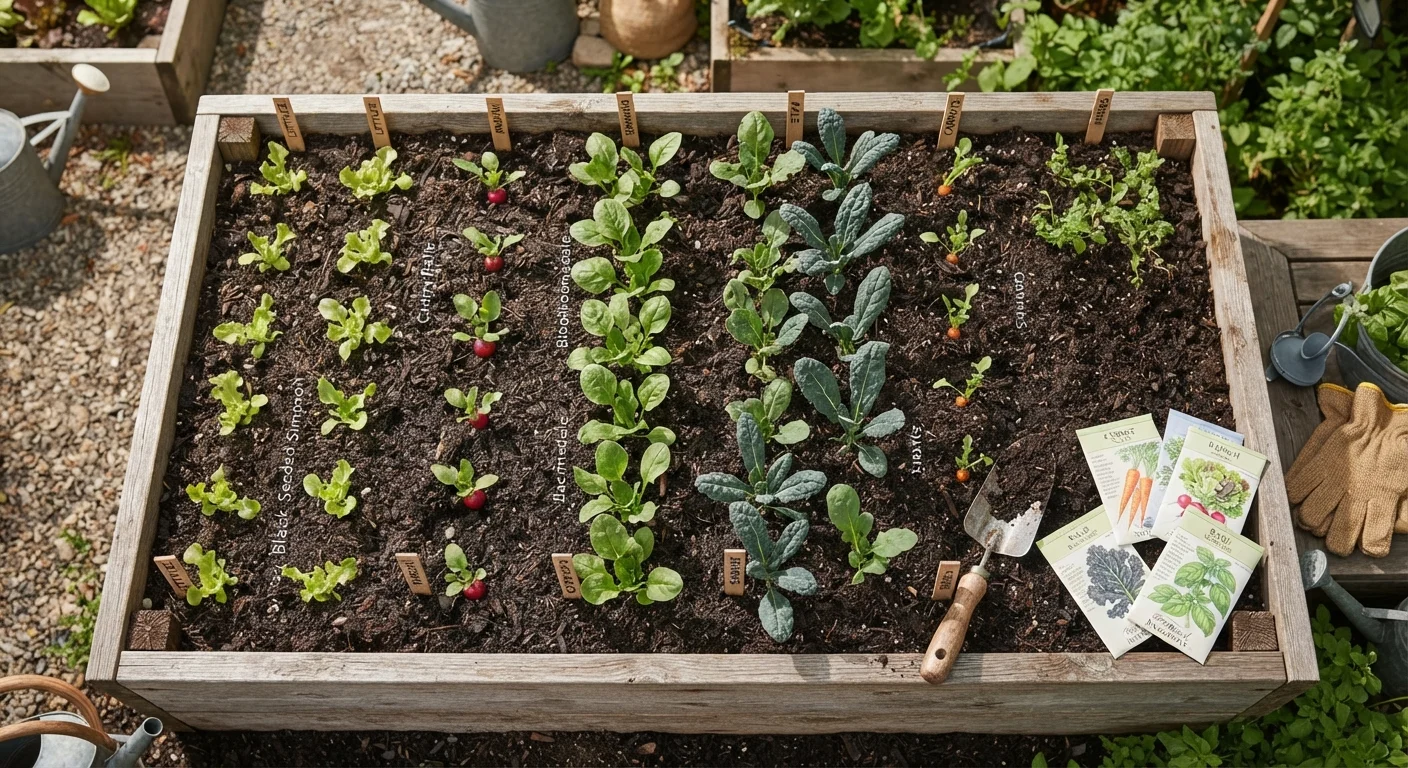
New gardeners often plant too much, too varied. A focused plan produces more food with less frustration. For a first garden, aim for a 4×8-foot plot or equivalent - enough to learn the rhythms of watering, weeding, and harvesting without becoming overwhelming.
Choose vegetables based on three criteria: what your household actually eats, what grows well in your climate, and what fits your available time. Fast-producing crops are particularly satisfying for beginners:
- Radishes: Ready in as little as 25 days from seed.
- Lettuce and salad greens: Harvestable in 30-45 days; cut-and-come-again varieties extend the season.
- Bush beans: Reliable producers, easy to direct-sow, no staking required.
- Zucchini: Prolific; a single plant often yields more than one household can use.
Grow What You'll Actually Eat
It's tempting to try a wide variety of vegetables in your first season, but focus on produce your household regularly buys at the store. Growing food you'll genuinely use maximizes the practical return on your time and investment. Start with three to five crops and expand as you gain confidence.
Check your USDA plant hardiness zone and your area's average last frost date before finalizing a plant list. Your local cooperative extension service publishes planting guides tailored to your specific region - these are free, accurate, and far more useful than generic timelines.
Planting and Early Care
Some vegetables grow best when started from seed directly in the ground; others benefit from transplants. Direct-sowing is cheaper and works well for beans, peas, carrots, radishes, and most greens. Tomatoes, peppers, and eggplant require a long growing season and are typically started indoors six to eight weeks before the last frost or purchased as transplants.
Basic planting principles:
- Follow seed packet depth and spacing instructions - crowding is the most common beginner mistake and leads to poor airflow and disease.
- Water transplants in gently after planting. Keep the top inch of soil consistently moist until seedlings are established, then shift to deeper, less frequent watering.
- Weed early and often. Small weeds pulled by hand take seconds; mature weeds left to root take minutes and steal water and nutrients.
Mulching bare soil between plants significantly reduces watering frequency and suppresses weeds. Our mulching guide covers depth and material choices in practical detail. For the overall health of your outdoor space as your garden grows, the lawn care guide addresses how to manage the surrounding turf without competing with your beds.
Keeping Costs Down
A vegetable garden should save money over time, not just generate it as a hobby expense. Several habits keep first-year costs reasonable and set you up for cheaper subsequent seasons.
- Start from seed where possible. A packet of bean seeds costs a fraction of transplants and contains dozens of plants. Prioritize seed purchases for crops that direct-sow easily.
- Borrow before you buy tools. A trowel, a hoe, and a watering can cover most of a beginner's needs. Avoid buying specialty tools until you know you'll use them.
- Build a compost habit now. Kitchen scraps and yard waste become free fertilizer within months. See our guide on composting at home for a simple setup.
- Save open-pollinated seeds. Unlike hybrid varieties, seeds from open-pollinated plants can be collected, dried, and replanted next season - eliminating that recurring cost.
- Resist over-expanding in year one. A well-maintained small garden outproduces a neglected large one. Master the fundamentals before scaling up.
The same discipline that makes a garden productive echoes through other areas of home management. If you're building financial habits alongside your garden, budgeting from scratch offers a parallel framework for making intentional decisions with limited resources.
Frequently Asked Questions
Most vegetables need at least six hours of direct sunlight per day, and eight is better for fruiting crops like tomatoes and peppers. Leafy greens such as lettuce and spinach can tolerate as little as four hours. Always observe your chosen spot at different times of day before committing.
Radishes, lettuce, and bush beans are widely considered among the most beginner-friendly vegetables. They germinate quickly, tolerate minor care mistakes, and produce results within weeks. Zucchini is also reliably productive, though it needs more space.
No - in-ground gardens work well when soil quality is decent and drainage is adequate. Raised beds offer advantages for drainage and soil control but also add upfront material costs. See the trade-offs explained in our <a href="/home-garden/lawn-and-garden/raised-bed-gardening-advantages-drawbacks-and-what-no-one-warns-you-about">raised bed guide</a>.
Timing depends on your USDA hardiness zone and the last expected frost date in your area. Cool-season crops like peas and lettuce go in weeks before the last frost; warm-season crops like tomatoes and squash wait until after it. Your local cooperative extension service publishes zone-specific planting calendars.
Most vegetable gardens need about one inch of water per week from rain or irrigation. Water at the base of plants rather than overhead to reduce disease risk, and water in the morning so foliage can dry during the day. Stick your finger two inches into the soil - if it feels dry, it's time to water.
Direct-sow crops from seed rather than buying transplants, start a simple compost system to replace purchased fertilizer, and limit your first garden to a small, manageable plot. Borrowing or sharing tools with neighbors and saving seeds from open-pollinated varieties also cuts recurring costs significantly.
The content provided on our blog site traverses numerous categories, offering readers valuable and practical information. Readers can use the editorial team’s research and data to gain more insights into their topics of interest. However, they are requested not to treat the articles as conclusive. The website team cannot be held responsible for differences in data or inaccuracies found across other platforms. Please also note that the site might also miss out on various schemes and offers available that the readers may find more beneficial than the ones we cover.