

Why Mulching Decisions Matter More Than You Think
A layer of mulch looks tidy, but its real work happens invisibly - moderating soil temperature, slowing evaporation, suppressing weeds, and feeding soil biology as it breaks down. Done correctly, mulching can meaningfully reduce how much you water, weed, and worry about your garden beds. Done carelessly, it can trap moisture against stems, host pests, and even change soil chemistry in ways your plants won't appreciate.
If you're building out new beds, the groundwork matters just as much as the mulch itself. See our guide to starting a vegetable garden from scratch for a solid foundation before layering on top.
Choosing the Right Mulch Material
Not all mulch behaves the same way. The two broad categories - organic and inorganic - each have a place in the garden, but for most planting beds, organic materials offer advantages that hard landscaping rock or plastic sheeting simply can't match.
- Shredded hardwood bark: Long-lasting, widely available, and stays in place well on slopes. Works around shrubs and perennial beds.
- Wood chips: Coarser and slower to break down. Best around trees and larger shrubs, not ideal for vegetable gardens where you're turning soil frequently.
- Straw: A practical and affordable choice for vegetable and annual beds. Breaks down faster than bark, so plan to replenish it.
- Shredded leaves: An underutilized free resource. Run leaves through a mower or shredder, and they make an excellent, nutrient-rich mulch - especially good around perennials.
- Compost: More of a soil amendment than a mulch, but a 1-2 inch layer applied before a coarser mulch provides a nutritional layer as both materials break down together. Our guide to home composting explains how to produce your own for free.
Free and Low-Cost Mulch Sources
Many municipalities offer free wood chip mulch from tree-trimming operations - check your local public works or parks department website. Shredded leaves from your own yard are another cost-free option. Straw bales from feed or farm supply stores are typically inexpensive and stretch further than bagged bark products. Sourcing locally also reduces transportation costs and supports regional resource cycles.
Depth, Placement, and Common Mistakes
Depth is the variable homeowners most frequently get wrong in both directions. The target for most beds is 2-4 inches of mulch. Thinner than 2 inches and you lose meaningful weed suppression and moisture retention. Thicker than 4 inches and you risk creating a barrier that prevents rain and irrigation from penetrating to the root zone - and you encourage shallow rooting.
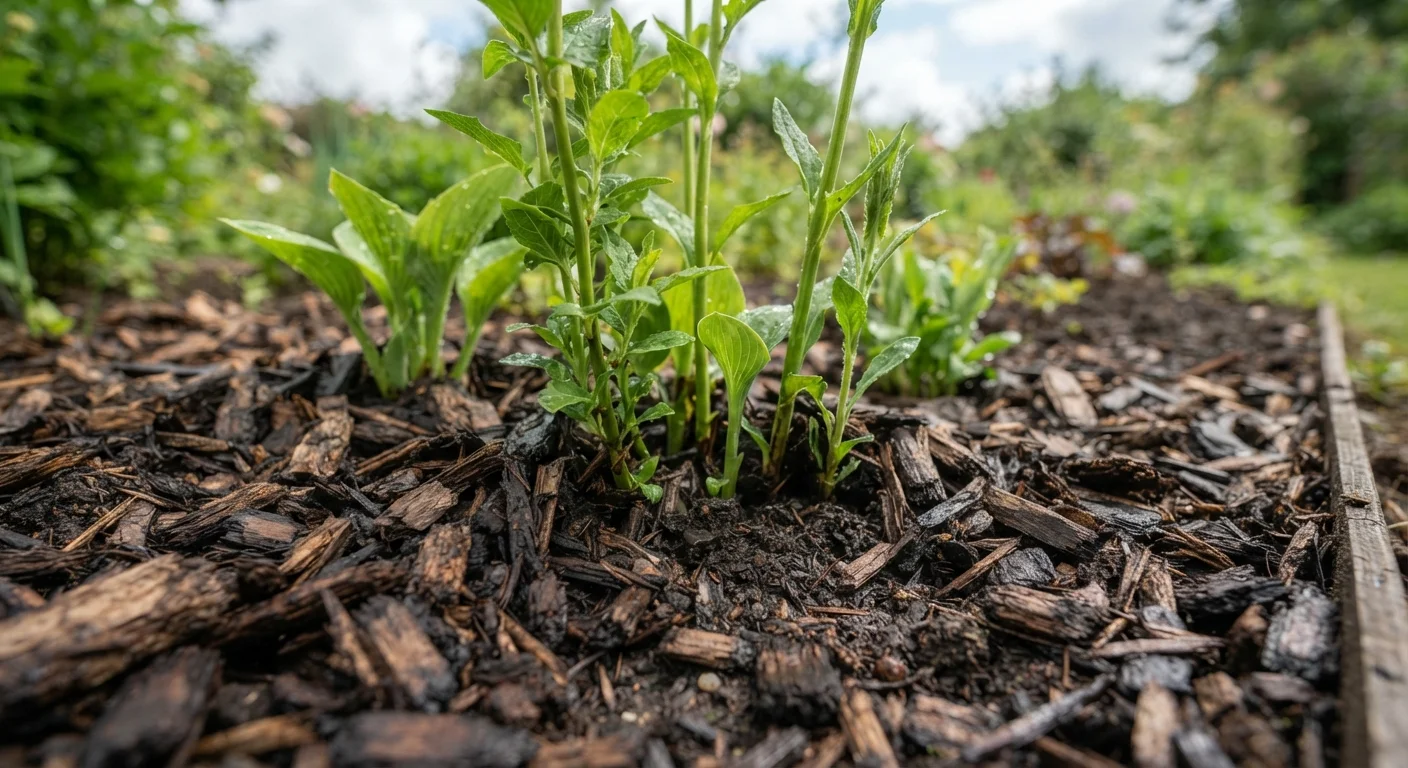
Placement around plant bases is equally critical. Mulch should never be piled against stems, crowns, or tree trunks. The common mounded look around trees - sometimes called a mulch volcano - traps moisture, promotes rot, and can girdle roots over time. Instead, pull mulch back 2-3 inches from any plant base, leaving a visible gap.
Fresh Wood Chips and Nitrogen: A Nuance Worth Knowing
There's a common concern that fresh wood chips deplete soil nitrogen as they decompose. Research suggests this effect is primarily limited to the soil surface layer, not the root zone - so it's a manageable consideration rather than a reason to avoid wood chips altogether. If you're mulching a bed where nitrogen availability is already a concern, incorporating a light layer of compost underneath the chips can help. For more on soil health, see our overview of soil pH and plant health.
When applying mulch, wet the soil first if conditions are dry. Dry soil under mulch is slower to rehydrate and can stay moisture-deficient longer than you'd expect. Pairing good mulching technique with smart watering habits pays off - the watering myths that quietly harm gardens are worth reviewing alongside this guidance.
Maintaining Mulch Over Time
Mulch is not a one-and-done task. Organic materials naturally compact and decompose, so beds that started the season at 3 inches may be down to an inch or less by the following spring. An annual top-off - adding an inch or so to restore depth - is more efficient than stripping old mulch and starting over. Old mulch that's still intact simply becomes part of the improving soil layer beneath the fresh material.
Timing your application also matters. A spring mulch layer, applied after the soil has warmed, helps retain that warmth and suppress early-season weeds. A fall application before hard frost helps moderate soil temperature swings and protect root systems through winter. For lower-maintenance bed designs that pair well with consistent mulching, explore low-maintenance landscaping approaches that reduce the overall upkeep burden.
The content provided on our blog site traverses numerous categories, offering readers valuable and practical information. Readers can use the editorial team’s research and data to gain more insights into their topics of interest. However, they are requested not to treat the articles as conclusive. The website team cannot be held responsible for differences in data or inaccuracies found across other platforms. Please also note that the site might also miss out on various schemes and offers available that the readers may find more beneficial than the ones we cover.