

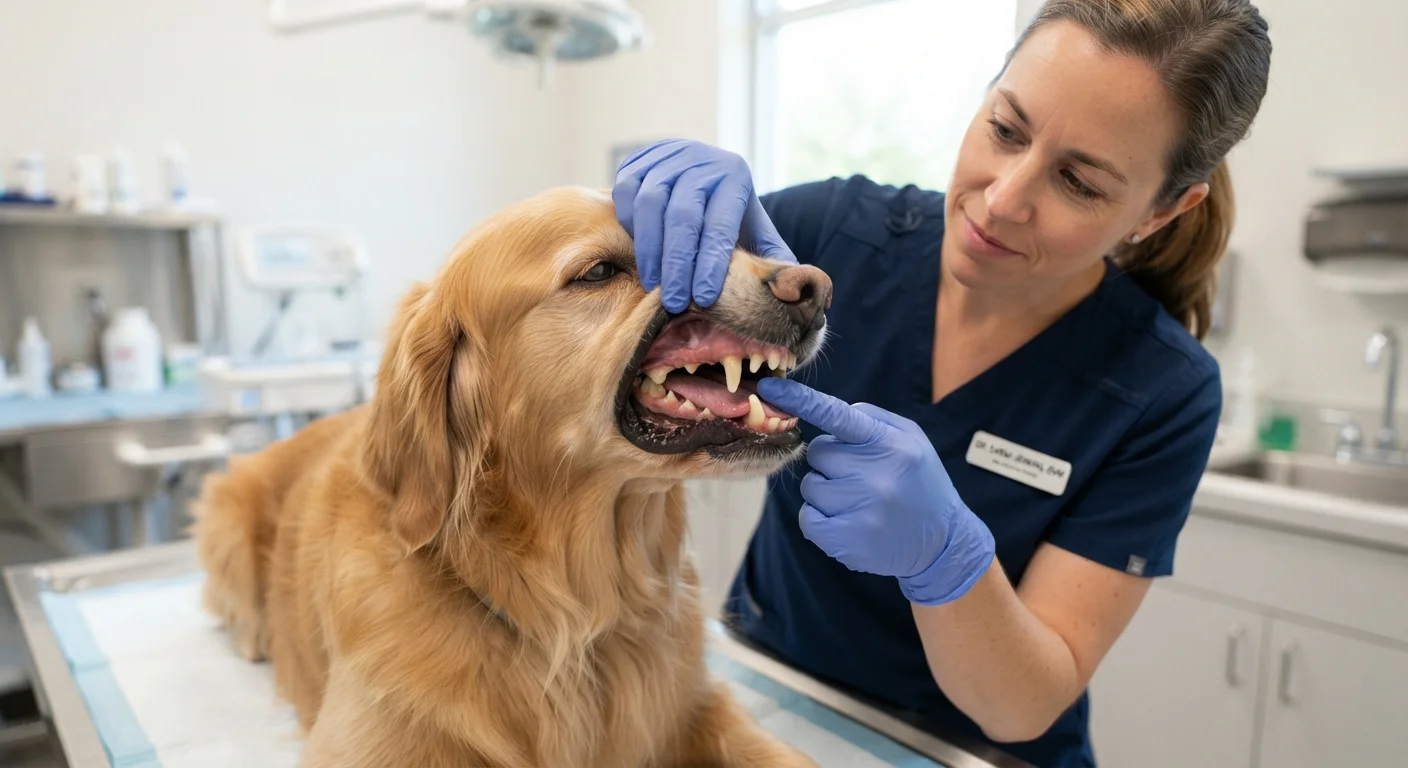
Why Dental Disease Is So Widespread - and So Overlooked
Periodontal disease develops quietly. Plaque - a sticky film of bacteria - forms on teeth within hours of eating. Without removal, it mineralizes into tartar, which harbors bacteria along and beneath the gumline. Over time, the immune response to that bacterial load inflames and destroys the gum tissue, ligaments, and bone that support teeth.
The prevalence is striking. According to the American Veterinary Medical Association (AVMA), most dogs and cats show signs of dental disease by age three. Yet because animals instinctively mask discomfort, owners often don't notice a problem until it has become advanced. By that point, affected teeth may require extraction and surrounding tissue may be permanently damaged.
Dental health is a routine focus of annual wellness exams, but many owners are surprised to learn how quickly disease can progress between visits.
~80%
Adult dogs affected by periodontal disease by age 3
According to the American Veterinary Medical Association, the majority of dogs and cats show signs of dental disease by their third year of life.
#1
Most commonly diagnosed condition in companion animals
Veterinary dental specialists consistently cite periodontal disease as the single most prevalent health diagnosis made in dogs and cats.
Daily
Recommended toothbrushing frequency for pets
The Veterinary Oral Health Council and major veterinary dental organizations recommend daily brushing as the gold standard for at-home dental care.
The Systemic Connection: More Than Just Teeth
The mouth is not isolated from the rest of the body. Bacteria from periodontal infections can enter the bloodstream through inflamed gum tissue, and veterinary research has explored associations between chronic dental disease and stress on the kidneys, liver, and heart. The strength of these connections continues to be studied, and correlation does not imply a simple cause-and-effect relationship - but the findings are significant enough that most veterinarians view oral health as an integral component of overall wellness.
This systemic dimension is one reason dental care appears prominently in discussions of preventive versus reactive care. Addressing plaque early costs far less - financially and medically - than managing organ complications or extensive tooth extractions later.
Senior pets face compounded risks. As animals age, immune resilience typically decreases, making chronic infections harder to manage. Veterinary care needs shift meaningfully after age seven, and dental assessments become even more critical at that stage.
What Proper Dental Care Actually Looks Like
Effective dental care for pets involves two complementary tracks: professional veterinary treatment and consistent at-home maintenance.
Professional Cleanings
A proper veterinary dental cleaning is performed under general anesthesia. This allows the veterinarian or veterinary technician to scale tartar above and below the gumline, probe each tooth for pocketing or looseness, and take dental X-rays to assess roots and bone - none of which are possible on an awake animal. If disease has progressed, extractions or other treatments may be performed during the same procedure. The frequency of recommended cleanings varies by individual pet, breed, age, and existing dental status.
At-Home Care
Daily toothbrushing using a pet-formulated toothbrush and enzymatic toothpaste is the most evidence-supported at-home method for slowing plaque accumulation. Dental chews, rinses, and water additives that carry the Veterinary Oral Health Council (VOHC) seal have demonstrated plaque- or tartar-reducing efficacy in clinical trials - but these work best as complements to brushing, not replacements.
Start Slowly With Toothbrushing
If your pet is new to having their mouth handled, introduce the toothbrush gradually over several sessions - first letting them sniff and lick the toothpaste, then gently touching the gums with a finger, before progressing to the brush. Keeping sessions short and positive reduces resistance and builds a lasting routine. Ask your veterinarian for a demonstration at your next visit.
Diet also plays a supporting role. Certain dry food formulations are designed to have a mild mechanical cleaning effect, though diet alone cannot substitute for active oral hygiene. For guidance on how nutrition intersects with pet health generally, see our pet nutrition guide.
Recognizing the Warning Signs
Because pets rarely vocalize dental pain, owners need to know what behavioral and physical changes to watch for. Dental disease that goes unnoticed is dental disease that goes untreated - and the signs can be subtle. This connects directly to a broader challenge: animals hide pain remarkably well, making owner awareness essential.
- Persistent bad breath - often the earliest noticeable indicator; not a normal baseline for dogs or cats
- Visible tartar - yellow or brown deposits along the gumline, particularly on upper back teeth
- Red, swollen, or bleeding gums - signs of active gingivitis
- Changes in eating behavior - dropping food, chewing on one side, reluctance to eat hard kibble
- Pawing at the mouth or face rubbing - may indicate oral discomfort
- Loose or missing teeth - indicates advanced bone loss
Any of these signs warrants a veterinary evaluation. Early intervention consistently leads to better outcomes and often preserves teeth that would otherwise require extraction.
This article is for general informational and educational purposes only and does not constitute veterinary medical advice. Always consult a licensed veterinarian for guidance specific to your pet's health needs.
Frequently Asked Questions
Veterinary organizations estimate that around 70-80% of dogs and cats show signs of periodontal disease by age three. It is widely considered the most prevalent health condition seen in companion animals. Many cases go undetected because pets rarely show obvious pain.
Yes, and it is the most effective way to slow plaque buildup between professional cleanings. Use a toothbrush and toothpaste formulated specifically for pets - human toothpaste contains ingredients toxic to animals. Even a few sessions per week provide meaningful benefit, though daily brushing is the veterinary standard.
A thorough cleaning requires scaling below the gumline, dental X-rays, and probing around each tooth - none of which can be done safely or effectively on an awake, moving animal. Anesthesia allows vets to do a complete and pain-free exam. Veterinary anesthesia protocols are well-established and routinely used in healthy pets.
Bad breath is often the first noticeable sign. Others include visible tartar buildup (a yellow-brown crust near the gumline), red or bleeding gums, dropping food, reluctance to chew, pawing at the mouth, and changes in eating behavior. Many pets mask discomfort well, so routine vet exams are essential.
Research suggests a link between chronic oral infections and increased stress on the kidneys, liver, and heart in pets, though the precise mechanisms and extent are still being studied. Veterinarians generally view good dental hygiene as an important part of whole-body preventive care.
Dental care habits are best established during puppyhood or kittenhood, before permanent teeth fully come in. Adult pets benefit from starting oral care routines at any age. Your veterinarian can assess your pet's current dental status and recommend an appropriate starting point.
The content provided on our blog site traverses numerous categories, offering readers valuable and practical information. Readers can use the editorial team’s research and data to gain more insights into their topics of interest. However, they are requested not to treat the articles as conclusive. The website team cannot be held responsible for differences in data or inaccuracies found across other platforms. Please also note that the site might also miss out on various schemes and offers available that the readers may find more beneficial than the ones we cover.