

Start here
Cats Are Obligate Carnivores - What That Actually Means
Next
The Nutrients Cats Cannot Live Without
Then
Wet Food, Dry Food, or Both?
Apply it
Feeding Frequency and Portion Basics
Go deeper
Reading a Cat Food Label Without Getting Lost
Cats Are Obligate Carnivores - What That Actually Means
Unlike dogs or humans, cats are obligate carnivores - their bodies are biologically dependent on nutrients found only in animal tissue. This isn't a preference; it's a metabolic fact shaped by millions of years of evolution as hunters. Their digestive systems, enzyme activity, and cellular processes are all calibrated around a meat-based diet.
In practice, this means cats cannot convert plant-based compounds into the forms they need the way omnivores can. For example, cats lack the enzyme pathways to efficiently convert beta-carotene into vitamin A, or linoleic acid into arachidonic acid - both must come from animal sources. Understanding this distinction is the foundation of good cat nutrition. For a broader look at how cats and dogs differ in this regard, see why cat and dog food differ so significantly.
Obligate carnivore
An animal that must eat meat to survive because its body cannot produce certain essential nutrients from plant sources.
Taurine
An amino acid that cats must get from their diet; it is essential for heart function, vision, and reproductive health.
Arachidonic acid
An omega-6 fatty acid that cats cannot make from other fats and must obtain directly from animal-based foods.
AAFCO
The Association of American Feed Control Officials - the body that sets the nutritional standards commercial pet foods in the US must meet.
Complete and balanced
A label claim indicating a pet food meets the minimum nutrient requirements established by AAFCO for a specific life stage.
Obligate moisture need
Cats' evolutionary reliance on food - rather than a water bowl - as their primary source of daily hydration.
The Nutrients Cats Cannot Live Without
Several nutrients are non-negotiable in a cat's diet because their bodies cannot manufacture them in adequate quantities:
- Taurine: An amino acid critical for heart muscle function, vision, and reproduction. Unlike dogs, cats cannot synthesize sufficient taurine from other amino acids. Chronic deficiency leads to dilated cardiomyopathy and retinal degeneration - conditions that develop slowly and can be irreversible.
- Arachidonic acid: An omega-6 fatty acid that cats cannot produce from linoleic acid. It must come from animal fat.
- Preformed vitamin A: Found in liver and other animal tissues. Cats cannot convert plant-sourced beta-carotene reliably.
- High-quality protein: Cats use protein not just for muscle maintenance but as a primary energy source. Their protein requirements are significantly higher than those of most omnivores.
For a detailed explanation of how each of these nutrients functions inside the body, see our explainer on taurine, omega-3s, and key nutrients. You can also explore the core nutritional building blocks every pet diet requires for a broader foundation.
Wet Food, Dry Food, or Both?
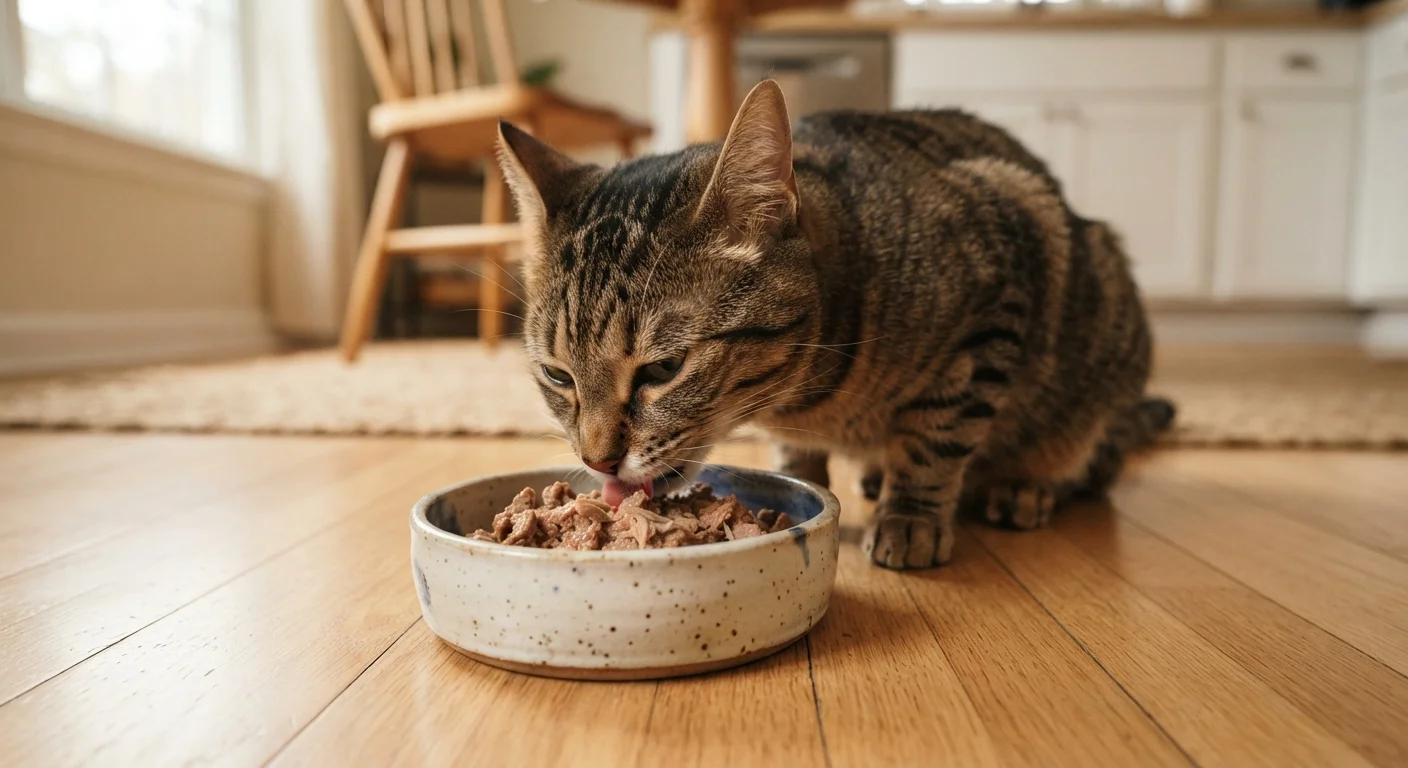
Cats evolved eating prey with roughly 65-75% moisture content. Most dry kibble contains only about 10% moisture, while canned wet food typically contains 70-80%. This gap has real implications for urinary and kidney health - cats with low moisture intake are more prone to urinary tract issues and kidney stress over time.
Wet food more closely mirrors the nutritional profile of whole prey: higher moisture, higher protein, and lower carbohydrates. Dry food offers convenience and can support dental health in some formulations, though the evidence on kibble as a dental solution is mixed. Many veterinarians suggest a combination approach - incorporating wet food regularly while using dry food as a practical complement - though the right balance depends on your individual cat's health, age, and preferences.
A Simple Way to Add Moisture
If your cat currently eats only dry food, adding one wet food meal per day is a low-cost way to meaningfully increase their moisture intake. You don't need to switch entirely - even partial incorporation can help support urinary health. Introduce any new food gradually over 7-10 days to avoid digestive upset.
Feeding Frequency and Portion Basics
Free-choice feeding (leaving food out all day) can work for some cats but tends to contribute to overeating and obesity, particularly in indoor-only cats with limited activity. Two structured meals per day is a practical starting point for most adult cats, allowing you to monitor how much your cat eats - which is often one of the first signs of illness when appetite drops.
Portion sizes vary based on your cat's weight, age, activity level, and the caloric density of the food. Packaging guidelines are a starting point, not a fixed rule. A cat gaining excess weight on the recommended amount may need less; an underweight or highly active cat may need more. Working with your veterinarian to establish appropriate portions is advisable, especially for cats with health conditions. For practical ideas on keeping feeding costs manageable without compromising nutrition, see strategies for stretching your pet food budget.
Reading a Cat Food Label Without Getting Lost
In the US, cat foods sold commercially must meet nutritional standards established by the Association of American Feed Control Officials (AAFCO). Look for a statement on the label confirming the food is "complete and balanced" for your cat's life stage - this means it meets minimum nutrient profiles, either by formulation or feeding trials.
Key things to check on a label:
- Life stage: "All life stages," "adult maintenance," or "growth" (kittens). Match this to your cat's age.
- Ingredient order: Ingredients are listed by weight before processing. A named animal protein (e.g., chicken, salmon) appearing first is generally a positive sign.
- Guaranteed analysis: Lists minimum protein and fat, and maximum fiber and moisture percentages. These figures help you compare products on a consistent basis.
No single label element tells the full story, and ingredient quality matters beyond position alone. If you're navigating this while managing a budget, understanding value per serving can help you evaluate options more effectively. For any questions specific to your cat's needs, a veterinarian is your best resource.
This article is for general informational purposes only and is not a substitute for professional veterinary advice. Always consult a licensed veterinarian regarding your cat's individual health and nutritional needs.
Frequently Asked Questions
No - cats are obligate carnivores and cannot synthesize several essential nutrients, including taurine and arachidonic acid, from plant sources alone. A plant-based diet will cause serious nutritional deficiencies over time. Always feed a diet formulated specifically for cats.
Cats have a low thirst drive and naturally meet most hydration needs through food. A cat eating primarily dry kibble typically drinks more from a bowl, but many still fall short of adequate intake. Incorporating wet food is one practical way to support healthy hydration.
Raw diets carry real risks including bacterial contamination (Salmonella, Listeria) and nutritional imbalance if not properly formulated. Veterinary and public health organizations generally advise caution. Consult your veterinarian before choosing a raw diet for your cat.
Most adult cats do well with two measured meals per day. This supports portion control and lets you monitor appetite, which can be an early indicator of health changes. Kittens require more frequent feeding - your vet can advise on the right schedule.
Several common foods are dangerous to cats, including onions, garlic, grapes, raisins, chocolate, xylitol, alcohol, and caffeine. Even small amounts of some of these can cause serious harm. When in doubt, do not offer human food and consult your veterinarian.
Yes. Kittens have higher caloric and protein demands to support rapid growth, and require foods labeled for "growth" or "all life stages." Adult maintenance formulas do not meet a kitten's nutritional needs. Switch to an adult formula around 12 months, or as your vet recommends.
The content provided on our blog site traverses numerous categories, offering readers valuable and practical information. Readers can use the editorial team’s research and data to gain more insights into their topics of interest. However, they are requested not to treat the articles as conclusive. The website team cannot be held responsible for differences in data or inaccuracies found across other platforms. Please also note that the site might also miss out on various schemes and offers available that the readers may find more beneficial than the ones we cover.