

Our Verdict
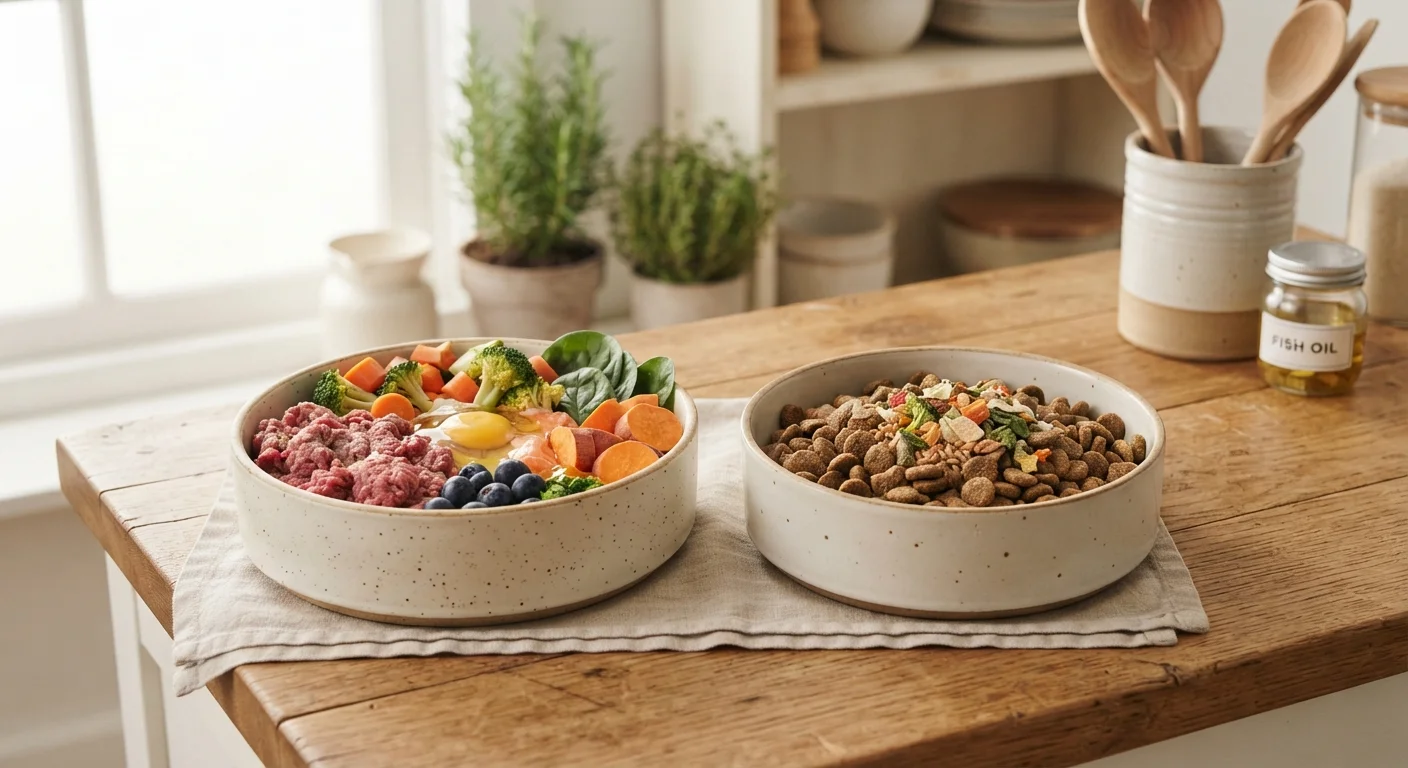
Commercial diets that meet established nutritional standards offer the most reliable path to complete, balanced nutrition for most pets. Homemade diets can be viable but require precise formulation - ideally by a board-certified veterinary nutritionist - to avoid deficiencies. Neither approach is inherently superior; the right choice depends on the pet's health status, the owner's resources, and the rigor applied to the feeding plan.
| Best for | Recommended |
|---|---|
| Owners seeking convenience and verified nutritional completeness | Commercial diets meeting AAFCO standards |
| Pets with specific health conditions requiring tailored ingredients | Professionally formulated homemade diets |
| Cost-conscious owners wanting to stretch their food budget | Commercial diets evaluated by cost-per-serving |
| Owners with strong ingredient-control preferences and veterinary support | Veterinary nutritionist-guided homemade diets |
The Core Question: What Do Pets Actually Need?
Before comparing feeding approaches, it helps to understand what makes a diet nutritionally complete for a pet. Dogs and cats require specific ratios of protein, fat, carbohydrates, vitamins, and minerals - and these needs differ significantly between species. For example, cats require taurine, arachidonic acid, and preformed vitamin A from animal sources, nutrients they cannot synthesize adequately on their own. Dogs have more metabolic flexibility but still have precise micronutrient requirements.
The Association of American Feed Control Officials (AAFCO) publishes nutrient profiles that serve as the baseline standard for commercial pet food in the US. A diet labeled "complete and balanced" must meet these profiles either through feeding trials or nutrient analysis. Understanding this framework matters when evaluating any feeding strategy. See also why dogs and cats have very different nutritional needs before planning any diet change.
What Research Shows About Homemade Diets
The appeal of homemade feeding is understandable: owners can control ingredients, avoid additives, and tailor meals to a pet's preferences or sensitivities. However, veterinary nutrition research consistently raises concerns about nutritional adequacy.
Multiple published studies - including analyses appearing in the Journal of Nutritional Science and Journal of the American Veterinary Medical Association - have found that the majority of homemade pet diet recipes, including those sourced from books and websites, fail to meet AAFCO nutrient profiles. Common deficiencies include calcium, zinc, copper, iodine, and several B vitamins. These gaps may not produce obvious symptoms immediately, but over time can contribute to bone disease, immune dysfunction, and organ damage.
Homemade diets also carry food safety considerations. Raw meat components, in particular, introduce pathogen exposure risks for both animals and the humans handling the food - a concern flagged by both the American Veterinary Medical Association (AVMA) and the US Food and Drug Administration (FDA).
Raw Diets Carry Additional Safety Considerations
Raw meat-based homemade diets pose pathogen risks from bacteria such as Salmonella and Listeria, which can affect both pets and the humans handling the food. The AVMA and FDA advise caution with raw feeding and recommend discussing the risks with a veterinarian before starting. Immunocompromised individuals and households with young children face heightened risk.
That said, homemade diets are not inherently unsafe - they simply require rigorous formulation. Recipes designed or reviewed by a board-certified veterinary nutritionist (Diplomate of the American College of Veterinary Nutrition, or DACVN) are far more likely to be complete and balanced than those drawn from general sources.
What Research Shows About Commercial Diets
Commercial pet foods that carry the AAFCO "complete and balanced" statement have been formulated to meet a defined nutrient profile for a specific life stage. This does not guarantee every product is equally high in quality or palatability, but it does mean the foundational nutritional math has been addressed by pet food scientists.
For cost-conscious owners, commercial diets also offer predictable cost-per-serving calculations, long shelf life, and convenience. Practical strategies for evaluating pet food value can help owners identify which commercial options deliver adequate nutrition without overspending.
Commercial diets are also available in formats suited to different health needs - life stage, size, and condition-specific formulas exist and are often developed in consultation with veterinary nutritionists. Dry kibble versus wet food is itself a meaningful choice within commercial options, with trade-offs around hydration, dental health, and cost.
| Homemade Diets | Commercial Diets | |
|---|---|---|
| Nutritional completeness | High risk of deficiency without expert formulation | Reliably complete if AAFCO-certified |
| Ingredient control | Full owner control over ingredients | Limited; depends on manufacturer transparency |
| Cost | Often higher when ingredients and supplements included | Wide range; predictable cost-per-serving |
| Convenience | Time-intensive; requires consistent preparation | High; ready to serve, long shelf life |
| Food safety risk | Higher if raw meat is used | Lower; commercial processing reduces pathogens |
| Customisation for health conditions | Highly flexible with professional guidance | Condition-specific formulas available |
| Veterinary oversight required | Strongly recommended for safe formulation | Recommended but not essential for healthy pets |
Making an Informed Decision for Your Pet
Neither approach is a universal answer. The right feeding strategy depends on your pet's age, health status, and any diagnosed conditions, as well as your own capacity to source ingredients and follow a precise recipe consistently.
If you're considering a homemade diet, a consultation with a board-certified veterinary nutritionist is strongly recommended before making the switch. Generic internet recipes - even those that appear detailed - frequently contain nutritional errors. The Petdiets.com service (affiliated with veterinary nutritionists) and the American College of Veterinary Nutrition's member directory are resources for finding qualified professionals.
If you're staying with commercial food, look for the AAFCO statement on the label and match the life stage designation to your pet's current phase (puppy/kitten, adult, senior). Before any diet transition, consult the pre-switch checklist to assess your pet's current diet and plan a safe transition. Also review which human foods are safe and unsafe for pets if you plan to supplement either approach with table food.
This article is for general informational and educational purposes only and is not a substitute for professional veterinary advice. Always consult a licensed veterinarian or board-certified veterinary nutritionist before making significant changes to your pet's diet.
The content provided on our blog site traverses numerous categories, offering readers valuable and practical information. Readers can use the editorial team’s research and data to gain more insights into their topics of interest. However, they are requested not to treat the articles as conclusive. The website team cannot be held responsible for differences in data or inaccuracies found across other platforms. Please also note that the site might also miss out on various schemes and offers available that the readers may find more beneficial than the ones we cover.