

Why Recall Is the Most Important Cue You'll Ever Teach
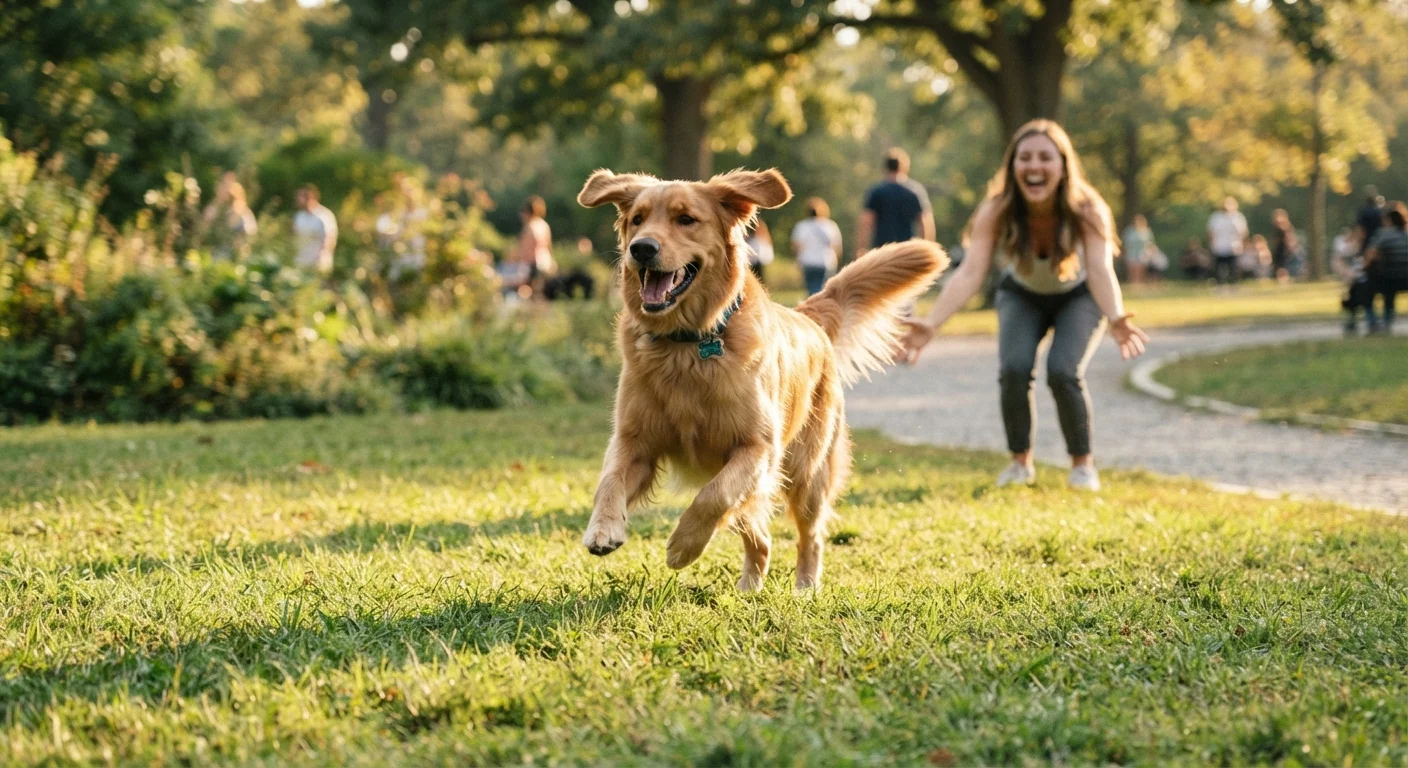
A reliable recall - the ability to call your dog back to you in any situation - is not just a polite behavior. It is a genuine safety skill. A dog who comes when called can be stopped before running into traffic, approaching an aggressive animal, or ingesting something harmful. It also gives you the confidence to allow more freedom off-leash, which directly supports your dog's physical and mental wellbeing.
Many owners treat recall as a basic obedience command, but it is better understood as a relationship skill. The dog must find returning to you more rewarding than whatever is competing for attention at that moment. That's a high bar in a world full of squirrels, smells, and other dogs - which is exactly why recall requires deliberate, graduated training rather than simple repetition.
If you are building your dog's training from scratch, recall is one of the first behaviors worth investing in. For dogs who seem to tune out, our guide to why dogs ignore commands can help you identify the root cause before continuing.
What you will need
How to Train a Reliable Recall Step by Step
Recall training follows a clear progression: establish the behavior in low-distraction settings, reinforce it heavily, then expand difficulty incrementally. Skipping ahead too quickly is the most common reason recall breaks down outdoors. Follow the steps below, and revisit earlier stages any time your dog struggles.
For an overview of the training methods referenced here - particularly marker training and luring - see our comparison of core training techniques. And to get the most from each practice session, review how to structure sessions that stick.
Introduce the recall cue indoors with no competing distractions
Choose a single, clear recall word - "come" is conventional - and commit to using it only when you are confident your dog will succeed. Stand a few feet from your dog in a quiet room. Say the cue once in a happy, upbeat tone, then immediately crouch down, open your arms, and back up a step or two to encourage movement toward you. The moment your dog reaches you, mark the behavior ("yes!") and deliver several small treats in quick succession.
Build distance gradually within the home
Once your dog is consistently responding from a few feet away, begin calling from different rooms, up and down a hallway, or from around a corner. The dog should not be able to see you before you call. This teaches the dog to orient toward you and move without a visual lure. Continue marking and rewarding every correct response generously - in early training, every single successful recall should be rewarded.
Add mild distractions before moving outdoors
Before going outside, practice recall while a family member is moving around nearby, while the TV is on, or while a toy is on the floor. If your dog fails to respond, do not repeat the cue - instead, get closer and try again at a simpler level. The goal is to keep the success rate above 80% at each stage before advancing.
Move training outdoors on a long line
Attach a 15-30 foot long line (not a retractable leash) to your dog's harness before practicing outdoors. Let your dog sniff and explore, then call once. If the dog comes, reward enthusiastically. If the dog does not respond within two to three seconds, gently guide them toward you using the long line - do not drag - and reward when they arrive anyway. The long line prevents the dog from learning they can simply ignore you and wander off.
Introduce a distinct emergency recall cue
An emergency recall is a separate, rarely used cue - a unique word or phrase - that you condition to predict an extraordinary reward (e.g., a small piece of real meat). Practice this cue only a handful of times per month, always pairing it with the highest-value reward you have. Because you almost never use it, the dog has no history of ignoring it, making it more reliable in genuine emergencies.
Gradually phase out the long line as reliability improves
Once your dog is recalling reliably on the long line in multiple outdoor environments, begin practicing in securely fenced areas without the line. Continue rewarding every recall - or at minimum, use variable reinforcement (rewarding unpredictably but frequently). Never phase out rewards entirely; sporadic reinforcement actually maintains the behavior more durably than constant rewards followed by sudden withdrawal.
Keep Sessions Short and Frequent
Recall training is most effective in sessions of five to ten minutes, repeated several times per week rather than one long session occasionally. Short sessions keep motivation and focus high for both you and your dog. End each session on a successful repetition to reinforce a positive association with the training routine.
Maintaining Recall Over Time
Once your dog recalls reliably in most environments, the goal shifts from teaching to maintaining. Dogs do not retain behaviors they never practice, especially under high-distraction conditions. Schedule brief recall refreshers - two to three repetitions - into your regular walks a few times per week. Keep rewards high-value even after the behavior feels solid.
Avoid two common traps. First, never call your dog to you to end something enjoyable and then fail to compensate - if you recall your dog to leave the dog park, give an exceptional treat so the word "come" stays positive. Second, if your dog does not respond, do not repeat the cue multiple times. Walk toward the dog calmly, reattach the leash, and plan to work at an easier level next session.
Never Punish a Dog Who Returns
Regardless of how long it took your dog to come back, the moment they reach you must always result in a reward, not a reprimand. Scolding a dog after they return - even if they were out of sight for ten minutes - directly punishes the act of coming to you. This erosion of the cue's positive association is one of the primary reasons recall breaks down in adult dogs.
With consistent, low-pressure practice, most dogs of any age or breed can develop a recall reliable enough to trust in real-world situations.
The content provided on our blog site traverses numerous categories, offering readers valuable and practical information. Readers can use the editorial team’s research and data to gain more insights into their topics of interest. However, they are requested not to treat the articles as conclusive. The website team cannot be held responsible for differences in data or inaccuracies found across other platforms. Please also note that the site might also miss out on various schemes and offers available that the readers may find more beneficial than the ones we cover.