

Our Verdict
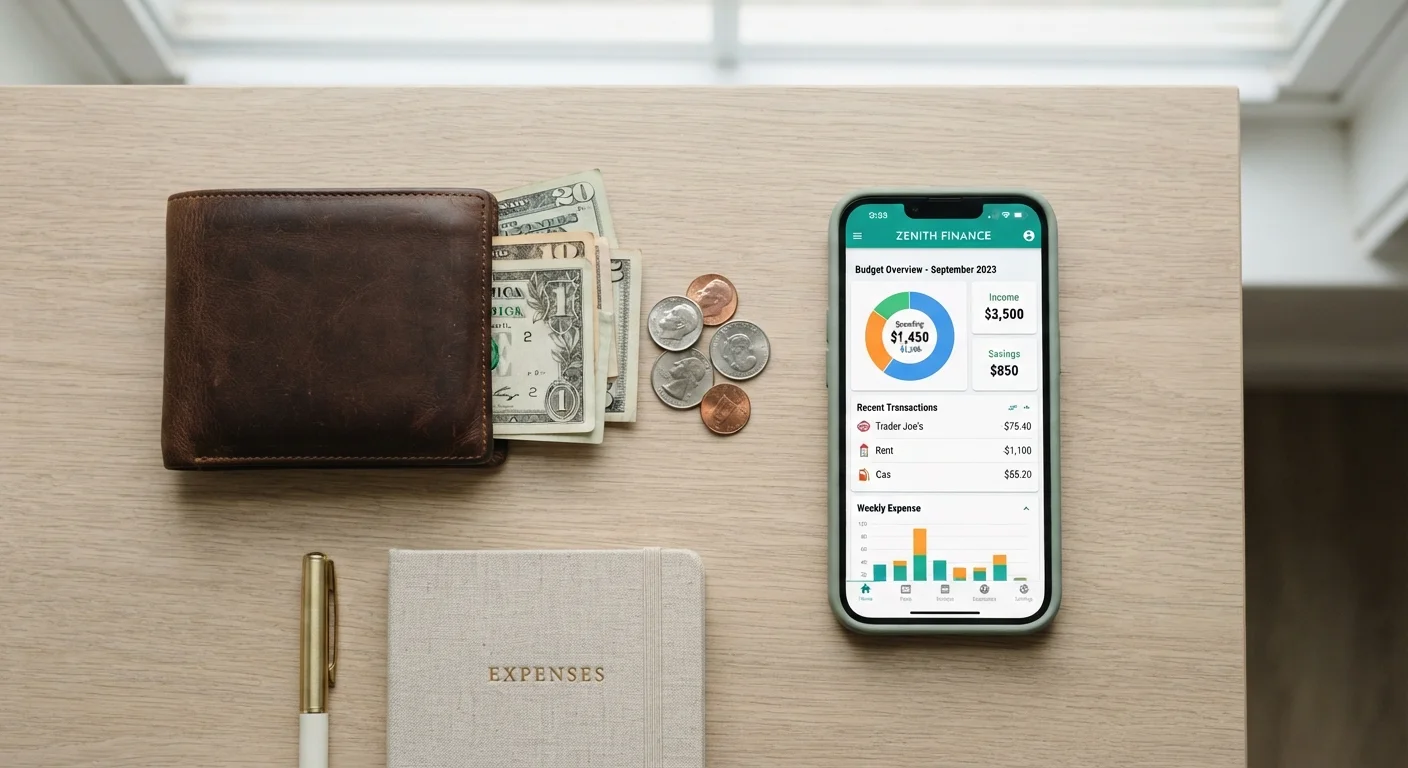
Cash budgeting and digital tracking apps each deliver real results when used consistently - the gap in effectiveness comes from fit, not format. Cash works best as a behavioral guardrail for impulse-prone categories, while apps shine when you need a complete financial picture across multiple accounts. Many people find the most traction by combining both.
| Best for | Recommended |
|---|---|
| Those who overspend in specific categories like dining or entertainment | Cash budgeting |
| People managing multiple accounts or income streams | Digital tracking apps |
| Beginners who want structure without technology friction | Cash budgeting |
| Those who want automated reports and spending trends over time | Digital tracking apps |
How Each System Actually Works
Cash budgeting means withdrawing a set amount of physical money for specific spending categories - groceries, gas, entertainment - at the start of each period. When the cash is gone, spending in that category stops. It's a tactile, zero-ambiguity system with roots in the classic envelope method. For a deeper look at how that framework translates to modern banking, see envelope budgeting in a digital world.
Digital tracking apps work differently. Most connect directly to your bank accounts, credit cards, and investment accounts, then automatically categorize transactions. Others require manual entry. Either way, the output is the same: a dashboard that shows where your money went, broken down by category, merchant, or time period.
Both approaches answer the same core question - am I spending in line with my intentions? - but through opposite mechanisms. Cash controls spending before it happens. Apps document it after.
The Real Strengths and Weaknesses
| Cash Budgeting | Digital Tracking Apps | |
|---|---|---|
| Spending control | Hard limit - physically can't overspend | Visibility only - no automatic stop |
| Record keeping | Manual or nonexistent | Automatic (if account-linked) |
| Works for online purchases | No - cash is in-person only | Yes - all transaction types |
| Privacy | No digital trail | Requires sharing account access |
| Setup effort | Low - withdraw and allocate | Medium - connect accounts, configure categories |
| Spending trend insights | None without manual logging | Detailed history and reports |
| Best for | Impulse-prone in-person categories | Multi-account, full-picture tracking |
Cash's primary strength is behavioral. Research in consumer psychology consistently shows that spending physical currency feels more significant than tapping a card or phone - a phenomenon sometimes called the "pain of paying." That friction can reduce impulse purchases in targeted categories. The tradeoff: cash doesn't scale well. It's awkward for online purchases, subscriptions, and bill payments. It also creates a record-keeping gap - once you spend it, the transaction vanishes unless you log it manually.
Digital apps, by contrast, create comprehensive records automatically (when account-linked). They surface patterns you'd likely miss - like noticing that your "occasional" takeout habit is actually a $400/month line item. The catch is that visibility doesn't equal behavior change. An app can tell you that you overspent on dining; it cannot stop you from doing it. There's also the security consideration: linking financial accounts to a third-party app involves granting data access that carries inherent risk, however well-managed.
How your payment method shapes what you spend explores this psychological dimension in more detail.
Practical Fit: Which Suits Your Life?
Your daily spending environment matters more than most people realize. If the majority of your transactions are digital - subscriptions, e-commerce, bill autopay - a cash-only system creates constant friction and incomplete coverage. Cash works better when your high-risk spending categories involve in-person, discretionary purchases.
Tech comfort is a real variable too. A budgeting app you find confusing or anxiety-inducing won't be used consistently, which defeats the purpose. If you've never built a formal budget before, the step-by-step monthly budget guide is a useful foundation regardless of which tracking method you choose.
Test Before You Commit
Before overhauling your entire system, try running both approaches in parallel for 30 days - cash for one high-spend category and an app for everything else. This low-stakes experiment reveals which method you'll actually stick with, rather than which sounds most appealing in theory. Consistency beats method selection every time.
People with irregular incomes - freelancers, gig workers, seasonal earners - often find digital apps more useful because they handle variable income and expenses more flexibly than cash envelopes do. See managing money on an irregular income for strategies tailored to that situation.
The Case for a Hybrid Approach
Many consistent budgeters don't choose one system exclusively - they use cash to govern high-temptation categories while relying on an app for full-picture visibility. For example: withdrawing a fixed cash amount for dining and entertainment each week, while using a digital app to track fixed expenses, savings progress, and overall net cash flow.
This hybrid approach captures cash's behavioral guardrail where it's most effective, while preserving the reporting depth that apps provide. It's worth noting that neither system eliminates the need for honest self-assessment. As explored in the real tradeoffs of strict budgeting, even well-designed systems carry hidden costs in time and cognitive load.
For a broader framework that connects budgeting method to your income and financial goals, the complete personal budgeting framework provides end-to-end context.
This article is for general informational purposes only and does not constitute personalized financial advice. Consult a qualified financial professional for guidance specific to your circumstances.
The content provided on our blog site traverses numerous categories, offering readers valuable and practical information. Readers can use the editorial team’s research and data to gain more insights into their topics of interest. However, they are requested not to treat the articles as conclusive. The website team cannot be held responsible for differences in data or inaccuracies found across other platforms. Please also note that the site might also miss out on various schemes and offers available that the readers may find more beneficial than the ones we cover.