

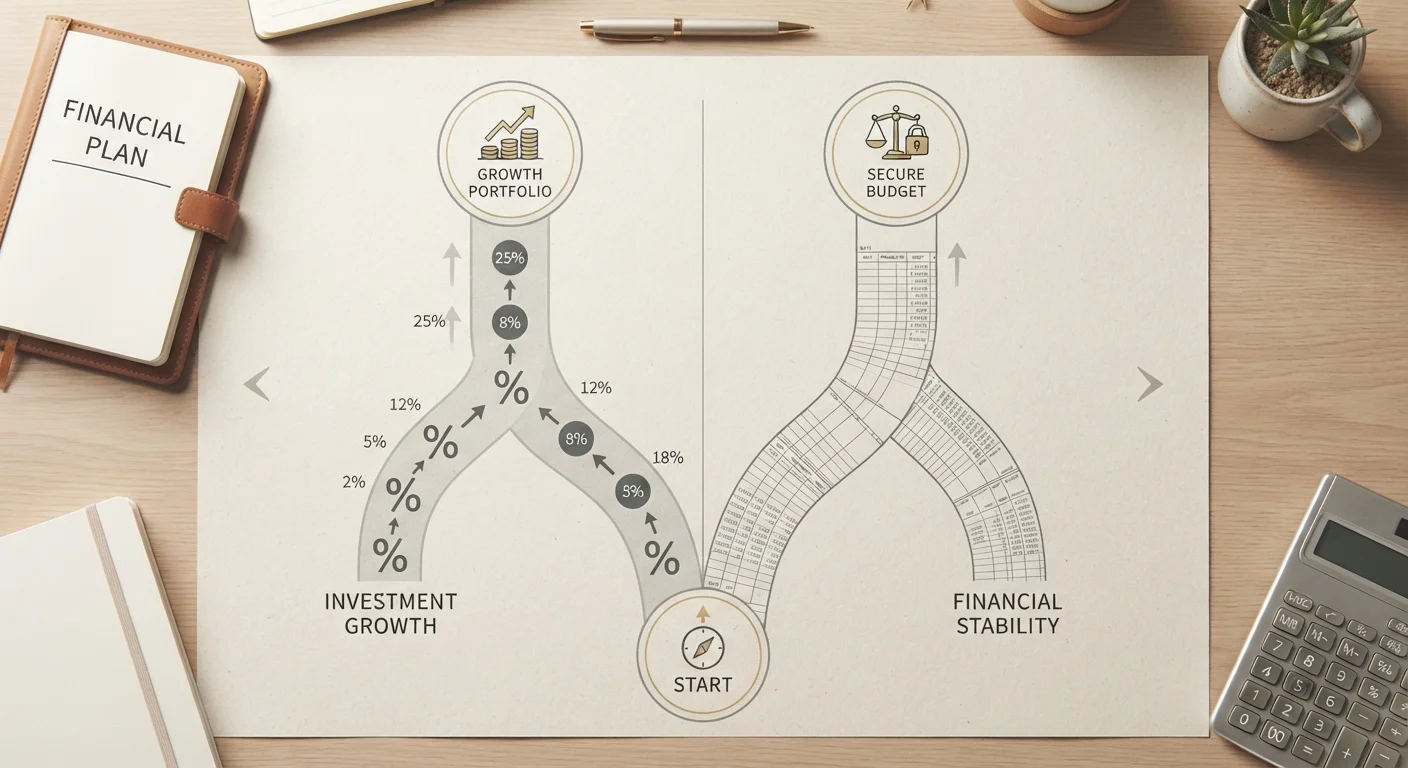
Option A
The 50/30/20 Rule
The simple, percentage-based framework for budget beginners.
Best for: People who want a quick, low-maintenance system that sets spending guardrails without micromanaging every dollar.
Option B
Zero-Based Budgeting
The detail-oriented method that accounts for every single dollar.
Best for: People motivated to take precise control of their spending, reduce debt aggressively, or align money decisions with specific goals.
How Each Framework Works
The 50/30/20 rule - popularised in Senator Elizabeth Warren and Amelia Warren Tyagi's book All Your Worth - splits monthly after-tax income into three buckets: 50% to needs (rent, groceries, utilities, insurance), 30% to wants (dining out, streaming subscriptions, hobbies), and 20% to savings and debt repayment beyond minimums. The appeal is its simplicity: run the percentages once, set up automatic transfers, and check in occasionally to make sure spending stays roughly on target.
Zero-based budgeting (ZBB) takes a different starting point. Each month begins at zero, and you assign every dollar of income to a specific category - housing, food, transportation, entertainment, savings, debt - until your income minus your planned expenses equals exactly zero. Nothing is left unaccounted for. The framework is often associated with personal finance educators who emphasise intentional spending, though its roots go back to corporate financial planning in the 1970s.
See our detailed guide to zero-based budgeting for a full walkthrough of the method's mechanics.
| Criterion | 50/30/20 Rule | Zero-Based Budgeting |
|---|---|---|
| Setup time | 30 minutes or less | 1-2 hours per month |
| Ongoing effort | Low - periodic check-ins | High - monthly rebuild and tracking |
| Spending visibility | Broad category level | Line-item level |
| Flexibility | High - wide category buckets | Moderate - changes require deliberate reallocation |
| Best income type | Stable, salaried income | Variable or irregular income |
| Debt payoff focus | Limited - shares 20% bucket with savings | Strong - named categories isolate debt payments |
| Tools typically needed | Basic calculator or app | Spreadsheet or dedicated budgeting app |
Strengths and Real-World Trade-Offs
The 50/30/20 rule's greatest strength is sustainability. Because it doesn't require line-item tracking, most people can maintain it without spreadsheets or dedicated apps. The built-in flexibility of the "wants" bucket also reduces the psychological friction that causes many budget systems to fail - you're not forbidden from spending on enjoyment, you just have a ceiling. The trade-off: broad categories can mask problem areas. If rent alone consumes 45% of take-home pay, the remaining 5% for all other needs is far too thin, and the percentages offer no automatic fix.
Zero-based budgeting's strength is visibility. Because every category is named and capped, overspending in one area is immediately obvious and must be offset somewhere else. Research in behavioral economics consistently finds that people who track spending in detail make more conscious trade-offs. The cost is time: building a new budget each month, reconciling actual transactions against planned amounts, and adjusting categories mid-month takes real effort.
High Housing Costs and the 50/30/20 Rule
In many US metro areas, housing alone can consume 35-45% of after-tax income for median earners - pushing the "needs" bucket well past its 50% target before other essentials are counted. If your fixed costs already exceed 50%, the 50/30/20 percentages become aspirational rather than operational. In that scenario, zero-based budgeting's category-by-category approach may give you a more honest picture of where adjustments are possible. Always interpret any percentage framework in light of your actual local cost of living.
For a deeper look at how needs and wants blur in practice - a tension that directly affects both frameworks - see our analysis of the needs vs. wants distinction.
Choosing the Right Framework for You
No budgeting method is universally superior. The right choice depends on three factors: income stability, financial urgency, and personal temperament.
If your income is salaried and predictable, the 50/30/20 rule's fixed percentages translate cleanly each month. If you freelance or work variable hours, zero-based budgeting's month-by-month rebuild is more honest - you plan based on what you actually expect to earn, not a static average.
If you have pressing financial goals - eliminating credit card debt, building a three-to-six-month emergency fund, saving for a large purchase - zero-based budgeting's granularity helps you direct dollars purposefully rather than hoping the 20% savings slice handles everything.
Temperament matters too. If detailed tracking feels motivating, ZBB can become a rewarding habit. If it feels like a chore you'll skip after week two, the 50/30/20 rule's low friction is a feature, not a compromise.
You can also combine elements: use 50/30/20 as an overall guardrail while zero-basing just the "wants" category to spot where discretionary dollars actually go. If you're ready to build a complete plan, our six-step guide to your first monthly budget walks through the full setup process.
This article provides general financial education and is not personalised financial advice. Consider consulting a qualified financial professional for guidance tailored to your circumstances.
The content provided on our blog site traverses numerous categories, offering readers valuable and practical information. Readers can use the editorial team’s research and data to gain more insights into their topics of interest. However, they are requested not to treat the articles as conclusive. The website team cannot be held responsible for differences in data or inaccuracies found across other platforms. Please also note that the site might also miss out on various schemes and offers available that the readers may find more beneficial than the ones we cover.