

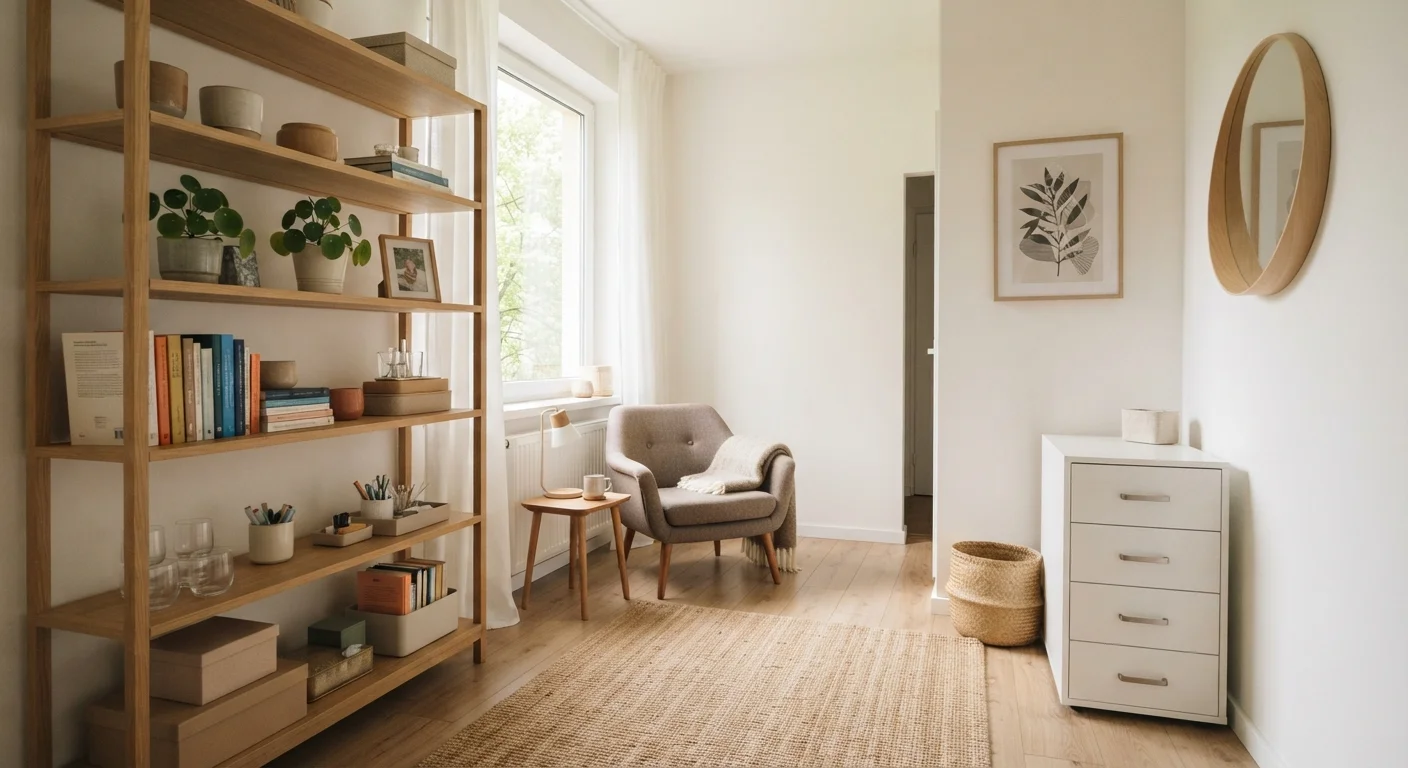
Option A
Vertical Storage
The space-multiplying, wall-first approach.
Best for: Best for rooms where floor space is tight but wall height is available, and where items need to be visible and quickly accessible.
Option B
Drawer Systems
The contained, clutter-free organizer.
Best for: Best for storing smaller items neatly out of sight in bedrooms, kitchens, and offices where a tidy surface appearance matters.
How Each System Actually Works
Vertical storage uses wall height - rather than floor area - as its primary resource. This typically means wall-mounted shelving, freestanding shelf units, pegboards, or stacked modular cubbies. The defining characteristic is visibility: items sit in open view, making retrieval fast and inventory obvious at a glance.
Drawer systems work on a containment principle. Chests of drawers, under-bed drawer units, built-in drawer stacks, and rolling drawer carts all operate the same way: items are sorted into dedicated horizontal compartments and closed off from view. The emphasis is on categorization and concealment rather than visibility.
Understanding this core difference - visible and accessible versus contained and concealed - is the most useful starting point when evaluating your own space. For a broader framework on how different storage approaches map to the way you actually use your rooms, the zone method offers a practical organizational lens worth pairing with any storage decision.
| Criterion | Vertical Storage | Drawer Systems |
|---|---|---|
| Primary benefit | Maximizes wall height, frees floor space | Conceals clutter, organizes small items |
| Visibility of contents | High - items in plain sight | Low - contents hidden behind fronts |
| Best item types | Larger, stable items; books, bins, boxes | Small, loose items; clothing, utensils, supplies |
| Typical cost range | Lower (freestanding) to moderate (mounted) | Low (basic carts) to high (built-ins) |
| Installation effort | Minimal for freestanding; moderate for wall-mount | Low for standalone; high for built-in units |
| Renter-friendly | Yes, if freestanding | Usually yes for standalone units |
| Flexibility / portability | High for freestanding units | Moderate (freestanding) to low (built-in) |
| Dust and debris exposure | Higher - items exposed to air | Lower - items enclosed in drawers |
Where Each Approach Performs Best
Vertical storage shines in living rooms, home offices, laundry rooms, and garages - spaces where items are large enough to sit stably on a shelf and where you want quick visual access. A wall of open shelving in a home office puts reference materials, binders, and equipment within arm's reach without requiring you to open anything. In a laundry room, vertical shelving above a washer-dryer stack turns unused wall space into meaningful capacity.
For kitchens, vertical storage can work well for cookbooks, larger appliances, or pantry goods - though it requires discipline to keep looking tidy. See how vertical approaches fit into a compact cooking space in our guide to keeping a small kitchen functional.
Drawer systems excel in bedrooms, bathrooms, and office environments where small, loose items dominate. Clothing, accessories, toiletries, stationery - these are categories that scatter on open shelves but stay organized when each has its own contained compartment. Drawers also reduce dust accumulation on stored items, which matters more in a bedroom than a garage.
~68%
Americans who say clutter causes stress
A survey by the American Psychological Association found that cluttered home environments are consistently linked to elevated stress levels among US adults.
30%+
Usable vertical space left unused in typical homes
Home organization experts commonly note that most homeowners use less than 70% of their available wall height for storage in key rooms.
2-3×
More storage capacity with vertical systems vs. floor footprint
Wall-mounted shelving can provide two to three times the storage volume of a comparably sized floor-based unit, depending on ceiling height and configuration.
Cost, Installation, and Flexibility
Vertical storage typically carries a lower upfront cost. A freestanding shelving unit requires no wall anchors, no tools beyond a level, and can move with you if you rent. Wall-mounted shelving does require hardware and some skill - and in rental situations, may require patching holes on move-out - but remains relatively affordable compared to fitted cabinetry.
Drawer systems range widely in cost. A basic rolling cart with drawers is an accessible entry point, while built-in drawer stacks or custom fitted units represent a significant investment. The trade-off for that investment is durability, a tailored fit, and a polished appearance that adds perceived value to a room.
Flexibility is another factor. Freestanding vertical shelves can be reconfigured, relocated, or repurposed easily. Drawer units - especially built-ins - are more permanent commitments. If your storage needs shift seasonally or you move frequently, this matters.
For a comprehensive look at how storage choices fit into a full home reset, the room-by-room organization checklist walks through every major space with practical guidance.
Making the Decision - and Combining Both
The most functional small spaces rarely rely on a single system. A bedroom might use a vertical shelving unit for books and décor while a four-drawer chest handles clothing. A home office might mount pegboard above the desk for tools and supplies while a two-drawer unit manages paperwork below.
When deciding where to start, ask three questions: What am I storing? (size and category), How often do I need it? (access frequency), and How much wall versus floor space do I have? Answers to these will point you toward a clear priority without guesswork.
Also worth considering: wall space you haven't fully accounted for yet. Our guide to underused spaces that could double your storage identifies overlooked areas - behind doors, above cabinets, under stairs - where vertical storage in particular can unlock surprising capacity. For a deeper look at the values driving your organizing choices, minimalist vs. category-based organization is a useful complement to the practical question of which physical system to install.
The content provided on our blog site traverses numerous categories, offering readers valuable and practical information. Readers can use the editorial team’s research and data to gain more insights into their topics of interest. However, they are requested not to treat the articles as conclusive. The website team cannot be held responsible for differences in data or inaccuracies found across other platforms. Please also note that the site might also miss out on various schemes and offers available that the readers may find more beneficial than the ones we cover.